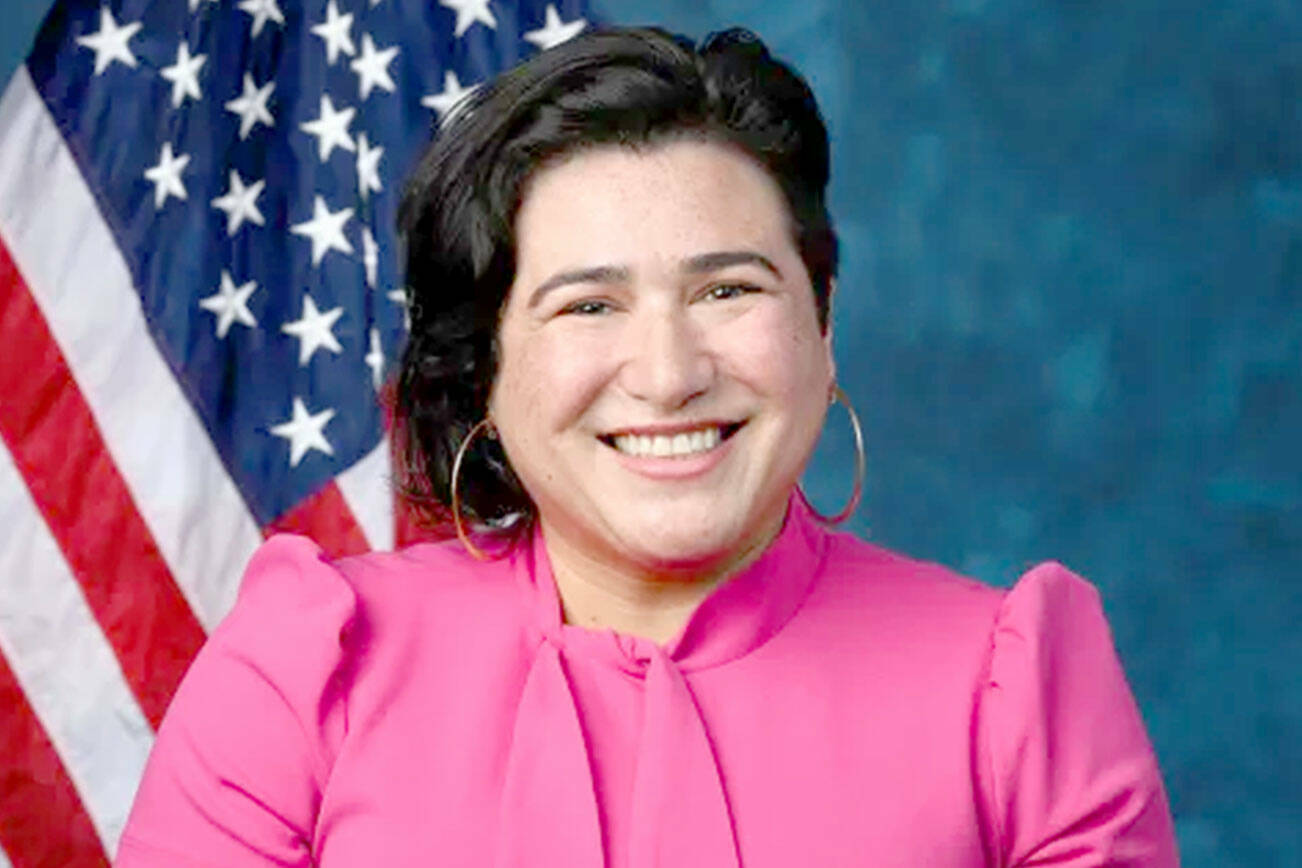
United States Rep. Emily Randall (D-6th District) embarked on a whirlwind tour last week as the House of Representatives is in recess during a government shutdown.
Randall toured Summit Pacific Medical Center and the facility’s expansion project and attended Greater Grays Harbor, Inc.’s Business After Hours event. She then headed to Olympia and Tacoma before returning to Grays Harbor on Friday.
After visiting the Aberdeen Fire Department, Grays Harbor County Public Health and Harbor Regional Health, Randall stopped by The Daily World offices for some conversation.
TDW: What’s concerning you right now, Congressperson?
Randall: What’s concerning me most is the chaos that our neighbors are being thrown into because of D.C. politics. It’s frustrating as a congressmember to not have been called to the floor for votes or to do work for 30 days. It’s frustrating that we’re in a government shutdown. But I’m most worried about the confusion and uncertainty for neighbors who are federal workers worried if they’re going to get paid, families worried if they’re going to be able to afford to keep food on their table, folks worried if the programs that they rely on are going to keep operating. That’s what keeps me up at night.
TDW: Some of the rhetoric around the government shutdown, talking about getting rid of Democratic programs just for the sake of doing it, a lot of that would affect Washingtonians, especially here in Grays Harbor County. Have you heard of any specific projects that they’d like to do away with other than just “Democrat” projects that (the GOP) never wanted in the first place?
Randall: Obviously the levee, the BRIC grant that was rescinded because it’s no longer aligned with the president’s priorities, as Secretary Kristi Noem said. That worries me. We’ve seen a lot of just what feel like very arbitrary grants stalled, green energy projects that aren’t just about the environment, but are about jobs and energy reliability in communities, WSU funding and the hydrogen hub that’s good for shipping and buses and job development. I’m also really worried about the shutdown, funding being stopped for NOAA. We’re in a fishing community. Being able to rely on NOAA monitoring and data is important to our ability to monitor and regulate catch and ensure that we’re maintaining the ability for commercial fishermen, for tribal fishermen, and sports fishermen. It feels like this administration is using almost any excuse to dismantle any program that they didn’t like. And they call them Democrat programs. They say that they’re about giving money to the people we don’t want to give money to. But at the end of the day, it’s about ensuring that our economy is strong, that our kids are fed, that our environmental programs are functioning, that our parks are open. It feels like a war on government as we know it.
TDW: Let’s go into Medicaid a little bit. Some of it is the language around it. People don’t understand what Medicaid is, what it pays for. The vice president, the speaker of the house talk about how Democrats are leading the shutdown because they want to give health care to undocumented immigrants. We know undocumented people, if they get hurt, they get injured, they’ll be seen in an emergency room. That’s the law. There’s this misconception that the federal government is allowing undocumented immigrants to have health care that American citizens would be entitled to. But many people don’t understand all of what Medicaid pays for. In your experience, in your knowledge, what does Medicaid pay for? And if funding isn’t re-engaged and secured, how’s it going to affect people?
Randall: How much time do you have? The first thing that I sometimes forget to say is that Medicaid is AppleHealth. A lot of folks who might be on Apple Health don’t think about it as Medicaid. They think about it as Apple Health. My wife was on Apple Health between jobs. My sister was alive for 19 years because we had Medicaid expansion in 1993 when she was born. Even though my dad worked at the Puget Sound Naval Shipyard and had good government insurance, it wouldn’t have covered the feeding tube and supplies and diapers for 19 years and inflatable vests that kept Olivia from getting pneumonia and wheelchairs and early intervention programs. I could go on and on and on. Folks who don’t have job-provided health care who don’t make enough to pay for healthcare themselves in the jobs that they have, folks who have disabilities that qualify them for health care. So many of Washington’s kids are on Apple Health, I think at Harbor Regional Health, they said upwards of 70% of the babies born here in Grays Harbor County are paid for by Medicaid. This is about nursing home care for our aging parents. A lot of people don’t know Medicare doesn’t cover assisted living, long-term care. If they don’t have private wealth, they’ve got to spend down. They have to sell their homes or put a lien on their property in order to qualify or to be able to pay for their healthcare. When you have providers, whether they’re assisted living or hospitals like Harbor Regional Health or Summit, who see such a high percentage of Medicaid patients, if those folks lose Medicaid funding, then that means that the reimbursement, the revenue that those hospitals get are going to dramatically decline, because they’ll still see people show up at their emergency room who don’t have coverage. And then hospitals, they may not close their doors, but they may have to make really difficult decisions about what programs they keep open and what programs they close, what programs lose them money, and what programs will allow them to continue driving a little bit of revenue to keep their doors open. That puts healthcare at risk for not just Medicaid patients, but private insurance patients, patients who can afford to pay out of pocket for their healthcare, for everyone.
TDW: We have a shortage of providers here as it is. You run the risk of losing doctors and nurses and, these highly trained professionals, we’re trying to attract them and, we can’t afford to lose any more of them.
Randall: Why would you want to go work someplace if you weren’t sure if they were going to be able to have a budget that could continue to operate for the next year or two or three? That feels really scary as someone who’s trying to make a financial decision to support your family.
TDW: How much are you in contact with Olympia? How much have you been talking to Governor Ferguson and some of the other elected officials here in Washington?
Randall: A fair amount. Our staff is in pretty regular communication with the governor’s office. We just got an update from our legislative director in D.C. based on a conversation she had at the agency level. I had a press conference on Wednesday in Olympia with Senator Bateman and Senator Nobles with our insurance commissioner, Patty Kuderer. I feel like you’re always here on the road at visits and community when I’m not with our state legislators Adam Bernaum, Mike Chapman and Steve Theringer, as well as the folks throughout the 6th district. I worked a lot on healthcare policy when I was in the state and I still remain really invested in it. I think Washington (state) has the opportunity to lead. This was obviously a tough budget year for the state and with potential Medicare cuts, SNAP cuts, delays to WIC funding, all of that puts more burden on the state. I think there’s a will to step up at the state level, whether or not they have the political will, the votes to pass the revenue that will allow them to cover everything that we’re losing from the federal government I don’t know, but I know that the legislators in Olympia care a lot about ensuring that they’re keeping our community healthy and supporting neighbors who are hurting.
TDW: Why do you think some of these other programs like Medicaid and some of these other things are on the chopping block?
Randall: It doesn’t make a lot of sense to me, some of them, especially given that President Trump and Speaker Johnson had previously said that they weren’t going to cut programs like Medicaid. They wouldn’t touch Medicaid. They wouldn’t touch Medicare. What did Trump say? That he would love and cherish it, I think. But now we’re seeing these cuts to programs. There’s the Project 2025 of it all. Russ Vought at (the Office of Management and Budget), who is the architect of a lot of that plan, has an agenda to dismantle government, to privatize programs, to make money-making opportunities for folks who are in the business of coming in and replacing programs that the government wants provided. That’s one argument. The other argument is they’re looking for programs that they can cut and get the votes to cut, the programs that they have the ability to cut through whatever sort of executive power they have decided they have that day. Cutting Medicaid is a dangerous position, not only for the lives that it will impact, but the states that have the highest proportion of Medicaid recipients, the highest proportion of SNAP recipients are red states, are states where they have Republican representation. This Republican majority in this Congress, this president, are banking on the fact that they’ve delayed the cuts long enough that people won’t really realize, notice that they’re impacted until we’re through another election cycle or two.
TDW: Some of it is, ‘we’re keeping the government closed until the Democrats come back to the table on healthcare and trust us,’ right? Reopen the government, then we’ll handle this.
Randall: I have lots of how do we improve the healthcare system ideas. Lots of hopes for how we could rebuild different government programs, including healthcare, in a way that isn’t just copy and paste what we had before. In my glass half full analysis of what’s going on right now, if I try to be the most optimistic and think, well, our system is burning down, we can rebuild it in a way that serves people better. I like the Medicaid model. There are certainly Medicare For All proposals. There are others like universal health care proposals that are projected to lower the cost of healthcare broadly. We pay the most for healthcare per capita as a country of any developing country or developed nation of the world. It shouldn’t have to be that way. It shouldn’t be as expensive. People shouldn’t struggle to afford care even if they have insurance because of high copays and out-of-pocket costs. We shouldn’t see the prior authorization challenges we have. There’s so many things to fix. Do I think that the Republicans can fix it by the end of the year? No. Do I think they want to? No. I’m not even sure if I could think they can fix it in the next year, right? I think we’re better off when more members of Congress from all parties in all parts of the country want to fix healthcare. But I haven’t seen anybody willing to have a conversation across the aisle, in these last 25 days, 22, however many days it’s been. I see a lot of people speaking out in the media or on a video about what they think the Democrats or the Republicans should do. I’d like us to be at a table together working on it if we’re really serious about getting something done.
TDW: Do you ever see states starting to develop their own Medicaid for all type programs, like take Apple Health and have it become an insular thing that funds itself and or that the state budget funds where people in Washington state get healthcare through the state and it’s not subsidized by the federal government?
Randall: There certainly have been proposals. Whole Washington has a proposal for a universal healthcare program. In order to fund that, you need a revenue stream. One of the first bills that I passed in the Legislature was a universal healthcare work group that then turned in, a year or two later, to the Universal Health Care Commission. That’s one of the country’s only universal health care commissions. That’s some of the strongest legislation in like a decade on universal health care that gives our agencies real flexibility in how they apply Medicaid dollars, how they apply for waivers, but also has a financial technical advisory committee as a portion of the commission that is informing the commission and developing plans and how we would pay for universal health care. We’re really excited about that continued work and honestly sad not to get to sit on the commission anymore. I do think, you know, we have opportunities. There have also been conversations about multi-state efforts, like do we join forces with Oregon, California, maybe Hawaii, too? We’ve seen those governors, our governors lead on vaccine advisories, right? Can we build relationships with states that care about universal healthcare? And there’s legislation at the federal level for a state-based Medicaid, universal Medicaid kind of program not passing in this administration, but I do think there’s ways that we can partner to give the state more autonomy in providing health care for everyone.
TDW: You always seem to enjoy your visits when you come to Grays Harbor County. There’s a lot of good momentum here. What are some of the good things that you see when you come visit and talk to people? It does seem like at least the right conversations are being had.
Randall: One of the most inspiring things about rural communities like Grays Harbor County is the strength and resiliency of the community. I had rural people, working class people know how to find a way. And especially at times like now when the federal government is not the strong partner that it should be, folks aren’t just going to sit back and let nothing happen. They’re going to come together and find a way. We went to the county public health office to meet with the WIC program team. They’re talking about how to find baby formula, if funding runs out, if they need to supplement folks. Healthcare delivery is finding a way, even when revenue is tough. Quinault’s substance use treatment clinic is meeting a need because they see it in the community and they want to figure it out. We’ve been talking about childcare. There are great conversations happening about how to cut some of the red tape, how to make it easier for us to establish childcare access in a community that needs it. If we want, especially moms, but parents, to get to work and in new jobs, to work longer hours, to have access to a growing economy, and folks don’t have childcare, it’s not going to be possible. We have to make sure that the resource exists for people. I am continuously inspired that our neighbors and local leaders here in Grays Harbor County are coming together to figure out how to do it.
TDW: What are your thoughts on the importance of local journalism, not just newspapers, but local radio and community television?
Randall: I think like we have seen the impact of defunding and a consolidation of the media landscape and like the loss of local journalism infrastructure. When we first walked in (to The Daily World), you pointed out the big empty space and said there’s been 80 people and now to have such a small, dedicated, but small crew, I think it’s very clear that change has shown up in more and more people getting their media from less reliable sources. Like so many folks, 70 plus percent of people get their political news from non-news sources, like lifestyle podcasts and streams, comedians, the Joe Rogans or whatever. It also skews conservative in the reporting of that lifestyle kind of content. Gone are the days that people read the daily paper, watch the same nightly news shows, they’re not getting their content in the same way. So, I think it makes it hard in families and communities to have conversations about facts and the truth when we’re all getting our media from different places. It’s challenging for our fabric of civic society, for our relationships and for our democracy. I love the steps that Washington state has taken to invest in local journalism, and I think we need to do more. We need to invest in programs like the WSU Journalism School, like Internships and fellowships to make sure that young people and people of all ages, who are looking have a pathway into jobs and newsrooms like this one and that newsrooms like this one can continue to stay open.