On Aug. 14, Learning to Grow held a ribbon cutting for their newest location in Montesano, bringing their total childcare facilities in East Grays Harbor County to three: two in Elma and one in Montesano. Collectively, these three facilities offer 228 childcare slots for families. In 2005, when Stephanie and Eric Smith opened their first childcare facility in Elma, they were licensed for 21 children.
The 20-year journey from serving 21 to 228 children and their families is a story of both their persistence in providing childcare for families and community members seeking creative solutions to provide affordable childcare.
In retrospect, Smith probably wouldn’t have opened their first childcare facility on Halloween.
“[We] probably wouldn’t start on a holiday again, but it was a good memory,” she said. “And we filled those first 21 slots immediately.”
Over the next decade, the Smiths gradually expanded to offer more childcare slots, adding a classroom off the back of their first building and converting the downstairs of their house into licensed space. At their highest enrollment, they served 80 children. A fire in 2016 resulted in a total loss of the original building, so they became creative to remain open.
“We spent about the next five years being nomadic and trying to find new locations,” Smith said. “At the time, it was very difficult to relocate childcare [in Elma] because of city zoning and just what sites were available.”
Despite the city’s efforts to remedy the zoning situation so the Smiths could continue using St. Luke’s Episcopal Church as their childcare facility location, the rezoning wasn’t approved.
“In the big picture, it meant that we had to get more creative,” said Smith.
(The passage of Senate Bill 5509 earlier this year now permits locating childcare centers “in all zones except industrial zones, light industrial zones, and open space zones.”)
In 2019, a conversation with their pastors, Mike and Michele Mueller, led to the proposal of co-locating the Abundant Life Church and Learning to Grow in the same building. Smith described it as an in-kind exchange: “We use their land and they use our building.” That year also saw the opening of Learning to Grow Little Oaks, which is located near Summit Pacific Medical Center in Elma.
The new building broke ground in 2020, and it wasn’t even completed (the ongoing COVIDpandemic resulted in delays and cost increases), when the city of Montesano reached out: Would Learning to Grow be interested in expanding?
A confluence of factors came together for the city to propose this. There was a piece of property available for development on south Sylvia Street that former Mayor Vini Samuel had ideas for that hadn’t come to fruition.
“There’s not a whole lot of development that could happen in Montesano so that was a great spot,” said Mayor Tyler Trimble, who was on the city council during this time.
The Smiths submitted a proposal, which was later awarded.
“That began our joint effort between Learning to Grow and the city to be aggressive and creative about funding for another project,” Smith said.
Of the American Rescue Plan funds the city received, they used $250,000, as well as Transportation Improvement Board grants and water funds to develop the building site. Additional funding the city received was two rounds of direct appropriation in the supplemental budget and the capital budget. Smith said that she would be remiss not to give a shoutout for those funds because they “add[ed] a whole another layer of this is how much we believe in this need.”
Learning to Grow received a $1 million grant through the Washington State Department of Commerce’s Early Learning Facilities Fund. The grant was a 3:1 match, which meant the Smiths still had to do significant fundraising, “but that’s really what made this a viable building site for us,” Smith said.
What also made building the facility possible is what Smith calls a “creative partnership” — they own the building and lease the land from the city for a monthly fee.
A requirement of the lease is that Learning to Grow will provide childcare for 10 years, “which we see happening far longer than that,” Smith said. Also included in the lease agreement is that if Learning to Grow decides to sell the building, the city would have to approve the sale.
Coupled with this funding support was community and legislature support from partners that included school districts, Summit Pacific and Greater Grays Harbor, Inc.
“This was Vini’s passion project, and she definitely was the backbone to making this happen, persistence and begging and pleading and arm wrestling,” Smith said. “She definitely sold her own council on it in the community and then at the state level as well.”
The city of Montesano City Council and Mayor Trimble were in attendance for the ribbon cutting.
Smith also credits Sen. Mike Chapman, who was a representative at the time, and Rep. Steve Tharinger for also being strong supporters of the project.
“We know that providing quality and affordable childcare is important for growing our economy and getting people back in the workforce in addition to preparing our children to enter the K-12 system,” Rep. Tharinger shared via email. “We’re thrilled to bring more facilities to an area in need. I look forward to seeing the positive results moving forward.”
When it came to building both the Montesano and Elma facilities, Smith credits Bradley Eisold with PNW Built Inc for “bringing them to life” based upon paper drawings; she still has the original drawing for the Elma facility, tucked into the pages of her Bible.
“[I’d be] sitting there in the wee hours of the night or the early morning, and just envisioning after 20 years of doing it, what would make it the best flow and the most function?” Smith said.
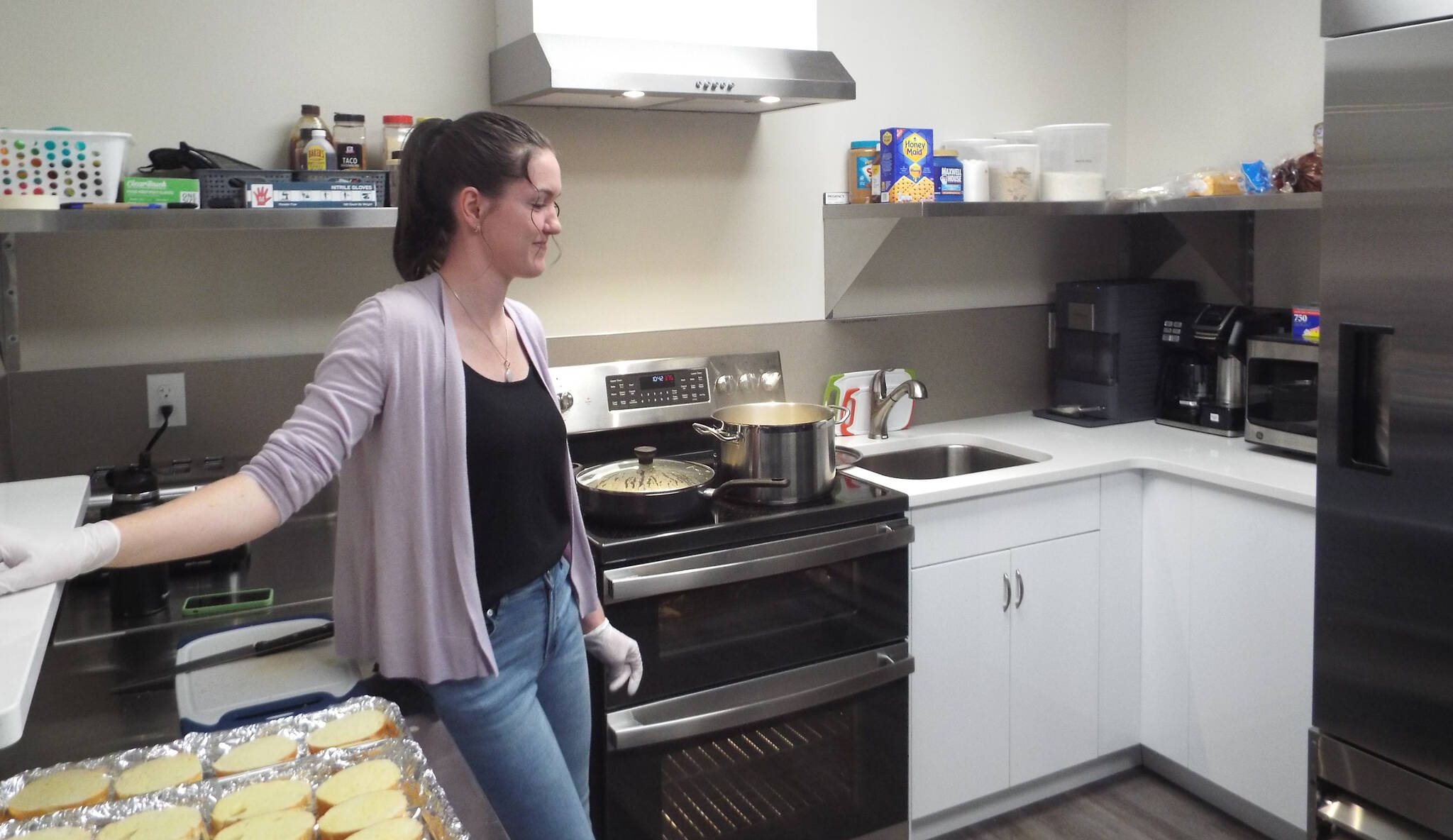
And there is a flow through the Montesano building. Each room, decorated and filled with toys appropriate for the specific ages of children cared for in the room, leads into the next room. In the heart of the building is the communal dining area with a kitchen off to the side. A feature that Smith calls out specifically is the covered playground, which was made possible by the construction coming under budget.
Mayor Trimble said that his first walkthrough was on the grand-opening day and it was a “pretty spectacular place.”
“This was a long-term vision that we never knew if we were going to get to the finish line or not, and without some visionary leadership from Vini, Mayor Samuel in the beginning, we would have never got here,” said Mayor Trimble. “A lot of kudos go to her. A lot of kudos go to Learning to Grow and Stephanie.”
As the company has grown, the Smiths remain hands-on, doing the grocery shopping for all the buildings, changing light bulbs, and installing the technology. Being hands-on “keeps us really connected to our staff and the families and the needs of a business,” said Smith.
With the opening of Montesano, Learning to Grow now has 50 employees with a range of experience: from high school students who are entering the workforce to staff with a bachelor’s degree in early childhood education.
“We have a number of staff right now that are involved in a college program of some sort, acquiring their early learning certificates, most of them through Grays Harbor [College],” Smith said.
The site director for Montesano is Gidget Barbo, who previously worked at the Elma facility and with the Montesano School District.
Barbo said she was excited to see the siblings of children she previously taught in the high school and middle school. She spends the day juggling her time depending upon what comes up each day, which sometimes means “making sure the kids know their parents are coming back at the end of the day.”
Even while celebrating the success of more childcare slots available in eastern Grays Harbor, there is still the question of whether more can be done to fill the need, for example, of parents who work swing shifts or families who only need care once or twice a week. Smith said that these are conversations that she’s been having. Considerations are staffing, the availability of childcare slots, particularly in the afternoon, and determining how many families need childcare during non-traditional hours.
“It’s bigger than just us for sure, but it’s definitely an area that we are exploring right now,” Smith said, adding that “the court has actually reached out to us, specifically, because one of the issues they have is people saying they can’t do jury duty because they don’t have child care.”
Additionally, there are families for whom childcare is not affordable because they make too much for state assistance. Smith said that they keep their rates as affordable as possible, but she acknowledges that “it still doesn’t feel overly affordable … we do our best to only have to have families pay for the care they really need.”
With the opening of the Montesano facility coinciding with their company 20 years old, Smith said “we’re officially out of our teens now, so that’s kind of exciting.” And in reflecting upon what they’ve accomplished, Smith hasn’t lost sight of what they’ve been charged with doing.
“You get to know these families at a very intimate level because you’re, first of all, taking care of the most precious thing they have they’re bringing to you, which is a huge honor. … It is a constant joy, but it’s a constant learning of how can we do better?”
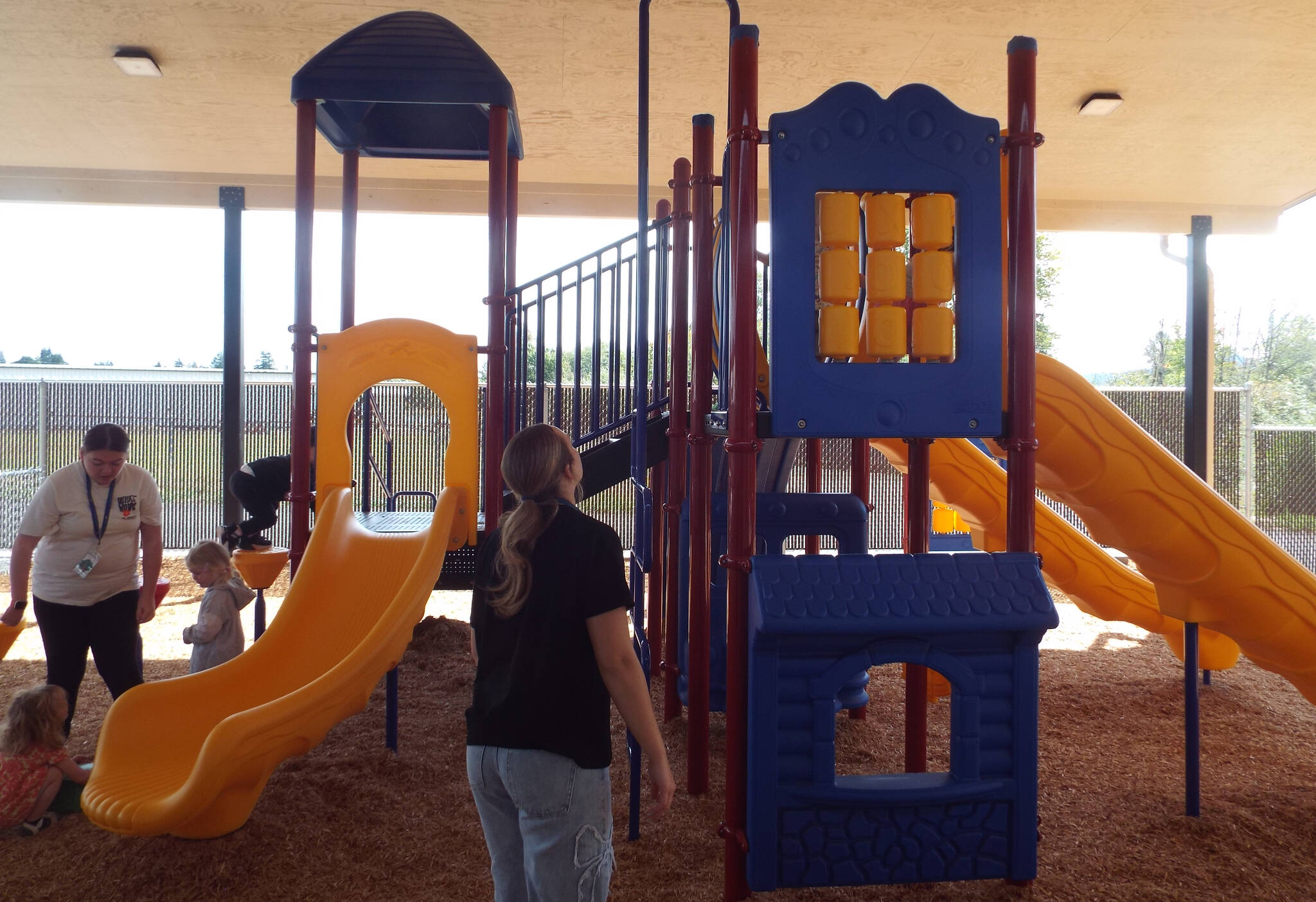
The Learning to Grow’s building in Montesano features a covered playground, which will allow the children to play outside year-round. This feature was made possible by the construction coming under budget. PNW Built Inc was the contractor for the project.