Washington State Attorney General Nick Brown and a multistate coalition filed a motion Tuesday asking the District Court of Massachusetts to enforce its order prohibiting the Federal Emergency Management Agency (FEMA) from terminating the Building Resilient Infrastructure and Communities Program (BRIC) and directing the agency to promptly take all steps necessary to reverse the termination.
For three decades, the BRIC program has provided communities across the nation with resources to proactively fortify their infrastructure against natural disasters. By focusing on mitigation and community resilience, the program has saved lives, protected property, and saved money that would have otherwise been spent on post-disaster costs.
“Every day our communities have to wait for these funds leaves them vulnerable to the kind of devastation we saw from flooding in December,” Brown said. “More delay puts homes, businesses, and lives at risk.”
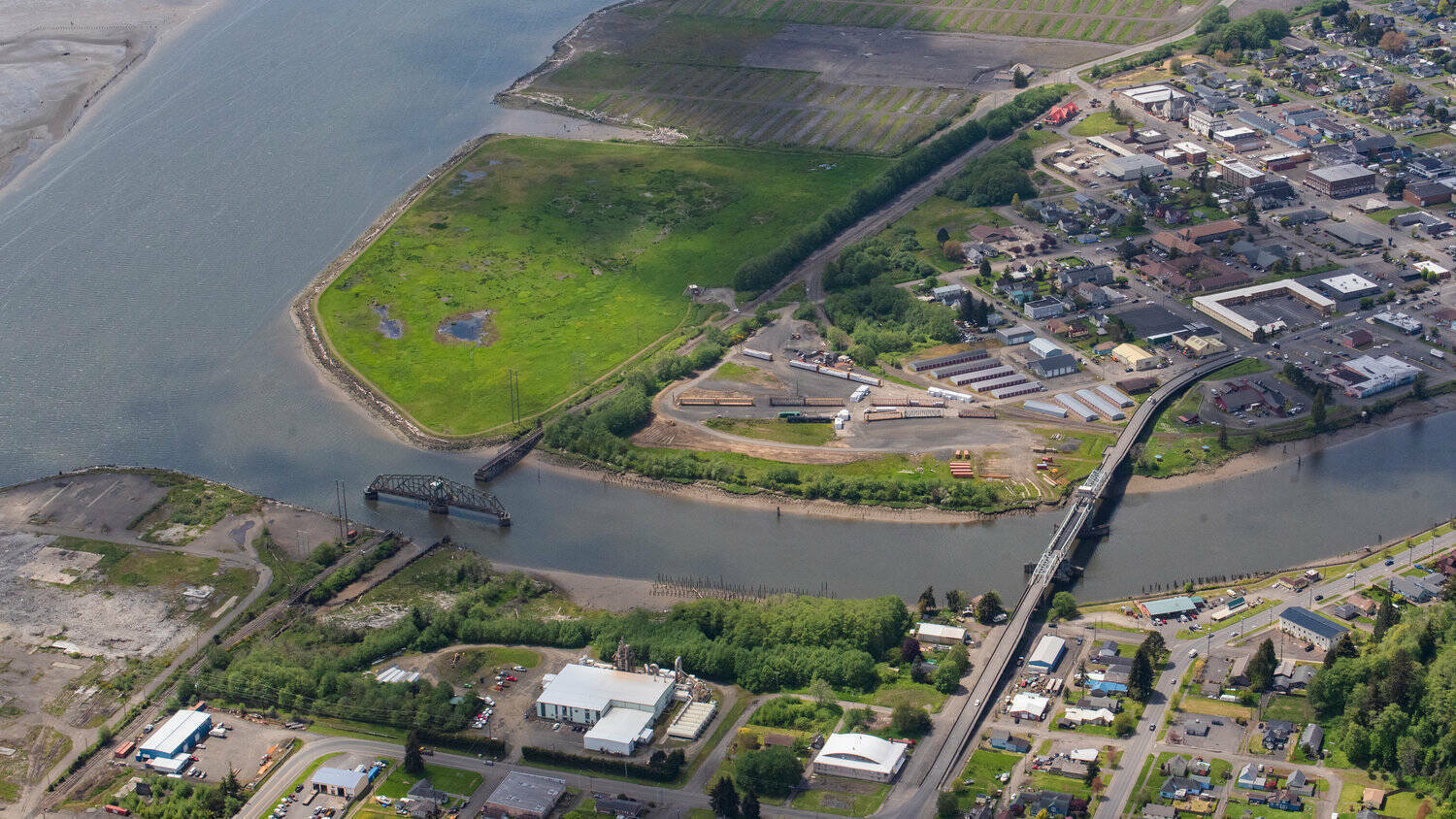
Nearly $100 million to be allocated to Aberdeen and Hoquiam for levee projects that would help prevent catastrophic flooding, lift FEMA floodplain designations and ease requirements for flood insurance and flood-zone codes has been “on hold” since the abrupt cancellation of the BRIC grant program last April.
On July 16, 2025, Brown and the coalition filed a lawsuit to prevent FEMA from terminating its BRIC program – an action which had already delayed, scaled back, and cancelled hundreds of mitigation projects across the country depending on this funding. On Dec. 11, 2025, the coalition won their case. The court declared the termination of this congressionally mandated program unlawful and ordered FEMA to promptly take all steps necessary to reverse the termination.
More than two months have passed, and the federal government has offered no indication that they have complied with the court order. FEMA’s regional offices lack information about whether and when it will resume the BRIC program, and some have indicated that FEMA is taking a “wait and see” approach – contrary to the clear terms of the court’s order. During this time, the federal government has not identified any concrete steps that it has taken to reverse the BRIC termination.
Recently, U.S. Rep. Emily Randall (D, 6th District) sent a letter to Department of Homeland Security Secretary Kristi Noem to follow up on the Trump administration’s decision to terminate the BRIC grant program.
“The cancellation of this $87 million grant has had widespread economic repercussions,” wrote Rep. Randall in the letter. “In the cities of Aberdeen and Hoquiam, more than 5,100 properties and over 1,000 existing businesses are trapped in the floodplain — all of which would’ve been protected by the BRIC-funded levee project. As a result, residents and employers collectively pay over $2 million each year in flood insurance premiums, which means thousands of dollars a year in added costs for homeowners. … Continuing to block this project places rural communities in economic stasis and deprives the federal government of returns it would otherwise realize.”
The coalition is asking the court to enforce its order by requiring the federal government to make pre-disaster mitigation funds available as required by statute, communicate the status and next steps for current BRIC projects to the states, communicate the reversal of the BRIC termination to all relevant stakeholders, and file status reports with the court outlining any actions taken or planned to comply with the order.
Over the past four years, FEMA has selected nearly 2,000 projects to receive roughly $4.5 billion in BRIC funding nationwide. In Washington, about two dozen BRIC projects totaling more than $150 million have been in limbo due to the federal government’s actions.
Joining Brown in filing this motion are the attorneys general of Arizona, California, Colorado, Connecticut, Delaware, the District of Columbia, Illinois, Maine, Maryland, Massachusetts, Michigan, Minnesota, New Jersey, New Mexico, New York, North Carolina, Oregon, Rhode Island, Vermont, Wisconsin, as well as the governors of the Commonwealth of Pennsylvania and the Commonwealth of Kentucky.