
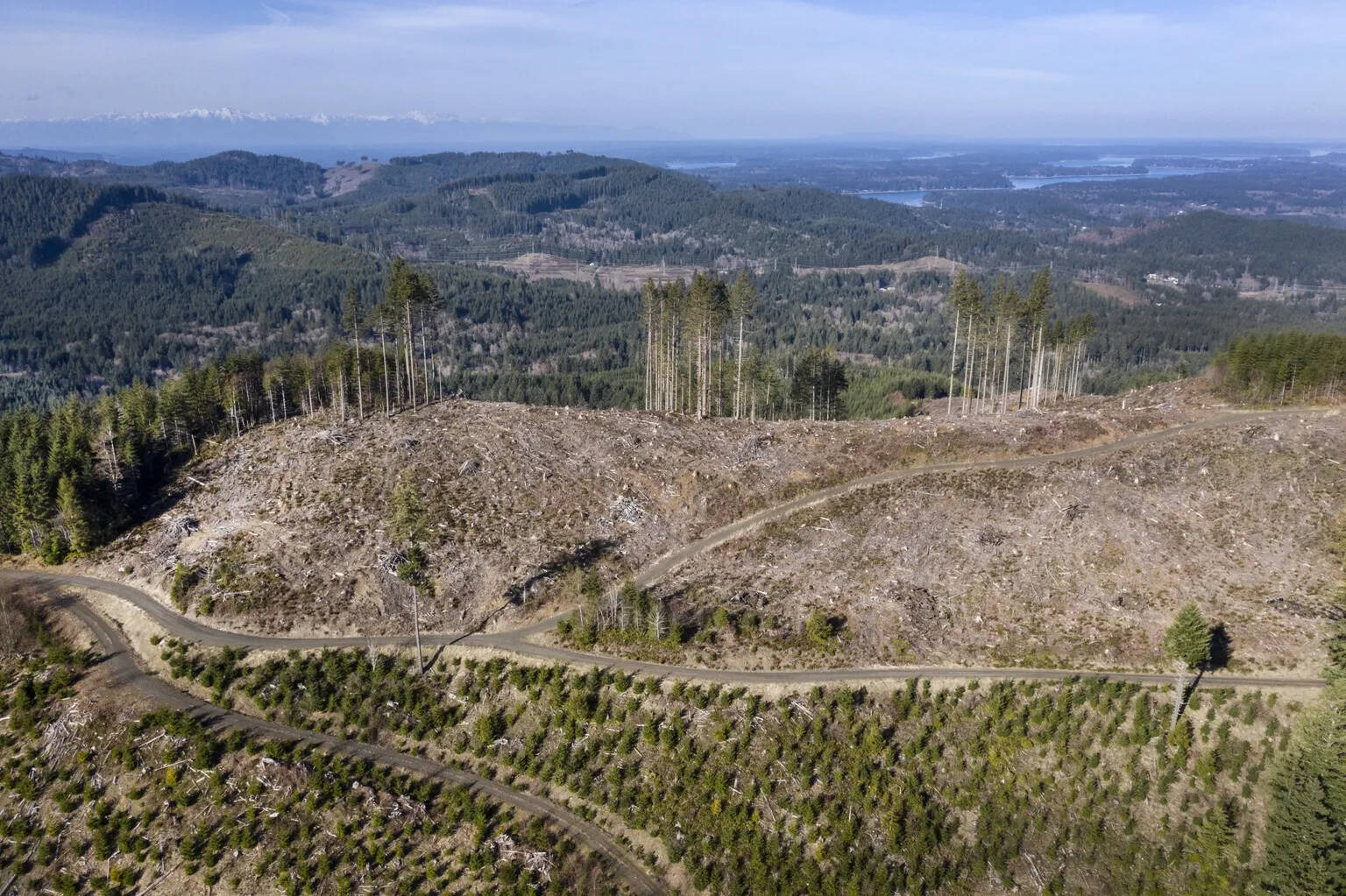
Commissioner of Public Lands Dave Upthegrove Tuesday took action to conserve 77,000 acres of Washington’s most ecologically valuable, older state-owned forests.
“This is the biggest step forward in forest conservation in our state in a generation. It will enable us to nurture and steward these forests in innovative, diverse ways to do more for our climate, for habitat, and for the communities we serve,” said Commissioner Upthegrove. “Today is a big first step, but there is more work ahead as we chart an exciting new path forward for managing these forests.”
In an event amidst older forests on Tiger Mountain, Commissioner Upthegrove signed a Commissioner’s Order that conserves 77,000 acres of structurally complex forests, including all remaining older forests on state lands managed for timber — which total more than 10,000 acres. These older stands will become the old growth forests of tomorrow. The order also directs the agency to pursue strategies other than traditional industrial harvests to ensure these carbon-dense, habitat-rich forests remain available for future generations.
These strategies include pursuing selling carbon credits and other valuable ecosystem services, acquiring replacement timber lands, and seeking increased value from timber sales by promoting mass timber markets. Commissioner Upthegrove will also ensure DNR maximizes the return on certified forest products, and reviews how it structures and configures sales. Finally, DNR will explore innovative silviculture practices to improve habitat, forest health, and accelerate stand stage development, which may also provide revenue opportunities.
“I am committed to quickly working with the Legislature to get the authority to enter ecosystem services markets with these acres. Selling carbon credits will be a central piece of the management of these 77,000 acres.” Commissioner Upthegrove said.
Older forests are critical as they store and sequester carbon, an important tool to address climate change. They also support biodiverse habitats and provide recreation opportunities. This step will allow DNR to achieve desired habitat outcomes faster while supporting new innovative ways to generate revenue for schools and local governments.
“Conserving 77,000 acres of the most critical forests, including 10,300 acres of older forests, while ensuring steady support for rural communities is a bold step in the right direction,” said President Guy Capoeman of the Quinault Indian Nation. “We need more of this thoughtful, responsible approach to decisions about forestry, the timber industry, and rural economies. I hope this is the start of a genuine conversation about how we can ensure our forests are stewarded for the future.”
On his first day in office, Commissioner Upthegrove announced a temporary pause on certain timber sales to develop this plan. Since then, DNR forest scientists have assembled and put into use a new tool for identifying older, structurally complex forests.
That tool showed the agency had 106,000 acres of structurally complex forests – classified as Maturation II. That means they have an understory with diverse species growing beneath the canopy, small gaps appearing due to natural disturbances like wind, and a relatively low presence of large fallen logs or standing dead trees (snags). These landscapes are very close to fully mature forests with increased structural complexity and biodiversity.
“Commissioner Upthegrove’s order conserving 77,000 acres of our most critical forests while ensuring that communities can continue to count on revenue from DNR is exactly the type of leadership we need these days,” said Senator Mike Chapman, D-District 24, Chair of the Senate Agriculture & Natural Resources Committee. “Folks in my district rely on a strong timber industry but also understand that our forests can be so much more than just clearcuts. That’s why I am happy to see that Commissioner Upthegrove is eager to work with the legislature to get DNR the tools it needs to innovate how it stewards its lands and diversify its portfolio by entering the carbon market and engaging with other ecosystem services.”
The conservation of 77,000 acres leaves 29,000 acres of structurally complex forests still available for harvest to ensure the department meets its responsibilities to schools and local governments during the transition to new, innovative, and diverse management strategies on these 77,000 acres.
“I strongly support the bold action taken by Commissioner Upthegrove that opens the door for Washington to embrace the most cutting-edge approaches to stewarding our forests and supporting our communities,” said Heidi Eisenhour, Chair of the Jefferson County Board of Commissioners. “We’re a timber county — we need a strong and sustainable industry and that industry needs certainty, which this action provides. But we also know that business as usual won’t cut it in a changing world. I have great confidence that under Commissioner Upthegrove, the Department of Natural Resources will seek out innovative strategies to enhance the economic and environmental benefits our forests provide.”