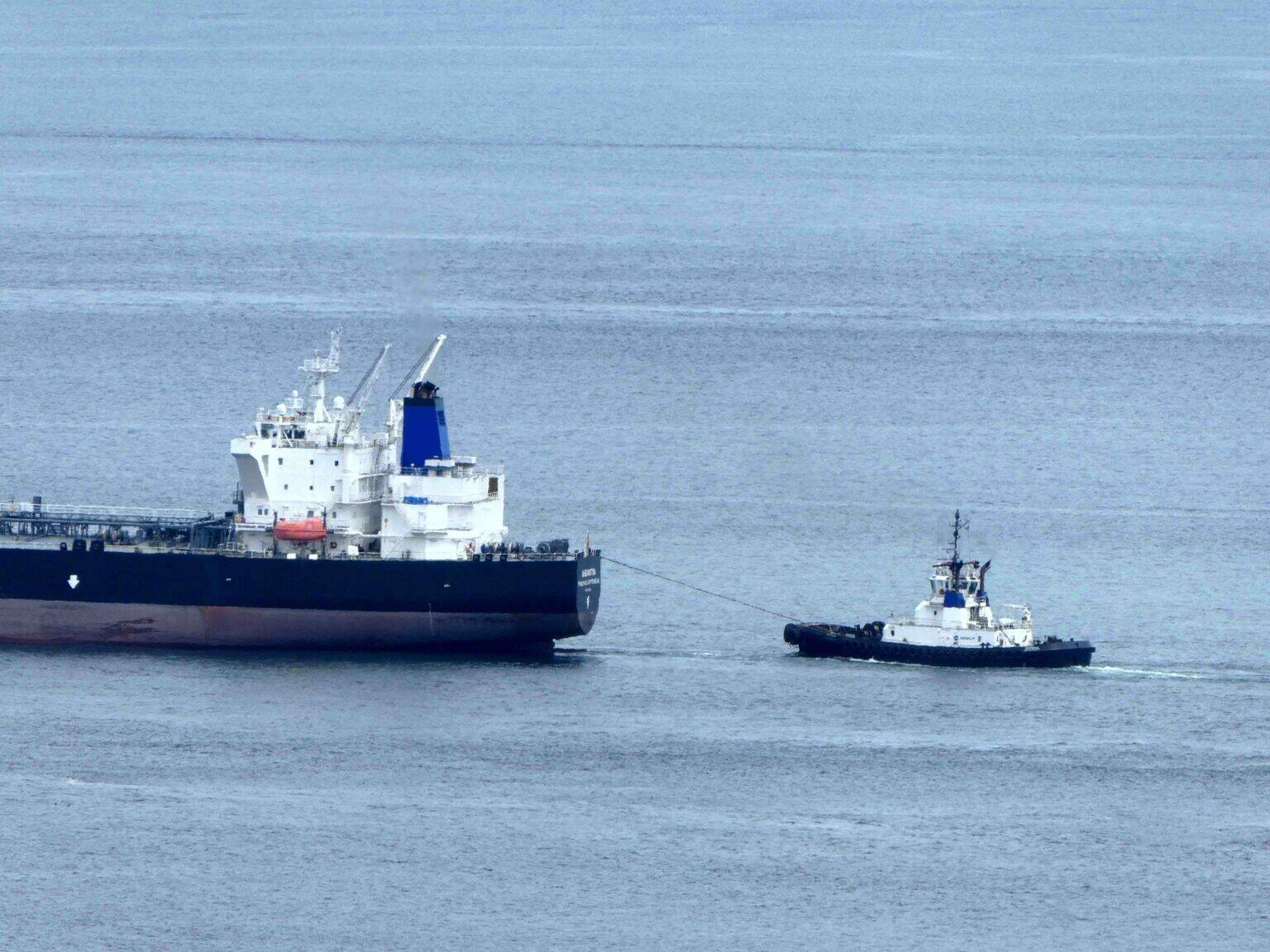
Two Washington agencies are proposing to dial the oil spill prevention rules for tankers and tank barges up a notch in the busy waterways between Skagit, Whatcom and San Juan counties. Even with the survival of the region’s iconic killer whales as a motivating force, the push is not exactly smooth sailing.
In recent weeks, the U.S. Coast Guard took issue with the state’s plans to expand a requirement for small to medium-sized tankers and towed barges to have tug escorts when underway with loads of oil or refined fuels. Simultaneously, multiple environmental groups and tribes are pressing the state to proceed with the rulemaking to further protect endangered orcas and the marine environment.
In a letter addressed to the state Department of Ecology and Board of Pilotage Commissioners, the Coast Guard Northwest District reasoned that an expanded tug escort requirement would increase vessel traffic unnecessarily.
“The overall reduction in oil spill incidents is negligible while significantly increasing vessel traffic in Puget Sound and adjacent waters,” wrote Captain Darwin Jensen, chief of prevention for the Coast Guard district office in Seattle. “More collisions and spills could result due to increased vessel traffic and risks to safety of navigation in congested waterways.”
More tugs traveling to and fro present an “incremental” risk that shouldn’t be discounted, but which is outweighed by the protection the tugs provide to prevent a potentially catastrophic oil spill, countered Fred Felleman, Northwest consultant to the group Friends of the Earth.
“Washington state’s admirable oil spill record is not because we’ve rested on our laurels,” Felleman said in an interview. “We’re committed to continuous improvement that has to be responsive to changes in the maritime trade – more petroleum products that are moving across the water in smaller vessels.”
The Washington Legislature tasked the pilotage board, in consultation with Ecology, to periodically review the tug escort requirement in question. That is why this debate is happening now. The tug requirement for this class of tank vessels first took effect in 2020.
Ecology estimated that tugboat companies get about 800 escort jobs per year in the Rosario Strait region due to the existing requirement. The oil tankers and towed barges targeted by these state rules are most commonly hauling refined products produced in northwest Washington – such as diesel, gasoline, jet fuel or heavy fuel oil – to customers near and far. Some crude oil also travels by barge from British Columbia via Rosario Strait to the U.S. Oil refinery in Tacoma, or less commonly to Anacortes.
The targeted class of vessels doesn’t look small when you stand close. They can exceed 600 feet long. The class – defined as 5,000-40,000 dwt, to be precise – includes an increasingly popular, efficient-to-operate type of tank vessel called an ATB, short for articulated tug barge.
The current rulemaking does not affect larger oil tankers used to import crude oil to the Pacific Northwest from Alaska and overseas. State law has long required those large oil tankers to have a tug escort to all destinations in Puget Sound when loaded.
Friends of the San Juans Marine Protection and Policy Director Lovel Pratt explained the beauty of a tug escort is that the tug can quickly assist to prevent a collision or grounding if an oil-laden vessel loses propulsion or steering.
“This is so important to prevent accidents and oil spills. If the tanker is at risk of getting into an accident, there is a tug there to help,” Pratt said.
Between 2017 and 2023, Ecology reported a handful of propulsion loss incidents and one minor collision between an oil barge and a bridge in north Puget Sound, where the agency determined an escort tug might have been helpful. None of those past incidents resulted in much, if any, oil spilling into the water.
The touchstone oil spills in Washington waters that inspired modern tanker regulations are now decades in the past. The Arco Anchorage, carrying Alaskan crude oil, ran aground in 1985 as it entered Port Angeles Harbor, spilling 239,000 gallons, which oiled several thousand seabirds.
Oil spill off of Grays Harbor
According to an incident report published by the Washington Department of Ecology, in the early morning hours of Dec. 23, 1988, the fuel barge Nestucca spilled 231,000 gallons of heavy fuel oil along Washington’s outer coast, offshore to the entrance to Grays Harbor.
The incident occurred when the Sause Brothers Ocean Towing Co. tug, Ocean Services, lost its tow of the Nestucca after the line broke after crossing the Grays Harbor bar. To try and retrieve the tow and keep the Nestucca off the Ocean Shores jetty, the tug captain backed into the starboard bow of the barge to get two crew members onto the barge to re-establish the tow line.
Unfortunately, the collision between the Ocean Services and Nestucca ripped a gash in the barge, causing heavy fuel oil to spill. While the bulk of the oil washed ashore near Ocean Shores, the spill harmed wildlife and fouled beaches as far south as Oregon and north to Vancouver Island, British Columbia. Patches of oily sheen were reported as far west as Dungeness Spit.
The spill also killed or injured an estimated 56,000 seabirds in the area. Once a seabird is coated with oil, their feathers no longer act to repel the cold effects of sea water. The birds also ingest the toxin when they preen their feathers in an attempt to remove the oil.
Former Washington Gov. Chris Gregoire was director for the Washington Department of Ecology when the Nestucca spill occurred. The spill helped define Washington’s current spill prevention, preparedness, and response strategy.
Among the first actions was the creation of the Pacific States-British Columbia Oil Spill Task Force to determine how best to share spill response resources, build on lessons learned from spill incidents, identify risks, and prevent spills. The first meeting was held on March 23, 1989, the day before the Exxon Valdez catastrophe in Alaska.
In 1989, the Washington Legislature passed legislation enabling the state to seek compensation from spillers for damages to the public’s natural resources caused by oil spills.
In 1990, state lawmakers passed the first set of oil spill preparedness laws for companies handling and shipping oil in Washington waters.
In 1991, the Legislature adopted a comprehensive bill establishing vessel and oil-handling facility spill prevention laws and created the 5 cent barrel tax on oil imported into Washington to pay for the new activities.
Costs
State regulators determined during an economic analysis that the ramped-up oil spill prevention measures would add cost to oil shippers by requiring more tug escort time. Foss Maritime’s published rates for tug escort services in north Puget Sound begin at $4,495 per hour before fuel surcharges, which easily add another $1,000 or more per hour.
The tug and barge trade association and the oil industry opposed the introduction of the Rosario Strait escort requirement back in 2019 when it first won legislative approval. This year’s proposed expansion and reaffirmation of the rules is drawing a more muted response. The American Waterways Operators and Western States Petroleum Association submitted public comments that mainly critiqued technical aspects of the Ecology Department’s risk modeling.
Tribes along the Salish Sea also appear keenly interested in what happens next. The Lummi and Swinomish tribes have long raised concerns about interference to their fishing and harvesting rights from increased vessel traffic. They renewed those concerns in letters to the pilotage board last month while also offering support for the oil spill prevention measures.
Comments submitted by the Port Gamble S’Klallam and Makah tribes dwelled on the balancing act the state must navigate between the benefits and impacts of more tug activity on the water.
Makah Tribal Chairman Timothy Greene Sr. called out the potentially harmful impacts to endangered killer whales from underwater noise generated by escort tugs. Tugboat operators themselves previously questioned whether increased underway time could be counterproductive to the state’s goals of reducing threats to the cherished resident orcas.
Pratt from Friends of the San Juans said tug escort operators could take mitigation measures to reduce underwater noise, such as going slower and maintaining a wide standoff distance when whales are present. Greene favored that approach as well and concluded that the Makah would ultimately support the state’s proposed expansion in the protection standard against oil spills, even if it only makes a marginal difference.
“The Makah Tribal Council views the threat of oil pollution to Southern Resident killer whales (and other Makah cultural and natural resources) as a more significant threat than underwater noise, with longer-lasting and potentially more widespread impacts,” Greene wrote in his public comment.
Rosario Strait is a major route for tankers and towed barges headed to and from the oil refineries near Anacortes and Ferndale. The proposal in front of the state panel would reaffirm the existing tug escort mandate and extend the coverage zone toward Patos Island where the Strait of Georgia comes down to meet Rosario Strait. That would increase the zone’s size by about 11% to the north-northwest.
The pilotage board is also considering whether to require tank vessel captains and their tug escort to hold a short pre-escort safety conference before getting underway.
The commissioners have before them the staff’s “preferred alternative” to renew and expand the tug escort requirement. But the nine commissioners also can consider multiple alternatives that underwent environmental vetting. Those include scaling back or completely rescinding the tug escort rules for the small-to-medium class of oil tankers and towed barges, though the latter seems unlikely.
Board of Pilotage Commissioners Executive Director Jaimie Bever said her agency would ask for a meeting with the Coast Guard to get clarification of the federal concerns. Jensen said that the Coast Guard is comfortable with maintaining the existing regulatory regime.