Due to rising temperatures and increasingly dry conditions, campfires will be restricted to established fire rings in designated areas in the Olympic National Forest and Olympic National Park.
This fire restriction will be effective at midnight on Sunday, July 13.
All backcountry and dispersed area campfires, charcoal grills, and other equipment that creates ash will not be allowed. Gas or propane camp stoves with a shut-off valve or lever that extinguishes the flame immediately are permitted in these areas. These stoves should be operated far from flammable vegetation and forest litter. Extreme caution is urged when using any open flame.
Campfires on Olympic National Park’s beaches will not be permitted.
“Abnormally dry and drought-like conditions have lingered over portions of the peninsula for the past several years. This is leading to live vegetation being in a state of stress and dead vegetation is quick to react to localized weather patterns, like the recent heat dome” said Jeff Bortner, Fire Management Officer for Olympic Interagency Fire Management. “These changes line up to quick changes in fire danger. Places like the Quinault, Hoh, and coastal beaches are especially sensitive to prolonged dry periods and drought as they have not evolved to survive in a moisture deficit.”
Fire and safety tips:
Check current fire restrictions before lighting a fire
Keep campfires small
Select the right spot for your campfire
Extinguish all campfires before leaving
Attend your campfire at all times
For more information on the Olympic National Forest, visit:
www.fs.usda.gov/olympic
Bear Gulch Fire grows to 415 acres
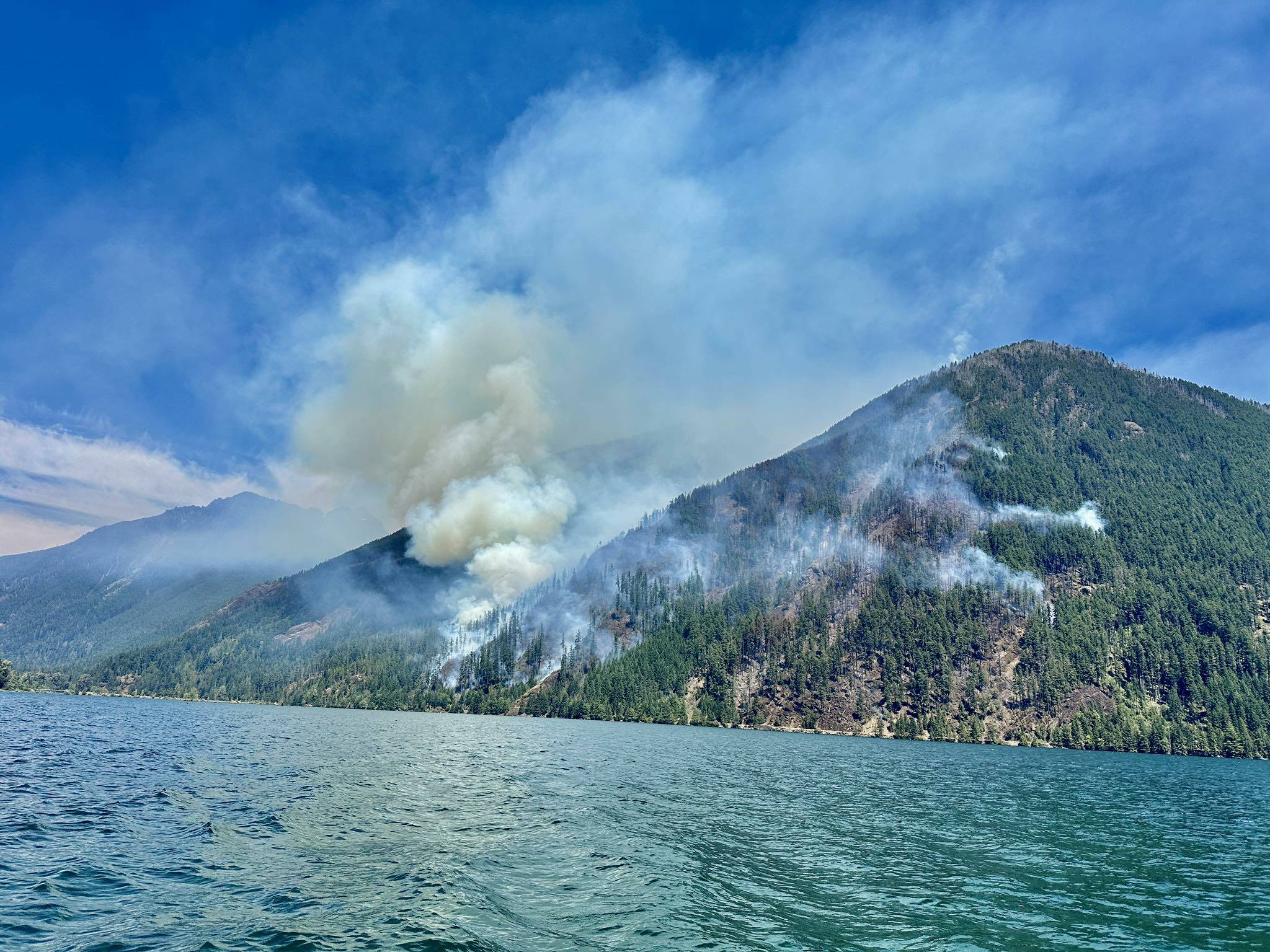
The Bear Gulch Fire on the north side of Lake Cushman near Rose Mountain in the Olympic National Forest near Hoodsport, grew to 415 acres heading into the weekend, with zero percent containment.
The cause of the fire has been determined to be human in origin.
The fire is burning in the Olympic National Forest 10 miles northwest of Hoodsport. A small portion of the fire is on Department of Natural Resources land as well. While this fire is burning outside of Hoodsport Fire’s response area, they have continued to assist both the Western Washington type 3 team and the agency administrators as a local cooperator who is familiar with the area.
The fire is in extremely steep and rocky terrain that previously burned in the 2006 Bear Gulch Fire. The previous fire resulted in numerous standing dead trees which pose a significant risk to firefighter safety. Rolling debris from the fire area, including large boulders and fallen trees poses a serious hazard to anyone on National Forest Road 2400. Due to this significant safety concern, the road is closed at mile marker 10.5 where the pavement ends and the dirt road into the Staircase area of Olympic National Park begins.
Currently aviation is being used to suppress and slow the progress of the fire while hand crews and engines take action to contain the fire. Additionally, crews are preparing plans to protect nearby communities should the fire progress further. Fire activity is expected to increase with the anticipated warmer weekend weather.
While there are no evacuation orders currently in effect, below is a reminder of how to prepare for an evacuation incident:
Level 1 — READY: Prepare a go kit for you, family and animals. Clear areas around your home in advance. Know your escape routes.
Level 2 — SET: Have your go kit on hand and ready. Ensure you, your family and animals are ready to go at a moment’s notice.
Level 3 — GO: Grab your go kit. Load your family and animals and leave.
Residents along the southeastern Olympic Peninsula and around the Puget Sound may have noticed a layer of haze. Slightly higher relative humidity should limit fire growth next week but expect the fire to continue to produce smoke with the greatest impacts along Lake Cushman. Communities such as Hoodsport, Potlatch and Skokomish may see periods of unhealthy air for sensitive groups, mainly in the morning hours.