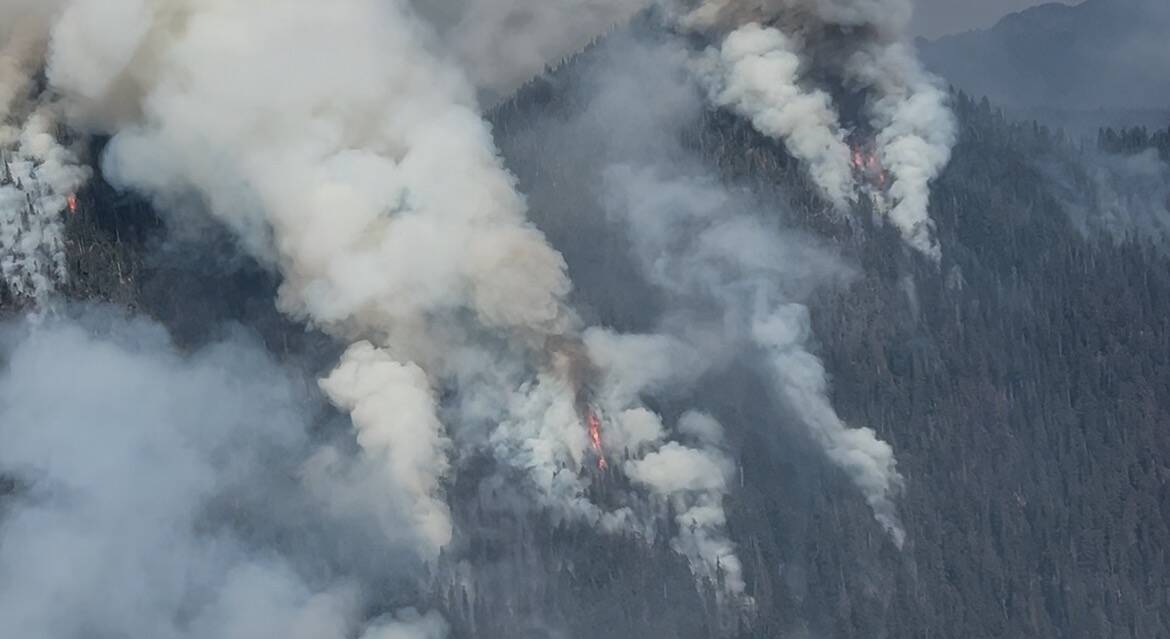
The Bear Gulch Fire on the north side of Lake Cushman in the Olympic National Forest exploded on Tuesday, and is now at 15,730 acres and still only 9% contained.
After a week of moderate fire behavior due to cooler weather, the Bear Gulch Fire experienced significant activity Tuesday, driven by warm, dry conditions and strong easterly winds. Heavy smoke was visible across the Olympic Peninsula and in the Hood Canal area in coming days, including Ocean Shores.
The east winds primarily impacted the upper slopes of the fire area, intensifying fire behavior and producing heavy smoke, particularly from the North Fork Skokomish River valley. Helicopter bucket drops were conducted over the Copper Creek area, northwest of Lake Cushman, to help slow the fire’s spread.
Aviation resources will continue supporting suppression efforts Wednesday focusing on structure protection near Lake Cushman, as fire activity remains heightened.
The fire is burning in steep, rugged inaccessible terrain, limiting access to the fire for safe direct engagement from firefighters.
A shift to a weak onshore flow was expected on Wednesday, bringing cooler temperatures and increased relative humidity and chance of rain returning later in the weekend. Despite the short-term forecast for cooler, wetter weather, dry fuel conditions will persist. Sustained and widespread rainfall will be necessary to significantly diminish fire activity and bring about a season-ending event.
Air quality remains unhealthy for sensitive groups adjacent to the fire area.
The northern half of Lake Cushman is closed to ensure firefighter and public safety during ongoing suppression repair efforts. Falling debris continues to impact roads in the area. The southern half of the lake is open to recreation. There are extensive closures in Olympic National Forest and Olympic National Park.
All campfires are prohibited in Olympic National Forest and Olympic National Park. All outdoor burning is prohibited in Mason County.
Homes in the area near Dry Creek Trail are in a Level 3 “GO” evacuation. This includes the Staircase Campground and areas across the causeway on the north side of Lake Cushman.
Farther north, the Tunnel Creek Fire is burning in remote terrain west of Quilcene in the Buckhorn Wilderness. Sparked by lightning, it has charred close to 300 acres and remains uncontained. While smaller, it is still adding to the smoke and haze across the region.
The combination of these fires, along with the wind shift, has lowered air quality across Clallam and Jefferson counties. Meteorologists say another change in wind direction is expected soon, which could bring some short-term relief. Looking ahead, forecasters also expect the Northwest’s rainy season to kick in next week, with a strong chance of above-normal precipitation. That could help clear the air and ease wildfire conditions across the region.
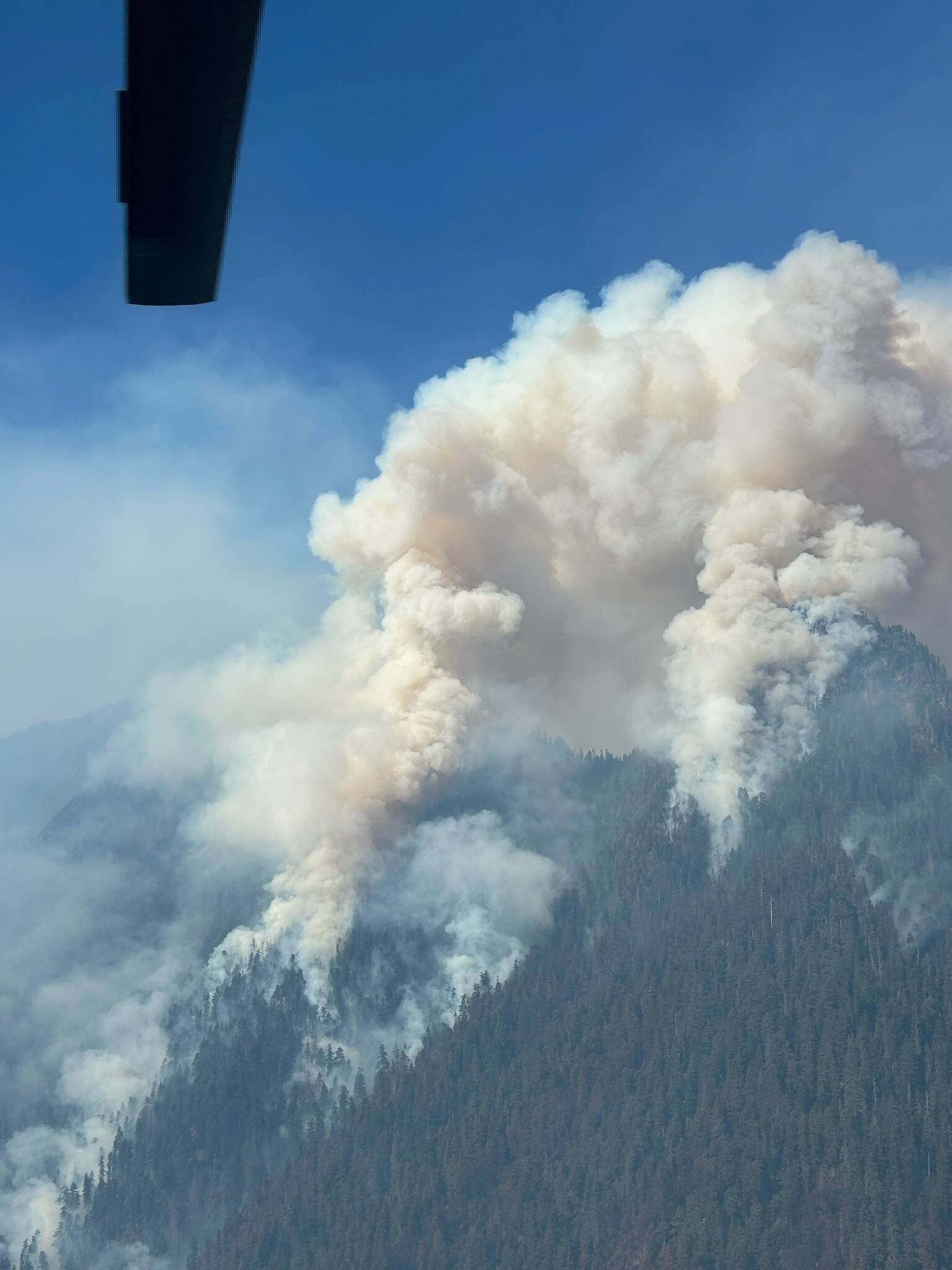
National Forest Service Smoke billows at the Bear Gulch Fire as photographed via a plane.