Capturing pop culture for over a century: Patience or, Bunthorne’s Bride
Published 1:30 am Friday, December 12, 2025
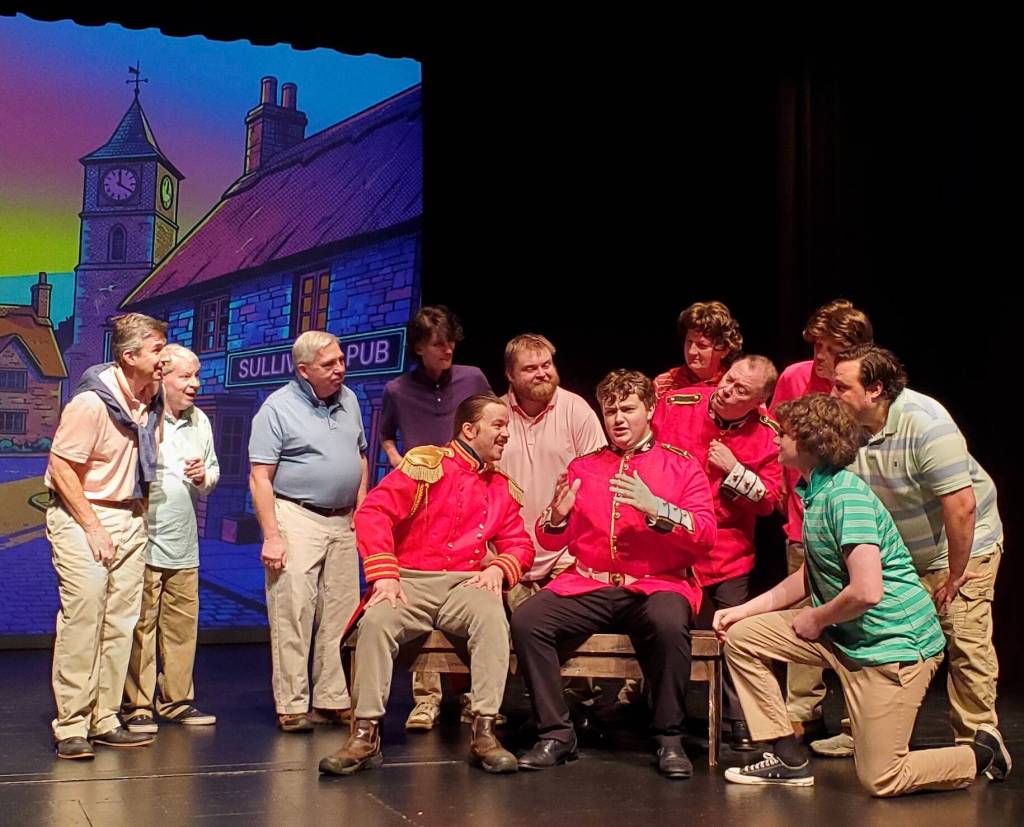
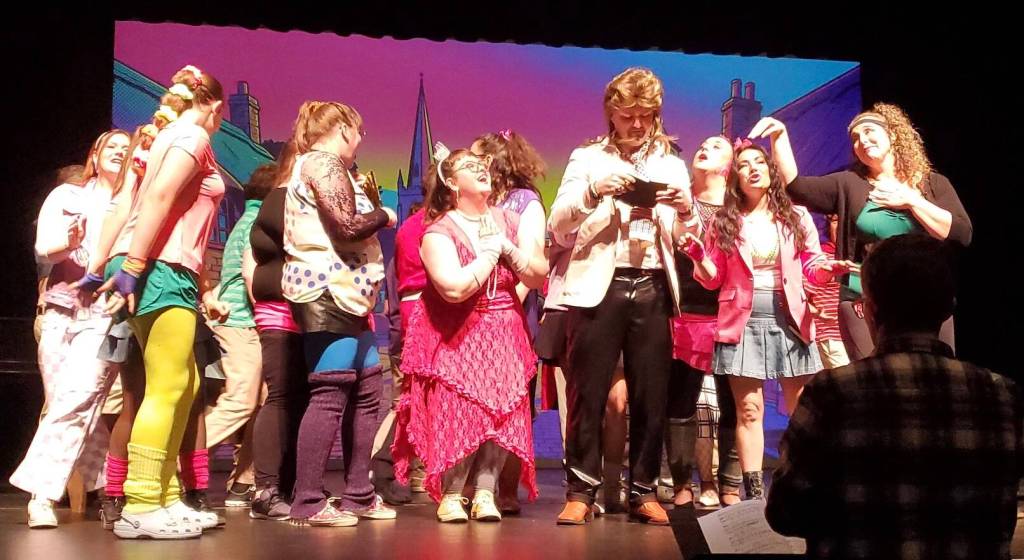


Even with road closures being announced across the county and rain continuing through the evening, the cast of “Patience or, Bunthorne’s Bride” arrived for the dress rehearsal on Wednesday night at the Bishop Center for Performing Arts.
In 2016, Ian and Joy Dorsch, faculty with Grays Harbor College, began the Opera Workshop.
“We started taking our students up to Seattle opera dress rehearsals,” Ian said. “And for a lot of these college students and some high school students who were doing Running Start, it was their first exposure to seeing this kind of stuff in a theater, and they were fired up about it.”
They took their proposal to Bill Dyer, another faculty member at the college, who helped shepherd them through the process of receiving approval. A year later, they held their first performance and have since held a couple shows a year.
The first performance of this Gilbert and Sullivan opera was on April 23, 1881, at the Opera Comique in London. “Patience” is the sixth the Grays Harbor Opera Workshop has staged, and Ian and Joy both codirect. They picked “Patience” because it’s really funny and a “good fit for the pool of singers that we have,” said Ian.
It’s also in English and features choruses.
“There are some people who are new to singing this kind of material, and we want there to be a way into it for people who don’t have music degrees, although we have quite a few people in this group who do,” Ian said. “The chorus is kind of essential for the way that we want to invite people into this material.”
“It’s not intimidating for anyone,” said Shannon Patterson, who plays Lady Jan. “It’s so accessible.”
How is an opera written 144 years ago relevant to today?
“It’s very much encapsulating pop culture in general, our over-interest in celebrities,” said Danielle Tobin, who plays Patience. “Maybe a little bit on a grander scale for us now because of social media and we can know what someone living across the country is doing. But even thinking about high school, when there was the really popular jock or popular guy and all the girls are big fans of his and fawning over him. I think people are going to respond to it because they’ll go, ‘Oh yeah, I’ve seen that before.’”
To further highlight the timeliness of the story, the costumes are immediately recognizable to Gen Xers, “goth versus sort of the new wave glam,” Ian Dorsch said.
What began as a conversation with Tobin, who is a trained opera singer, gradually expanded to include other cast members as they arrived for rehearsal. Much like a chorus, this created a dynamic conversation with cast members adding onto what another said, and a richer story emerges as to why staging operas, such as “Patience” matter.
What follows is our conversation edited for length and clarity.
The Daily World: What is the difference between an opera and a musical?
Danielle Tobin: I would call opera a precursor to a musical; it’s what morphed into a musical. Nowadays, a big difference is that operas don’t have amplification, so we don’t use microphones. Everything is just the voice.
TDW: Recreating how operas would have been performed.
Tobin: Yes.
TDW: Is there a reason for this?
Tobin: Some of it’s just traditional. The type of voice is typically trained to project over an orchestra or, in this case, a piano. The voices have to train in a slightly different way so that it can come out over the entire audience.
TDW: Is the musical composition different, such as the notes used, compared to musicals?
Tobin: It depends. There’s variance within operas and there’s variance within musical theater. But in general, operas will have a larger range of notes. Obviously, that is not always the case because some musicals also have a very wide range.
We have what we call arias or songs that a character will sing. They’re not to move the story along but more about feelings and describing how a character is thinking about a current situation.
In very traditional operas, there are what we call recitative. It’s not very musical, but it’s usually sung and it’s used to move the story along. In later time, and then especially into musical theater, that morphed into spoken lines.
Patience has spoken lines as well as a little bit of that recitative.
TDW: How were the costumes designed? Did you work with a costume designer?
Ian: Sometimes we do work with an actual costume designer, but the costumes are mostly by the cast with a couple of exceptions. It’s a nice way that people can express themselves within the context of the show.
TDW: It’s reported that Gilbert wrote the opera to skewer the culture at the time. Can you elaborate about that a bit?
Ian: Yeah, Gilbert loved to skewer self-important people, and a lot of their shows involve class distinction and skewering the rich or skewering the aristocrats or skewering the legal system. And this is aimed specifically at the aesthetic poetry movement at the time, which was a pretty pompous and self-important scene. And there are some specific barbs built in toward people like Oscar Wilde.
It’s specific to the 1880s, but I also think it’s kind of universal because we always have those pop culture scenes where people take themselves way too seriously. I think internet, like online fan culture, is that stuff blown up to the nth degree. And so you can see it every day on Instagram and TikTok and the influencer culture.
[At this point in the conversation, Ryan Colburn, who plays Reginald Bunthorne, arrives in a costume that wouldn’t look out of place being worn by a New Wave singer, and the cast voiced their approval of the styling.]
Ian: We liked the opportunity to take some sort of specific fun pop culture things and play with them.
TDW: That’s a good entry point for folks to understand what the play is about. They can get the references, based upon the costumes.
Ryan Colburn: Yeah, it fits really well with the ’80s, actually, because especially all the Europop that came out, like those guys were really about looking awesome. And they cared a ton about it. It really fits with 1880s.
TDW: What has been the community’s reaction to having an option to see an opera? Is there still a perceived barrier to attending a performance?
Joy: We do try and find the right shows. We do try and keep it in English, because there’s a big barrier with language. There’s a big barrier by not having amplification.
There’s a wonderful community here who are music enthusiasts who show up for everything. And there’s always people who come up to us afterwards and are just grateful for what we’re doing and what we’re trying to do.
Shannon Patterson: Our audiences have grown in size progressively, not each individual [performance] has grown in size, but the total amount of attendees.
I will say that the first time I ever came, it was because I knew Joy and Ian. I thought it was sweet that they were doing an opera. I thought it was probably a nice thing to come and watch, and I knew a couple of the people in it. Maybe I’d cheer for them and show a little bit of support. I didn’t realize at the time that I had a core subconscious belief about the inaccessibility of opera.
Then I went and was like, ‘Wait, this is entirely accessible and understandable and entertaining and hilarious, but also moving. And wait, everybody would love this.’
Colburn: I don’t think that there’s anyone we have strong-armed in to come see it, who didn’t say, ‘I had no idea I would like that.’
Joy: It’s kind of turned into one of our driving forces, because opera is struggling everywhere, and it is an art form that could easily disappear. And so [it’s good to see] the younger generation getting into it.
[Violet Colburn and Annie Patterson, who are members of the chorus, belong to this younger generation and already have performed in multiple operas.]
TDW: Why is opera struggling or potentially dying out?
Tobin: It’s expensive.
Ian: I think what audiences expect is big spectacle and the cheat code for us is that we don’t do any of that stuff.
Patterson: But in the end, I just feel proud. I just feel so happy and proud that how many small rural communities have a community college that supports an opera workshop and that has elementary, middle, and high school public education that feeds a pipeline of skilled musicians and actors and actresses that can now sustain and has people willing to teach and write and lead it.
Hatfield: As one of the newer cast members, the biggest barrier was the jump was so large — from what I think of as opera to what I had been doing in musical theater. It wasn’t until [another performer] friend said, ‘Hey, you need to come sing with us,’ and continued to poke me until finally I did. For people who are considering trying, it’s worth it to come audition. It’s a fun, good group of people.
Colburn: I would say another thing. We talk about the genre and people getting into it, and we talk about musical theater. The skills you learn doing opera, because you’re not amplified, proper use of your voice, and proper projection, those absolutely translate to musical theater.
Sometimes when people have only done musical theater and they come and try to do opera, they are feeling kind of naked because there is nothing to help. Sometimes they have to relearn that classical structure of how to use your vocal instrument so they can operate in this environment. Even if they only do it once, they leave a better actor singer because they’ve had to retune, get in touch with their instrument again.
That’s really good, from an education and teaching perspective, to reintroduce that foundation, or like our kids are doing, building their foundation of singing, rooted in the right place to do it.
Emard-Colburn: I really feel like opera is a team sport, and not that musical theater isn’t. We have to stay forward on the apron together as a group to make sure everyone out there can hear us.
If you want to go:
Performances for “Patience or, Bunthorne’s Bride” are on Saturday Dec. 13 at 7:30 p.m. and Sunday, Dec. 14 at 2 p.m. at the Bishop Center for Performing Arts. Tickets are available at https://www.ghc.edu/bishop.