By Ryan Sparks
Grays Harbor News Group
Come Hell or high water, they were going to play.
That was the thought process in the minds of the men in charge of the Cascade Collegiate League, a summer wood bat operation in its second year of existence.
After coronavirus cancelled all but two weeks of the college baseball schedule, wiped out the entire prep season in the spring and minor league baseball, league Commissioner Ben Krueger and Director of Operations Clarke Bader were determined to play ball as other summer collegiate leagues were folding up shop for 2020.
“Going in, especially knowing how all the college seasons were cut short and the high school seasons never happened … I don’t think there was ever a shadow of a doubt that we weren’t going to operate in some capacity,” Krueger said on Sunday as two of the league’s affiliate teams — the Barn Owls and the Sea Turtles — competed on the Olympic Stadium diamond in Hoquiam. “It was a mission. Seeing all the cancellations of all the other leagues, we wanted to be a beacon of light. Something the community could get behind, the colleges could get behind and something for the players to look forward to. Come Hell or high water, we were going to play.”
As Krueger alluded to, many prominent wood bat leagues decided to skip the 2020 season, including the premier Alaskan Baseball League, which attracts top-level NCAA talent. Krueger and Bader decided they would do their part to ensure baseball was played this summer. The league is just one of two collegiate wood-bat leagues playing on the west coast in 2020, the other being the San Diego League located in Southern California.
But one thing was missing if the Cascade League was to continue — a place to play.
The league opened its season on June 21 at the College of Idaho, but as of that first weekend of play, it had yet to secure a facility for the remainder of the schedule, putting the rest of the season in doubt.
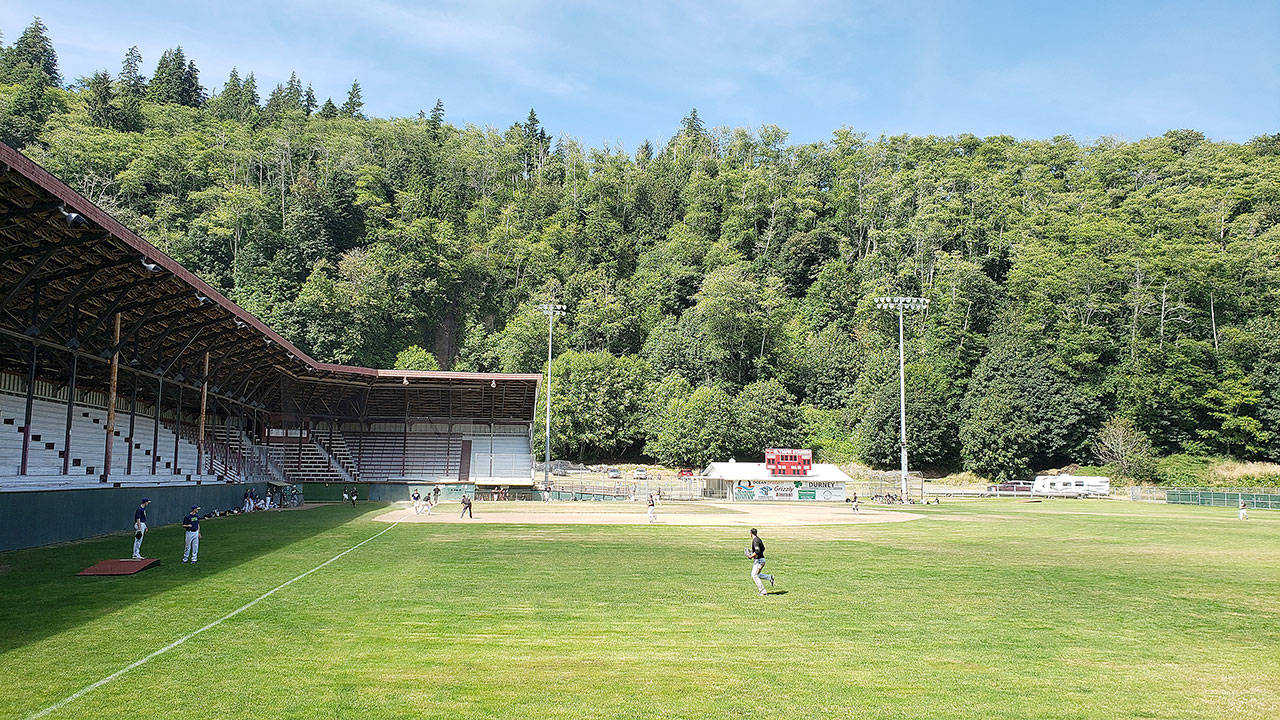
Enter Grays Harbor County, the city of Hoquiam and its crown jewel of a baseball venue: Olympic Stadium.
“We originally had announced an eight weekend schedule that had a rotating venue from week-to-week that was supposed to appeal to players across the Pacific Northwest,” Krueger said. “We didn’t have the relationship or the lease signed with the City of Hoquiam or Olympic Stadium when we were still in Idaho. It was still pending.”
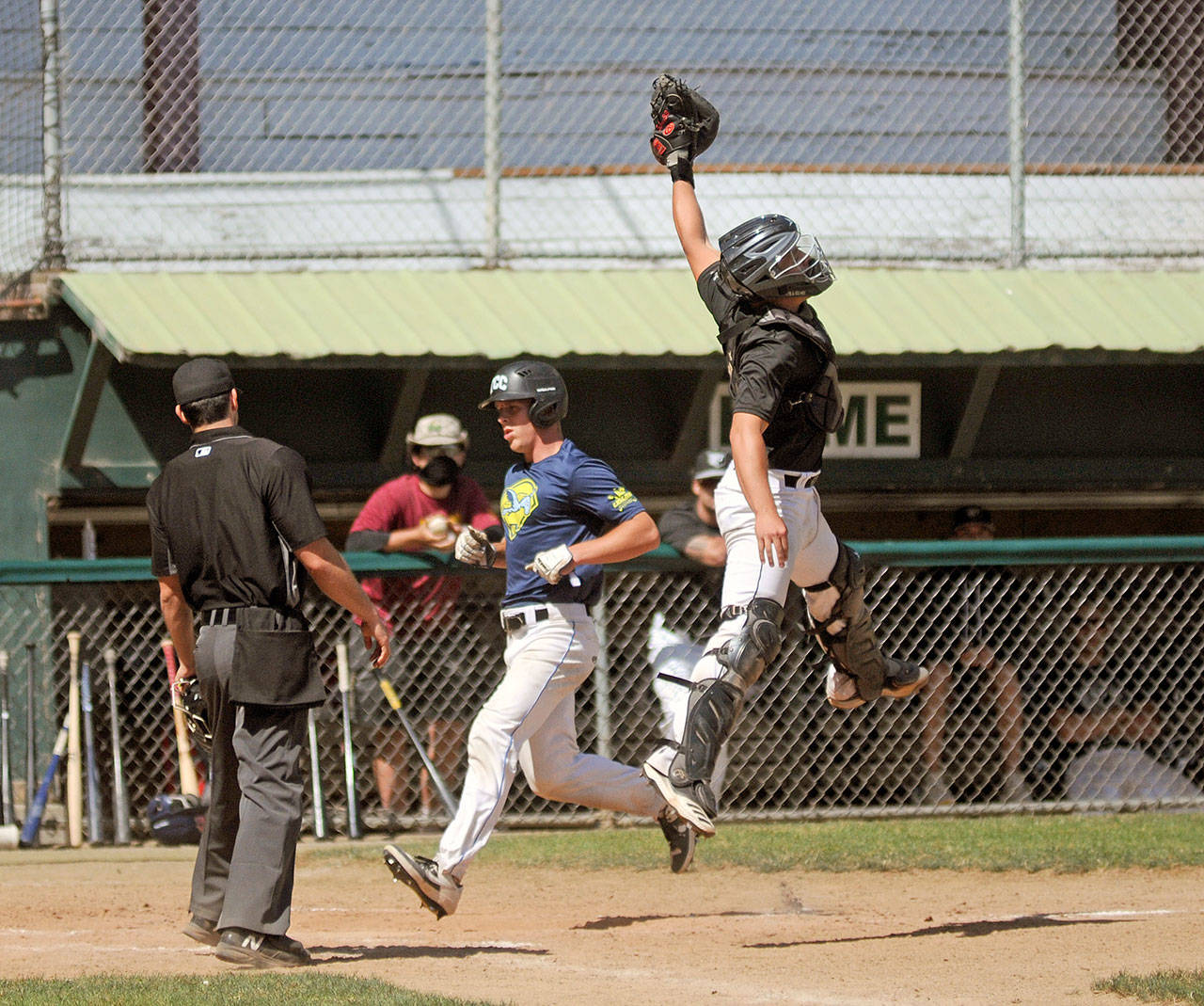
A player from the Sea Turtles scores as a throw home sails over the outstretched arm of a Barn Owls catcher during a Cascade League game on Sunday at Olympic Stadium in Hoquiam. (Ryan Sparks | Grays Harbor News Group)
But after the county was approved by the state to move to a Phase 3 re-opening, the league would be able to play its games, provided it takes into account all the proposed coronavirus security measures, which included playing with no fans in the stands.
Krueger was quick to point out some additional help from Grays Harbor College head coach Mike Bruner.
“(Bruner) ultimately was the one that gave us his blessing, supported us and pulled for us,” Krueger said before giving thanks to Hoquiam city officials as well. “This doesn’t happen if they don’t allow us to be here.”
As it turns out, Olympic Stadium was a perfect place to hold a season, as it sits within a few hours drive for the majority of its approximate 125 players, many of whom play for Northwest Athletic Activities Conference schools.
There are six teams with each team playing games on Saturday and Sunday.
The rich history of the venue was also an attraction.
“It’s been very well received (by the players),” Bader said. “I think they love it. They love the history of it. … I think it puts things in perspective for players and helping them understand it’s a staple of the Pacific Northwest and it’s a once-in-a-baseball-career opportunity to come play here and they get to play here for several weeks.”
The stadium is also optimal because of its location. With the majority of players located within a few hours drive, making any financial strain a little less impactful.
“A lot of these players and coaches, if they are spread out on the I-5 corridor, have a one-and-a-half to two hour drive,” Krueger said. “Even the Portland guys, it’s about a two-and-a-half hour drive. … But there are some players that have drove a long way.”
To compensate, the Twin Harbors community has stepped up when and where it can.
“You have guys that are opening up their college apartment, or families that allow players to sleep in a guest room,” Krueger said, adding that as the league progresses in the future he envisions a bond forming between it and the community. “Later, down the road, if you have a really strong fan and community presence and buy-in and folks that come and support all six affiliates, that can be something down the line where that could be in the cards.”
Further developing the connection between the community and the league may have to wait until next season, as fans are not allowed at the games unless the county is approved to move to Phase 4 of the re-opening, and nothing in the near future points to Gov. Jay Inslee allowing for a Phase 4 re-opening by the time the league holds its playoffs Aug. 14-16.
Though Krueger and Bader are chomping at the bit to get fans in the stands and create an all-out summer baseball experience for the community, they are currently focused on the league’s purpose: player development.
“At the end of the day, we want this league to have a big-time emphasis on development for these players,” Bader said. “No matter how awesome of an opportunity it is to fill the seats here, we always need to put player development first, and that means we need to make sure the league can operate from a game day standpoint. … Development has always been our first emphasis with this league.”
Judging by the reaction received from the players, their families and coaches, all of whom were denied a full season in the spring, the chance to just play again has been a blessing.
“I think after they realized we are running a tight ship (regarding COVID protocols and safety) we’ve got a lot of social media comments of people saying ‘Wow, I can’t believe you are doing this,’ and I think they really appreciate everything,” Bader said. “The response overall has been very positive and I’m just happy that we are one of the few in this area to be able to play baseball and we’re fortunate to have the opportunity to get these guys to continue developing their game when a lot of other guys aren’t able to.”
Krueger and Bader added they’ve been thrilled with the reception they’ve received by the city and hope to see a similar reaction once they are able to open up for fans.
“We’re presenting an opportunity for the future for the entire community to come watch this once things re-open. … This can be something that stays for a long, long time,” Krueger said. “The product on the field is only going to get better, we’ll have stuff for kids and entertainment — family friendly and affordable entertainment. We think it’s something this economy and this market could use. So it’s a perfect match and we’re just really fortunate they welcomed us during this crazy pandemic.”
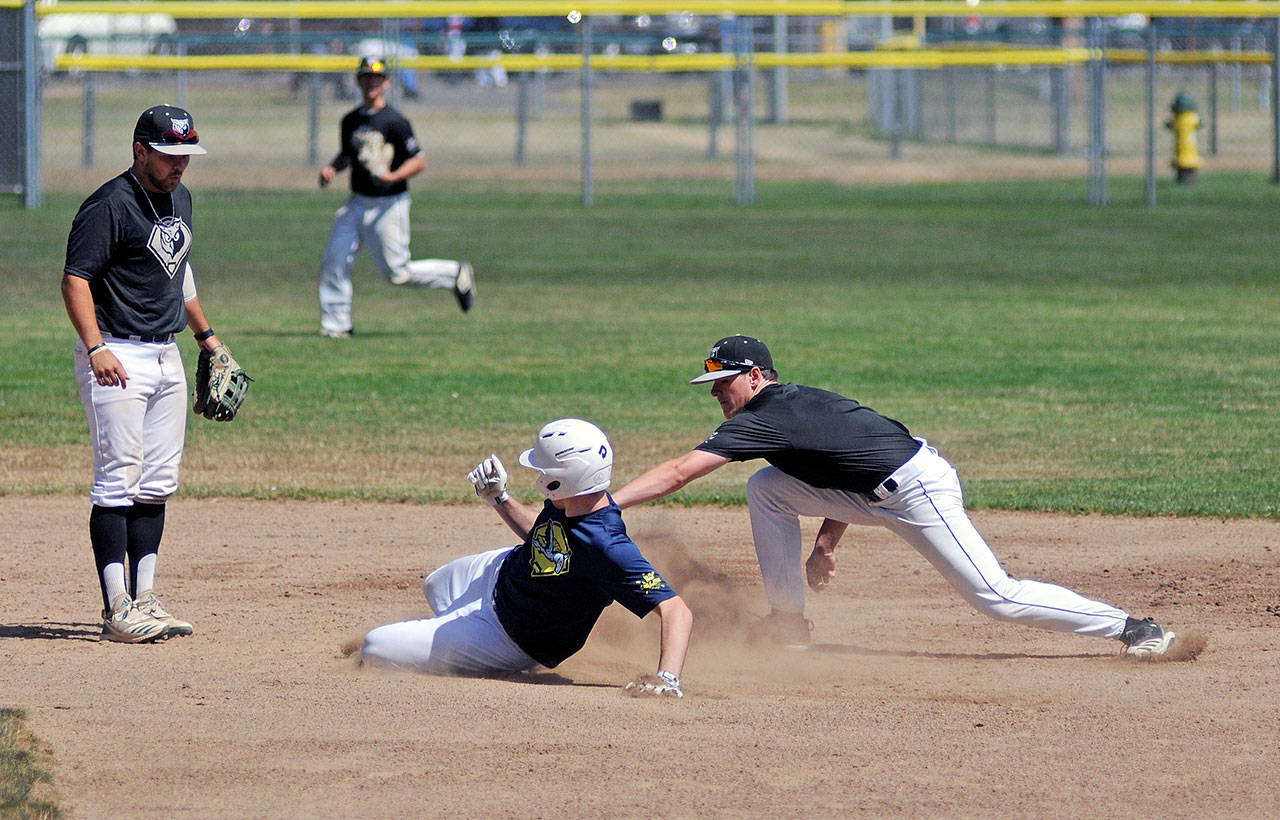
A player from the Sea Turtles slides in ahead of the tag from a Barn Owls infieder during a Cascade League game on Sunday at Olympic Stadium in Hoquiam. (Ryan Sparks | Grays Harbor News Group)