The Washington State Salmon Recovery Funding Board and Puget Sound Partnership announced on Wednesday the award of more than $61 million in grants to 155 projects across the state aimed at restoring salmon habitat.
“These grants fund important work,” said Jeff Breckel, chair of the Salmon Recovery Funding Board. “They are funding organizations to undo the damage we have done to our rivers, bays and shorelines in the past and helping us make our waterways more hospitable to salmon.”
As Washington’s population grew, the number of salmon dwindled. By 2000, the federal government had declared wild salmon and steelhead species in nearly three-fourths of the state as threatened or endangered. The Legislature created the Salmon Recovery Funding Board in 1999 to determine how best to distribute state and federal funding to recovery projects.
The grants fund a range of projects, from planting trees on riverbanks to shade and keep the water cool for salmon, to removing pipes that carry rivers under roads and often get clogged or are too high for salmon to reach, to digging channels off fast-flowing rivers to create slower moving water where fish can rest.
Grays Harbor projects
Restoring the banks of the West Fork Satsop River
$356,192
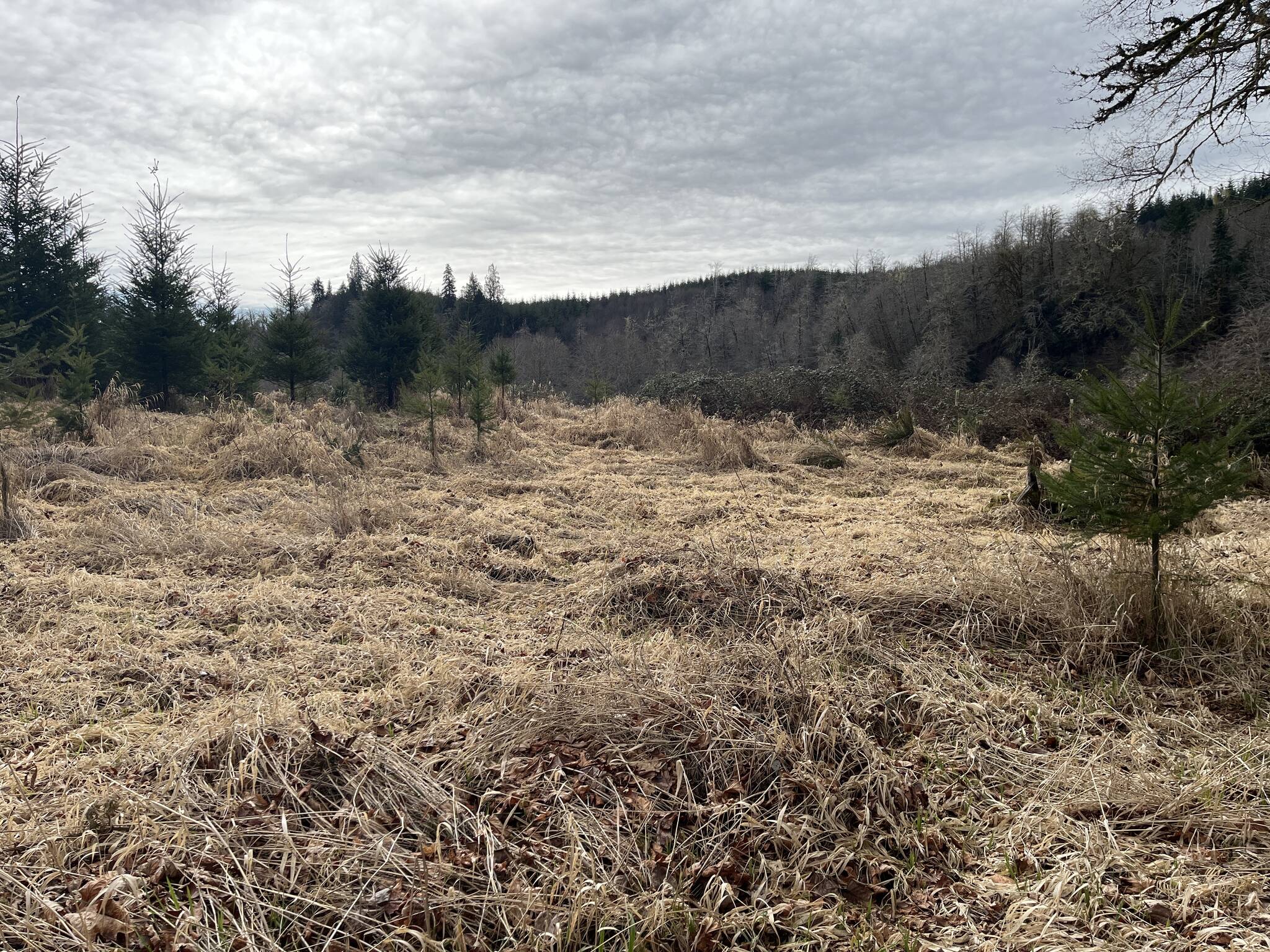
The Grays Harbor Conservation District will use this grant to restore and maintain nearly one mile of habitat along the banks of the West Fork Satsop River.
The conservation district will mow grass and apply mulch to reduce weeds and promote tree and shrub establishment of recent plantings funded by the Conservation Commission on 12.6 acres. The conservation district also will install 2,350 native trees and shrubs on 5.6 acres of pasture grasses, reed canary grass, and blackberry. This work will be followed up with stewardship mowing and mulching.
Currently the area lacks mature trees and shrubs along the riverbanks. Planting trees and bushes along a waterway shades the water, keeping it cool for fish. Mature plants drop branches and leaves into the water, which provide food for the insects that salmon eat. Finally, the roots of the plants keep soil from entering the water, where it can smother fish spawning gravel.
The Satsop River is used by Chinook, chum, and coho salmon and steelhead trout.
Opening fish passage in a Raft River tributary
$249,602
The Wild Salmon Center will use this grant to replace an undersized culvert that blocks fish passage in an unnamed tributary to the Raft River, opening access to nearly a quarter-mile of spawning and rearing habitat, including seventeen acres of forested wetlands.
Culverts are pipes or other structures that carry streams under roads and block fish passage when they are too small or too high. The tributary and river are used by bull trout, which is a species listed as threatened with extinction under the federal Endangered Species Act, and by steelhead, resident, and sea-run cutthroat trout, and coho salmon.
Restoring the banks of the Upper Quinault River
$235,955
The Quinault Indian Nation will use this grant to remove invasive plants and maintain more than 925 acres along the upper Quinault River for the next three years.
Crews will add plants where needed and plant an additional nearly 139 acres. The river is used by bull trout, which is a species listed as threatened with extinction under the federal Endangered Species Act, and by Chinook and sockeye salmon and steelhead trout.
Pacific County projects
Studying sediment movement in the Lower East Fork Grays River
$241,046
The Cowlitz Indian Tribe will use this grant to study the collection of sediment, creation of habitat, fish use, and entire stream changes following restoration in the lower East Fork Grays River.
The Tribe will look at more than four miles of restored habitat in Pacific County. This project provides an unprecedented opportunity to learn from the effects of intensive and extensive restoration efforts.
Designing improvements to habitat in the Upper Willapa River
$300,000
The Pacific Conservation District will use this grant to conduct analysis, complete designs, and prepare permit applications for a project to restore habitat in at least two miles of the upper Willapa River.
Multiple landowners have expressed interest in improving the river and its banks for the long-term health of the river and alignment with their land-use practices. The district already is working with landowners to plant trees and shrubs along the banks and to install livestock exclusion fencing.
The creek is used by Chinook and coho salmon and steelhead trout.
Planting trees and shrubs in the Rue Creek watershed
$77,450
Willapa Bay Fisheries Enhancement Group will use this grant to plant trees and shrubs in the Rue Creek watershed, south of Rue Creek Road in Raymond.
Logging has left the banks of Rue Creek dominated by a single type of tree-alder. The valley floor along West Fork Rue Creek was a spruce-dominated forest until the mid-1990s, when logging and storms left few trees standing. Now, the valley floor is dominated by beaver dams and extensive reed canary grass.
The fisheries enhancement group will plant 48 acres with different types of trees and shrubs to diversify the habitat.
The river is used by Chinook and chum salmon and steelhead trout.
“Projects are based on federally approved salmon recovery plans and selected as priorities by local groups who know their waterways the best,” Breckel said. “Salmon recovery is painstaking work and requires long-term investments of money, time and resources. But with each project, we move a step closer to recovering salmon and helping not only the fish but all the other wildlife that depend on them, including our endangered Southern Resident orcas.”
Salmon is a keystone species upon which many other animals rely. One report documented 138 species of wildlife, from whales to flies, that depend on salmon for their food. In addition, salmon fishing is important to Washington’s economy. Commercial and recreational fishing in Washington is estimated to support 16,000 jobs and $540 million in personal income.
“We see many benefits to investing in salmon recovery,” said Megan Duffy, director of the Recreation and Conservation Office, which administers the grants for the funding board. “When we restore our rivers for salmon, we also are reducing flood risk, restoring habitat impacted by wildfire, adding carbon-storing trees to help build climate resilience and helping local businesses that rely on fishing for tourism and jobs.”
Every $1 million spent on forest and watershed restoration generates between 15.7 and 23.8 jobs. About 80% of that funding stays in the county where the project is located, helping many rural communities. Salmon recovery projects also help Washington state uphold treaty-reserved fishing rights for Indian Tribes and ensure salmon are present and available for harvest.