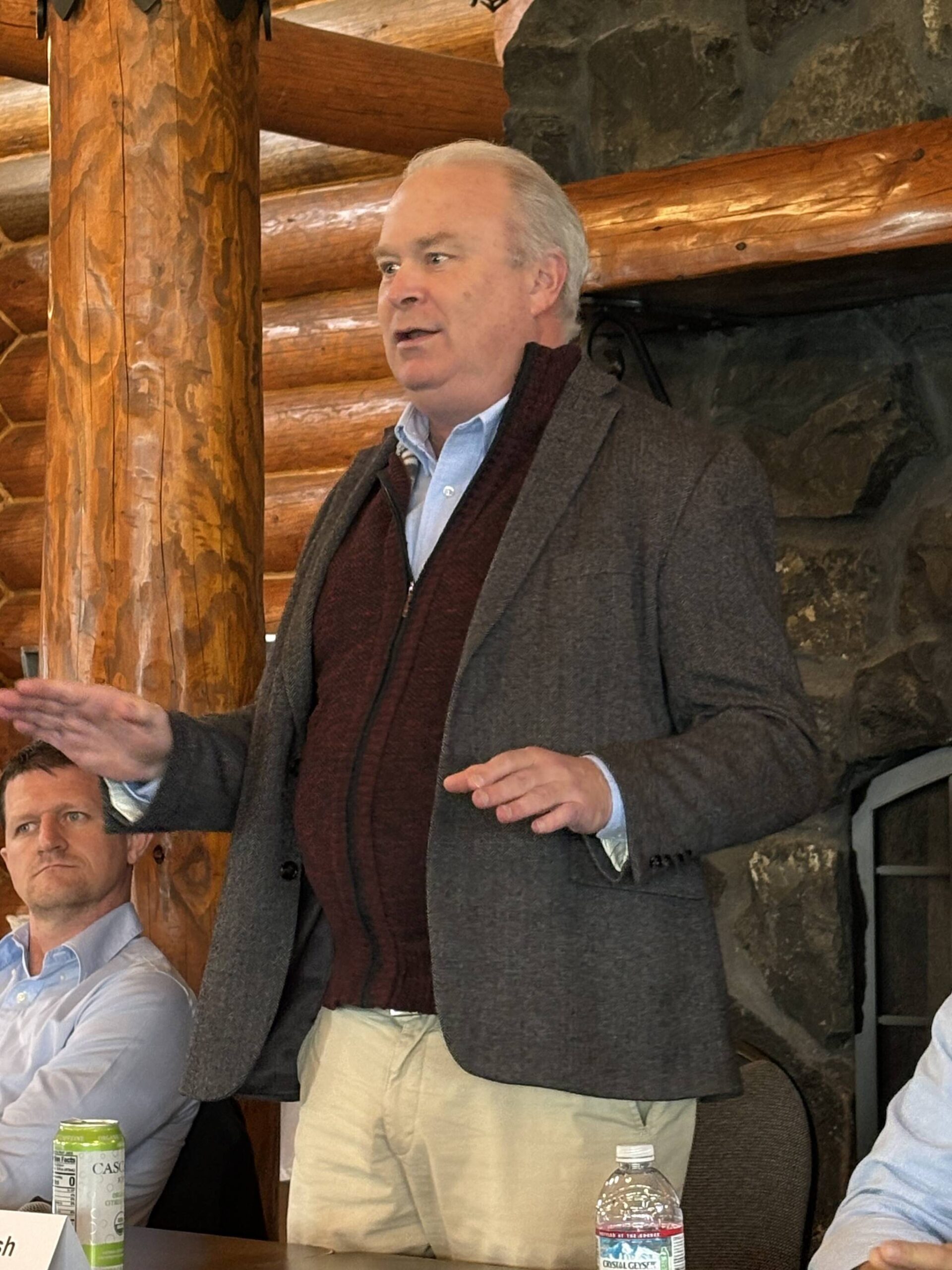
Last Friday, Greater Grays Harbor, Inc. (GGHI) hosted a luncheon featuring five of the six state lawmakers who represent residents of Grays Harbor County ahead of the start of the 60-day legislative session, which commenced this past Monday.
Sen. Mike Chapman, D-District 24; Rep. Adam Bernbaum, D-District 24, Position 1; Sen. Jeff Wilson, R-District 19; Rep. Jim Walsh, R-District 19; and Rep. Joel McEntire, R-District 19 Position 2 participated in what can only be described as a spirited discussion about the state budget, taxes, pre-filed bills, permitting reform and turning down the temperature when it comes to political violence and rhetoric. Rep. Steve Tharinger, D-District 24, Position 2, is recovering from hip surgery and was unable to attend.
The sold-out event at the Rotary Log Pavilion in Aberdeen was packed with elected county and city officials, city administrators, Port of Grays Harbor and Grays Harbor PUD officials, leaders of non-profit organizations, educators, hospital and healthcare administrators, media members and business leaders.
GGHI Board of Directors Chairman Kyle Pauley once again served as the master of ceremonies as the event began with opening remarks from GGHI CEO Darrin Raines and Emily Shay, state lobbyist at Gordon Thomas Honeywell Government Relations and a government affairs specialist for Greater Grays Harbor, Inc. Shay, who also lobbies for select issues for the cities of Westport and Hoquiam in Olympia, laid out priorities for this session including permitting processes, business sustainability, the expansion of rural housing and the support for associate development organizations (ADO) for economic development.
“It’s a short, 60-day session, and it’s often appropriate to do a non-budget year, since the Legislature makes adjustments to the two-year budgets. These adjustments are called supplemental budgets. In short sessions, the Legislature typically does not tackle controversial issues, because the entire House of Representatives and half the Senate will be on a campaign trail in preparation for the November general election,” Shay said. “Many of you may have seen the news highlighting the state’s ongoing budget shortfall, which is further complicated by reductions in federal funding. The release of the governor’s budget is the beginning of the process and it will continue throughout the legislative session. Because the budget deficit is so large and the Legislature just raised taxes in 2025, it’s anticipated to be a grueling budget process.”
According to the Washington Policy Center, Gov. Bob Ferguson is proposing a 9.9% tax on income over $1 million, while closing a $2.3 billion gap that includes $797 million in savings due to cuts for public agencies and a $1 billion withdrawal from the state’s “rainy day” fund, and an increase in business taxes. The governor is also proposing using $569 million in Climate Commitment Act (CCA) revenue to fund the Working Families Tax Credit and spending $3.2 billion for new ferries and infrastructure.
After opening remarks, each lawmaker was given the opportunity to outline their priorities and thoughts on the session. Sen. Chapman was up first.
“I’m going to just put on the record because I suspect not everybody will agree with this, but I think Governor Ferguson laid out a good, reasonable budget road map this year. He’s made some cuts and those cuts are probably going to stay in place. And so we’re not going to add back spending. The governor has laid out a budget that puts us on a better glide path going forward. Generally, governor budgets are dead on arrival. This is a ‘cuts’ budget. It’s significant cuts,” Chapman said. “And for those of you that the last few years thought we were spending too much this should be good news to you that the governor is putting forward a plan to live within our means in this state while working with the business community so that we can continue to have a good economy. So, I’m one of the early few legislators that are saying, I’m on board with Governor Ferguson’s plan. I’m not going to request money that he cut to be put back in the budget. I’m not going to work to pass new legislation out of my committee that adds spending. We have got to live within our means, and he’s laid out the pathway to do that.”
Sen Wilson, however, did not agree.
“I’m the opposite of what you just heard. Get ready for some more of the bad news bears. This should be no surprise. I’m shocked at the media that plays this into this big budget battle. This has been brewing for years with the way that we have spent your money. And it’s funny that this year, the focus seems to be how to get more money from you or from somebody else,” Wilson said. “How about we look at quitting spending money on things that we shouldn’t be spending money on? How about we look at the F word, the frauds? Why don’t we run government responsibly like we would in the private sector? I am prepared to do battle this year. I don’t want to do battle. I want the community, Gray’s Harbor community, I want the state of Washington to be successful instead of the path that we’re going on. Washington needs to be open for business. It needs to be business friendly. I don’t want to sugarcoat this. It’s going to be a very ugly session. I don’t want it to be. I’m not looking forward to it.”
Rep. Walsh also contradicted Chapman’s assertions.
“I’m going to disagree with Senator Chapman probably a lot today, but one of the things he said is this is a ‘cuts’ budget that the current governor proposed. That’s only if we consider a cut to the rate of increase in spending as a cut. I do not. I think if a proposal from the current governor is still increasing overall spending, that is not a ‘cuts’ budget. Now, the point here is we don’t need a ‘cuts’ budget,” Walsh said. “My position and the position of most of the fiscal conservatives in Olympia is we don’t need to cut the current operating budget amount. We just need to hold it. Don’t increase it. And within the $78 or $79 billion in the two-year cycle, reorganize, re-prioritize, shift money within the existing operating budget. We can spend your money more effectively than we do without cutting any program in the operating budget. It just takes tough choices. Our position is to make sure the voice of the people of this state gets heard, not just agency heads and special interest groups. There are controversial constitutional and legal issues around the hair-brained tax schemes that we’ve been hearing about in Olympia, and we’re going to fight those tooth and nail.”
Rep. McEntire was a bit more specific with the gloom and doom.
“I believe when I was here last, I said something very close to ‘the appetite of government is insatiable’ or something like that. But there’s no amount you can pay in taxes, which you will ever find a government that will say, that’s enough. We don’t need any more. There’s always a demand for more and the demand will go as far as the public will allow it,” McEntire said. “The operating budget has exploded over the last decade and the goal is over the next decade to explode it again, have it doubled again. If you’re not in Olympia every day during session and talking to the folks that are in these rooms, the goal is to extract as much tax revenue out of you as possible before you grab torches and pitchforks and have a riot. There is an emboldened feeling that the time for an income tax is now, being that we had a debate about something called capital gains tax, which some people get their income through capital gains. That is how they derive their income. And when voters failed to repeal that, they said, ‘look at that, voters love income tax.’ This is what they voted for.
“I hope you’re ready for an income tax. It’s coming to you. Right now they’re not calling it an income tax because that still has a little bit of damaging sound to it. So they’re calling it a millionaire’s tax. The plan is that once we get a millionaire’s tax in, we will lower the threshold and boil the frog so slowly. Eventually you will be included in that. You will pay the income tax before you know what happened. So that is the plan, is to bring about an income tax to Washington state to increase our budget to the maximum that we can. I don’t know if you’re okay with that. I’m not. The thing is, that the governor doesn’t even write the actual budget anyway. So, while he might be the most fiscally conservative guy in the room, the actual budget writers are far, far more willing to raise taxes than the governor. And he has shown that he won’t put up any resistance. When it comes to his desk, he will sign it just like he did last time.”
Rep. Bernbaum tried to lighten the mood while acknowledging the challenges that Washington lawmakers are facing in the days and weeks ahead.
“Just for a palate cleanser, I’ll try and end on a slightly cheerier note. Not to say that anything anybody said is wrong, we’re all right all the time. One of the nice things about being a new member of the Legislature is you get to spend a lot of time talking to people. A lot of people reach out to you just because you’re new and they want to tell you about their issues. You spend a lot of time on the campaign trail having discussions with members of the public about what they care about,” Bernbaum said. “And I overwhelmingly heard from all the corners of the district one theme about what they cared about, and that was affordability. Making things more affordable isn’t easy. One thing I did not hear many people say is that they want to see cuts to services. I’ve never heard a constituent say that they want less funding to go to schools, that they want to have a less well-funded hospital system. So we do need to find efficiencies. I’m looking forward to having a conversation with Republicans and Democrats alike about what that looks like.”
The rest of the debate at the luncheon centered around taxes, notably the proposed income tax, and a concerted effort to not add any additional spending to the supplemental budget.
In March of 2025, Becca Most of The News Tribune wrote that in 1933 the Washington State Supreme Court ruled that a state income-tax initiative approved by voters was unconstitutional because it did not uniformly tax a class of property (in this case, income). Pennsylvania is the only other state besides Washington that deems income to be property, according to the state Department of Revenue as of 2022. Other states that don’t have an income tax include Alaska, Florida, Nevada, New Hampshire, South Dakota, Tennessee, Texas and Wyoming.
An amendment to the Washington state constitution would have to be made before an income tax could be implemented.
GGHI weekly updates:
GGHI is offering a member-exclusive opportunity to join virtual calls with lobbyists and members of the Coastal Caucus to hear updates on the legislative session, budget development, and priority policies for our region each Friday starting this week through March 6.
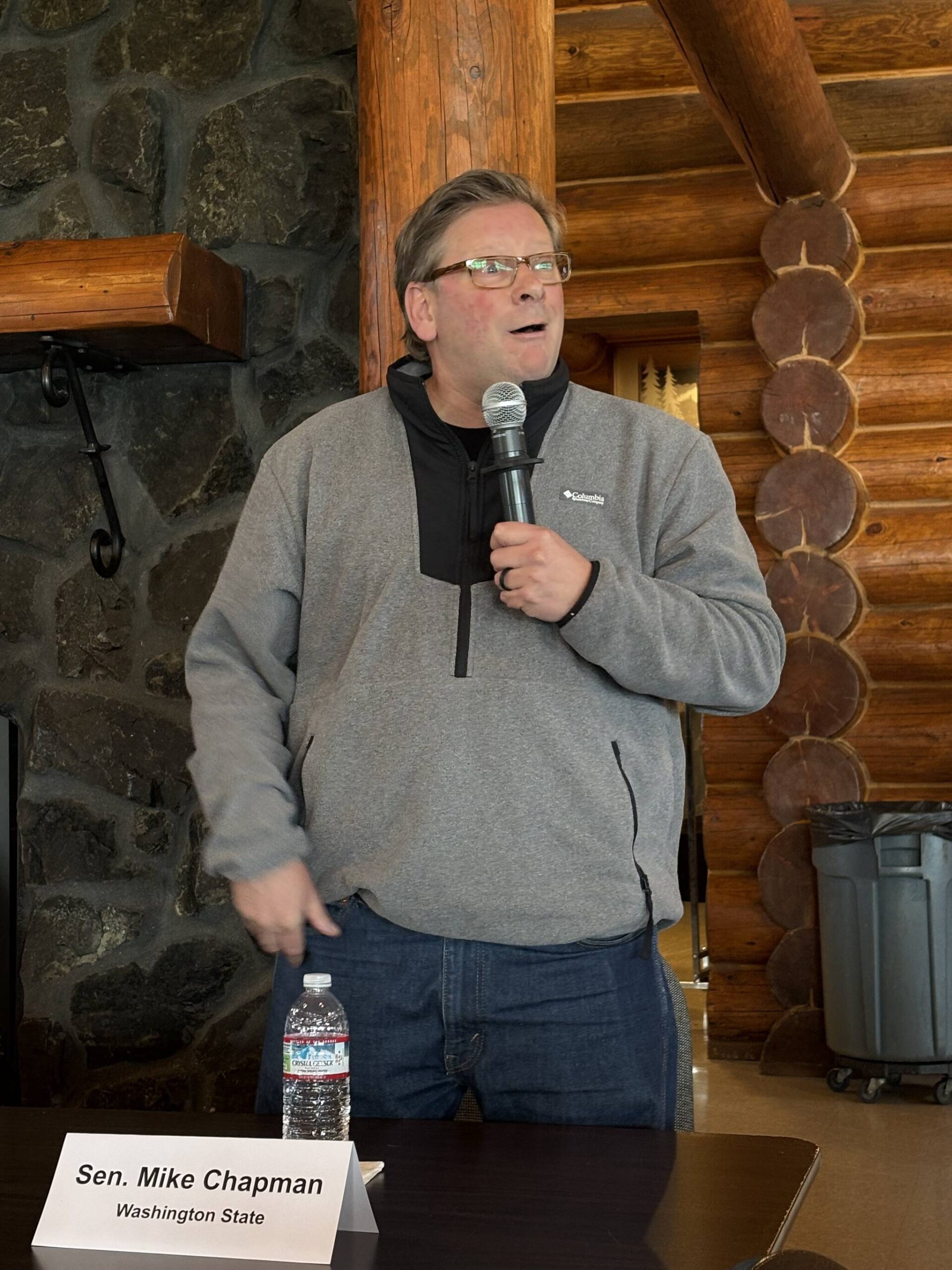
Jerry Knaak / The Daily World Sen. Mike Chapman speaks at the Greater Grays Harbor, Inc. Coastal Caucus luncheon at the Rotary Log Pavilion in Aberdeen.
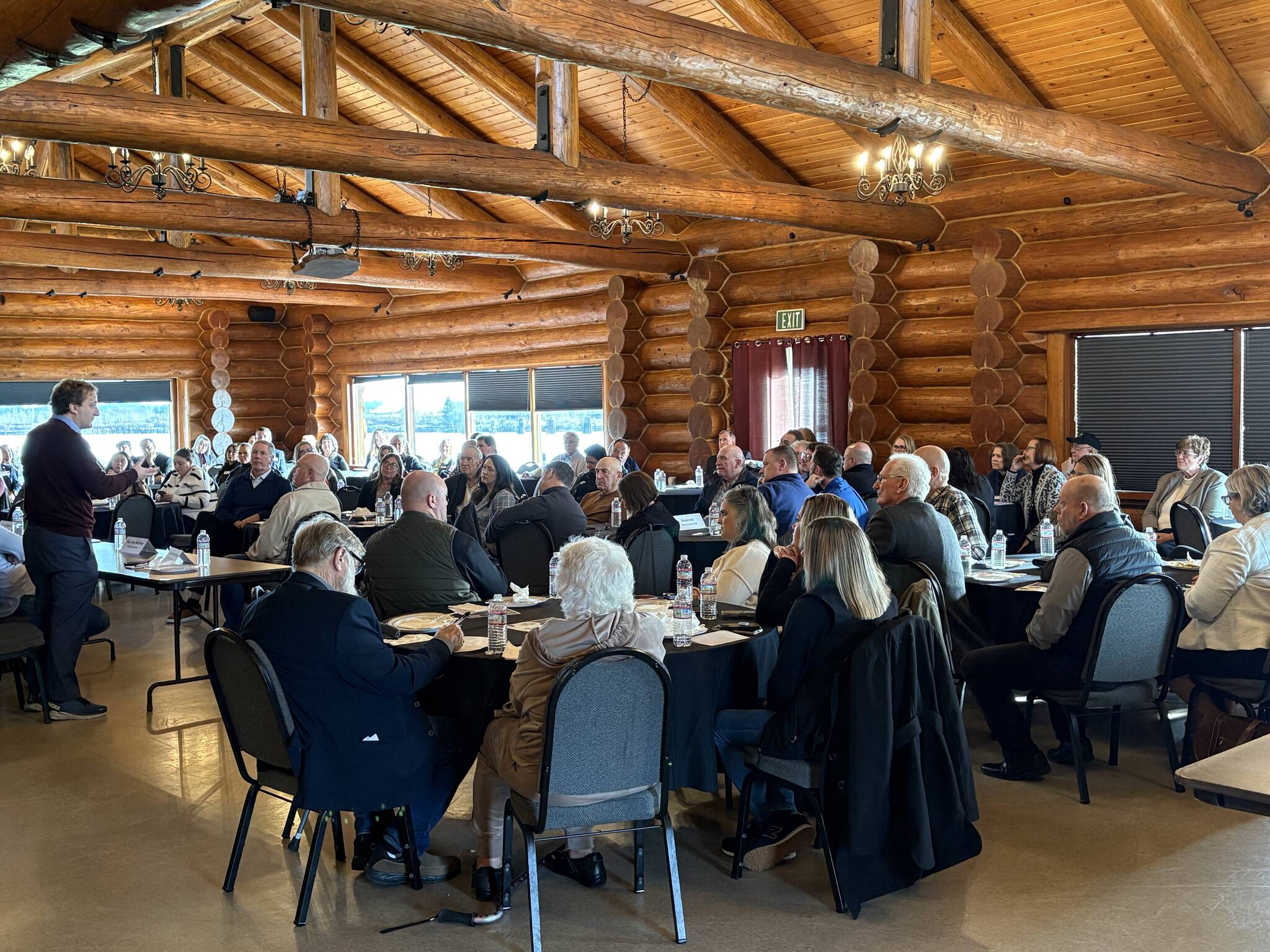
Jerry Knaak / The Daily World A packed house at the Greater Grays Harbor, Inc. Coastal Caucus legislative send-off at the Rotary Log Pavilion in Aberdeen.