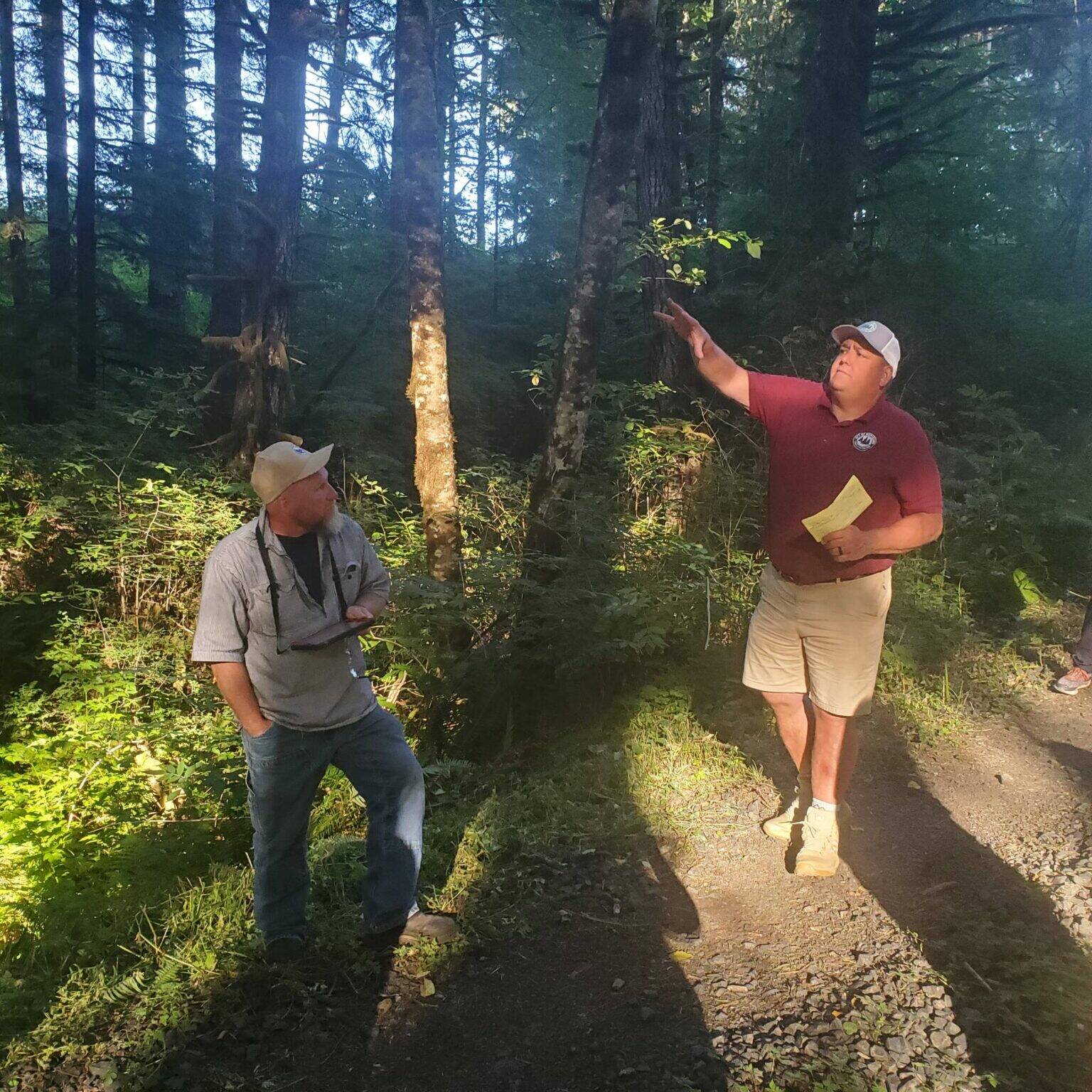
The House Agriculture and Natural Resources Committee showed a lively interest in repealing a rule that will lock up 200,000 acres of timber in Western Washington, including Grays Harbor and Pacific counties.
The committee held a hearing Feb. 3 on House Bill 2620, sponsored by a mix of conservative Republicans and progressive Democrats.
The bill targets the Forest Practices Board’s decision in November to widen and lengthen riparian buffers along streams without fish. The bigger buffers will eliminate $2.8 billion worth of timber, a University of Washington analysis estimates.
The rule barely passed, 7-5. HB 2620’s prime sponsor, Rep. Tom Dent, R-Moses Lake, said it should be replaced with something that can get more than a bare majority.
“Where we go wrong in our country and our culture is when we don’t work together,” he said.
Board members, drawn from state agencies and interest groups, adopted the bigger buffers after years of study. The state Department of Ecology has one vote on the board, but played a dominant role in passing the rule.
The buffers, which go into effect Aug. 31, are needed to keep logging from raising water temperatures in most cases, according to Ecology.
Timber groups say Ecology’s no-increase-in-water-temperature standard is humanly impossible to meet. What matters is that water temperatures stay cool enough for fish downstream, they argue.
Forest landowners and the Washington State Association of Counties suggested buffers that would take 44,500 acres out of production. The forest board didn’t consider that option.
According to HB 2620, the forest board deviated from the 1999 Forest and Fish Law, a landmark agreement that sought to recover salmon and keep the timber industry strong.
Timber groups said they didn’t ask for the bill. “But, boy, are we glad it’s here,” Washington Farm Forestry Association executive director Elaine Oneil said.
Lawmakers rarely intervene and repeal regulations. HB 2620 has formidable opposition. It’s opposed by tribes, environmental groups and Ecology.
“The science is clear. Non-fish bearing streams need more trees to remain cold and healthy,” Ecology water-quality program manager Jon Kenning told the committee.
The bill has another roadblock. The Department of Natural Resources projected that repealing the rule and studying a new one would cost $2.2 million over three years, mostly for consultants.
Nevertheless, committee members dug in and tried to understand an unfamiliar issue with a long procedural history. Rule supporters said the process led to “consensus,” but there was no consensus on that.
“The concerns of communities across the state were dismissed and viable alternatives were ignored,” Washington Forest Protection Association policy associate Matt Doumit said.
Two Republicans and three Democrats signed on as co-sponsors to Dent’s bill. Co-sponsors include Seattle Democrat Shaun Scott, the first socialist elected to the Washington Legislature since 1912, according to his legislative website.