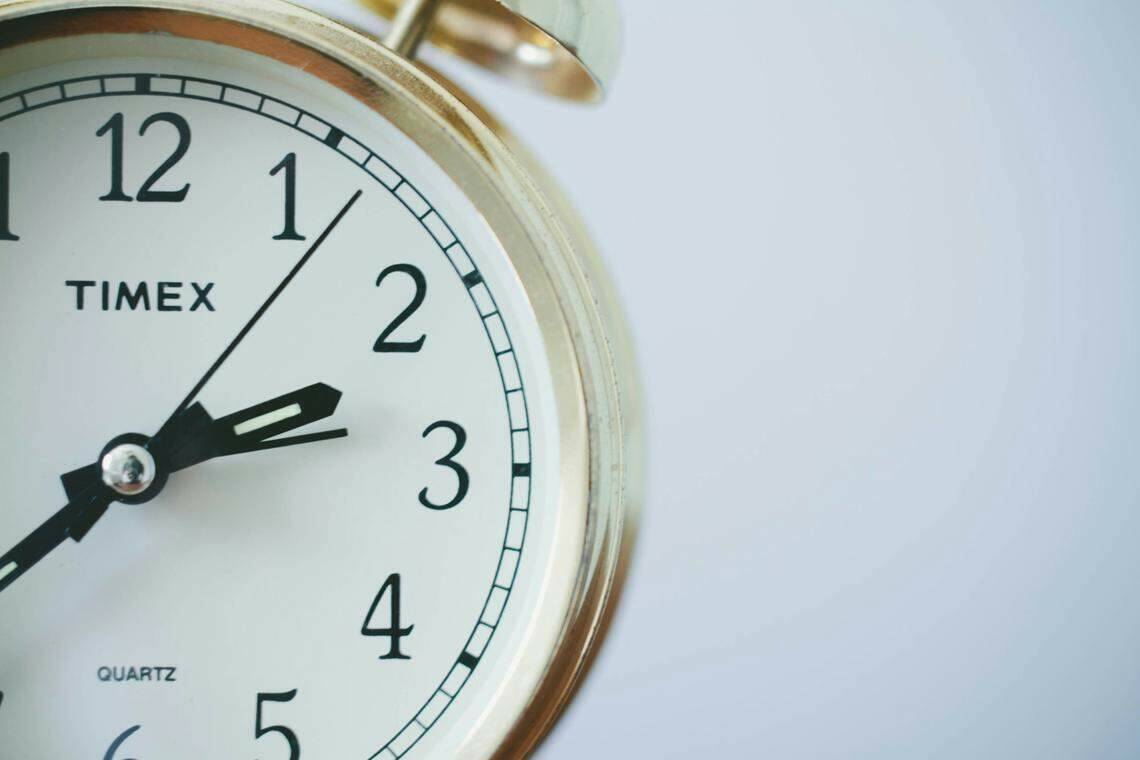
Daylight saving time is coming to an end soon in Washington state.
Although some people are excited about gaining an extra hour of sleep, others are eager to do away with the time change altogether. Could this the last time we set our clocks back?
President Donald Trump has publicly called for the elimination of daylight saving time, describing the practice of adjusting clocks twice a year as “inconvenient, and very costly to our nation.” Multiple lawmakers across the United States have also tried to do away with the biannual time switch.
Clocks are scheduled to “fall back” on Sunday, Nov. 2, 2025, as part of daylight saving time.
When does daylight saving time end in 2025?
Daylight saving time ends across most of the United States on the first Sunday of November, according to online world clock Time and Date. Clocks will “fall back” by one hour at 2 a.m. Sunday, Nov. 2. Although some clocks — such as smartphones and web-enabled home appliances — will automatically update to 1 a.m., you may need to set some devices back an hour manually to reflect this change.
Sunset will occur one hour earlier once the time shift takes place, resulting in less daylight in the evenings and more light in the mornings. The days will keep getting shorter as the winter solstice — Sunday, Dec. 21 — nears, according to the Old Farmer’s Almanac.
Why do we observe the fall time shift?
The practice of resetting clocks and watches twice a year dates back to the passage of the Standard Time Act in 1918, according to the U.S. Naval Observatory. The law was repealed a year later and not reinstated until after World War II.
Participation in daylight saving time has been standard across much of the United States since 1966, when the Uniform Time Act was enacted. The act followed the creation of the U.S. Department of Transportation, according to the Bureau of Transportation Statistics. It mandated standard times and the observation of daylight saving time across the country, with a specific opt-out option.
Which U.S. states don’t observe daylight saving time?
Some states and U.S. territories don’t change their clocks twice a year, according to the federal Department of Transportation.
“Under the Uniform Time Act, states may choose to exempt themselves from observing daylight saving time by state law,” the U.S. Department of Transportation said on its website. “States do not have the authority to choose to be on permanent daylight saving time.”
Under federal law, states and territories are not able to enact permanent daylight saving time. Instead, they observe permanent standard time. Attempts have been made to update these standards federally, but none have made it through the legislative process.
When will Washington get rid of clock change?
Washington is among a handful of states that passed legislation to immediately make daylight saving time permanent should federal standards be updated. Former Washington Gov. Jay Inslee signed off on the time change update in 2019.
The following year, Idaho Gov. Brad Little signed a bill enforcing a “Pacific daylight saving time” in parts of Idaho. Per the legislation, changes to Washington’s observation of daylight saving time would be echoed in certain parts of the Gem State.
As of 2025, no concrete steps have been taken to update federal guidelines, stalling any impact of the legislation in Washington and Idaho.
When do clocks spring forward in 2026?
Unless there is a change in legislation, daylight saving time will begin again on March 8, 2026. At that point, Washington residents will “spring forward” by setting their clocks and watches forward one hour.