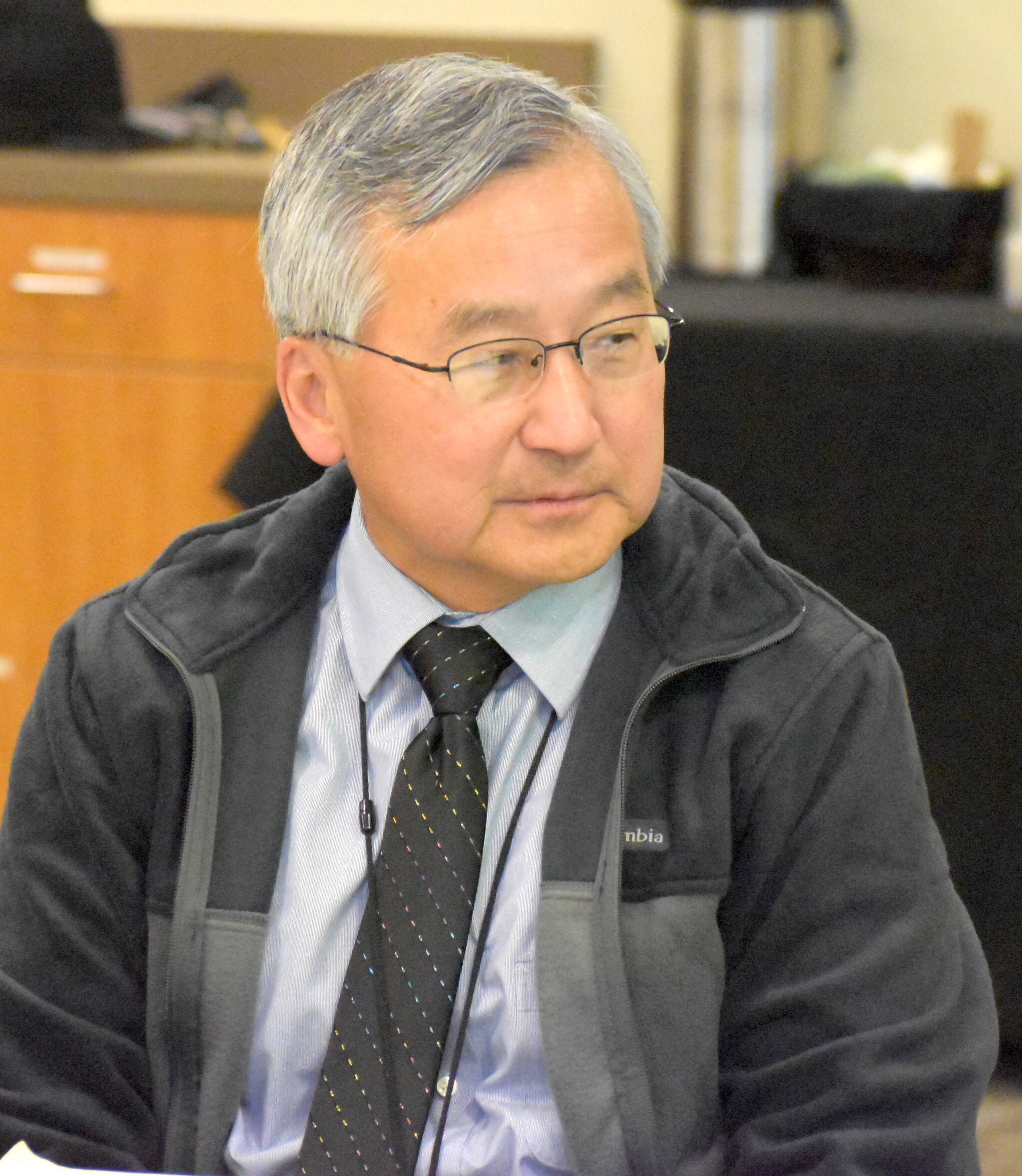
On March 31, under the direction of consultant Thomas O’Connor, the Board of County Commissioners, consisting of Georgia Miller, Rick Hole and Vickie Raines, along with County Administrator Sam Kim and Clerk of the Board Wendy Chatham, kicked off a series of strategic planning retreats that concluded on July 9.
According to Kim, it’s all about problem solving.
“I’m an engineer by trade and by education and one of the things that I love about engineering is we’re problem solvers, whether people want their problem solved or not, I’m going to solve that problem,” Kim said. “So, instead of having these (arguments) and all the theatrics that go with that, let’s solve real problems for our people. And if we can just focus on that, I believe that we can do a tremendous amount.”
“Strategic planning” might be a bit of a misnomer, however, as the trio of commissioners, two of which were newly elected, needed to do the basic work of learning how to communicate with each other within the confines of the rules of their elected office and work together to accomplish county business.
Through a series of offsite meetings held in Hoquiam, Elma and Montesano, the commissioners participated in a variety of exercises and activities with the ultimate goal of developing mission and vision statements, and a set of values for Grays Harbor County, while involving and sharing their work and findings with other elected officials and cabinet members.
Chief Deputy Auditor Ricardo Espinoza, Chief Deputy Treasurer Shawn Hill, County Clerk Kym Foster, Budget Manager Andree Harland, HR Manager and acting Chief Financial Officer Rob Bouffard, Public Health Director Mike McNickle, and Director of Utilities, Facilities and Community Development Mark Cox all attended the July 9 session at Montesano City Hall.
Developing effective communication, understanding personality types and learning conflict resolution skills were all part of these workshops. According to Kim, progress has been made at these sessions because of the buy-in from the participants.
“This is the best job I’ve had because the Commissioners are united,” Kim said. “Even if we disagree, even if we challenge each other, we’re working together toward solving the problem, toward the resolution, toward doing the very best thing that our county residents deserve. We should have these disagreements reflecting all of the different things we could be doing and then coming to a conclusion where even if you voted against it, you’re still going to support it. The Commissioners are modeling that which I’m incredibly grateful for.”
District 1 Commissioner Georgia Miller echoed Kim’s sentiments regarding disagreements and finding a way forward to make smart, efficient decisions.
“I’m really enjoying the process of strategic planning. It’s pushed me to dig deep into understanding how the county functions and what our true obligations are to the community,” Miller said. “While our board doesn’t always agree on every issue, we’re working effectively together and having meaningful discussions, always united by a shared commitment to being good stewards of taxpayer dollars and making decisions that will benefit Grays Harbor for generations to come.”
Grays Harbor County Public Health Director Mike McNickle is excited the Board of County Commissioners has included health in the vision for the county.
“I think it’s a great step forward. [The] Commissioners are on the Board of Health and by participating they can see the value,” McNickle said. “I think that’s where they’re heading, making sure that when you talk about transportation or housing or other things, the health issue just doesn’t go away. It’s always part of it. The importance of it is making sure it’s included in all those conversations. I’m glad. It makes me happy.”
These workshops were first proposed by Raines roughly 11 years ago, however a number of factors kept them from coming to fruition.
Kim said the reason it has taken so long to get this transformation off the ground is “there was never alignment. There was never agreement, there was no vision or mission, there was no North Star for us. We have started forming that North Star.”
One of the concepts introduced at the last session involves something known as Forming, Storming, Norming and Performing.
According to an article written for M.I.T. Human Resources by Judith Stein, “The most commonly used framework for a team’s stages of development was developed in the mid-1960s by Bruce W. Tuckman. Although many authors have written variations and enhancements to Tuckman’s work, his descriptions of Forming, Storming, Norming and Performing provide a useful framework for looking at your own team.”
“I thought we could do this in three days because I have done it in three days with others,” Kim said. “But with Grays Harbor County, it took doing so much more fundamental work of building a team, figuring out how we communicate, how we treat each other, what we do when we disagree. What we needed to learn how to do was argue well, how to have healthy debates without feeling injured just because you got outvoted. No, it’s part of a democracy at work.”
Another tool used to help attendees understand each other was a Dominance, Influence, Steadiness, and Conscientiousness (DiSC) assessment, which is similar to the Myers-Briggs Type Indicator assessment. According to DiSC Profile, “DiSC is a personal assessment tool used by more than one million people every year to help improve teamwork, communication, and productivity in the workplace. Organizations and facilitators use these profiles as tools to help ignite cultural change, inspiring lasting behavior changes that positively shape their workforce.”
According to Kim, DiSC assessments help define and understand personality types and why people act the way they do and make the decisions they do.
“It works for boss-subordinate relationships on how to manage your boss or how to manage your employee. It also works with how to relate to each other when you’re at the top,” Kim said. “As elected officials, you have all the power in the world, but you may not have any influence. It depends on what you know. Influence is earned as is respect. Do people listen to you or not? They may be forced to listen to you, because you have the power. What if we just treat each other as humans? How do we deal with each other? Take away the titles and figure out what works for us and what doesn’t.”
Kim said the end result of these workshops has been a willingness of the County Commissioners to step into the breach and work together to solve problems and serve the needs of the residents of Grays Harbor.
“These Commissioners run towards conflict because we have learned that’s how the best ideas are created. That’s how we make the best decisions,” Kim said. “It is an alien concept to most people, especially here at Grays Harbor County, where we did not do any of this. We chose flight or fight, which is normal. Now it is normal for us to have healthy debates. It may look like we’re arguing. But we are being productive. We’ll get better and better at it. But I think we’re at a point where we’ve set the standards. Dissent is actually welcome because we’ll make better decisions as a result.”
Kim added the goals are to increase economic development, create a holistic healthy ecosystem, foster education and workforce development, and continue to strengthen infrastructure in Grays Harbor County with county government paving the way and eliminating barriers to success.
The official Grays Harbor County mission and vision statements and values are as follows:
Mission
Effectively provide foundational services to enhance quality of life, encourage economic growth, and unify our community as one Grays Harbor.
Vision
Be the foundation of a thriving community as seen in the pillars of:
Financial stewardship
Housing
Criminal justice, public safety and public health
Economic development
Service orientation
Values
Transparency — Open government, inclusive, accessible, responsive
Stewardship — Balanced budget, efficient, asset management, procurement
Leadership — At all levels, cohesive, positive culture, planning for succession
Integrity — Honesty, courage, clear and concise practices, accountability
Service oriented — Knowing your customer, customer first (“what can we do for you” focus), responsive and timely, help vs. hinder thinking, speak their language