Last week brought Western Washington a brush with fall weather.
This week, we’re back to summer.
Kiss those rainy days goodbye — the Northwest is looking “hot and dry” as the days get increasingly warmer and sunnier into the weekend, said National Weather Service meteorologist Jeff Michalski.
For now, we’re riding out the wave of last week’s cool weather and a storm that had doused the region with nearly an inch of rain, Michalski said. Wednesday starts out with temperatures “just shy of average” for this time of year with highs in the mid-70s.
Those readings will climb a couple degrees higher into the upper 70s on Thursday. By Friday, we’ll be back to the 80s, with temperatures lingering in the lower 80s through the weekend into early next week.
Not the hottest we’ve seen this month, but this warming trend could still arrive with a moderate heat advisory Saturday and Sunday, the NWS said in a news release. That means anyone with heat sensitivities could be at risk of heat-related illnesses. Temperatures in the 90s are possible in Southwest Washington and in the Cascade foothills.
Daytime humidity will dip into the 20% to 30% range on Friday and Saturday, the NWS said. That will elevate fire weather conditions for the Cascades and areas south of Puget Sound.
Whether you’re a fan of the summer heat or not, that summer sun comes with a treat, at least. Not only does it make for nice sun tanning during the day, it’ll dish up a clear view for a rare celestial lineup.
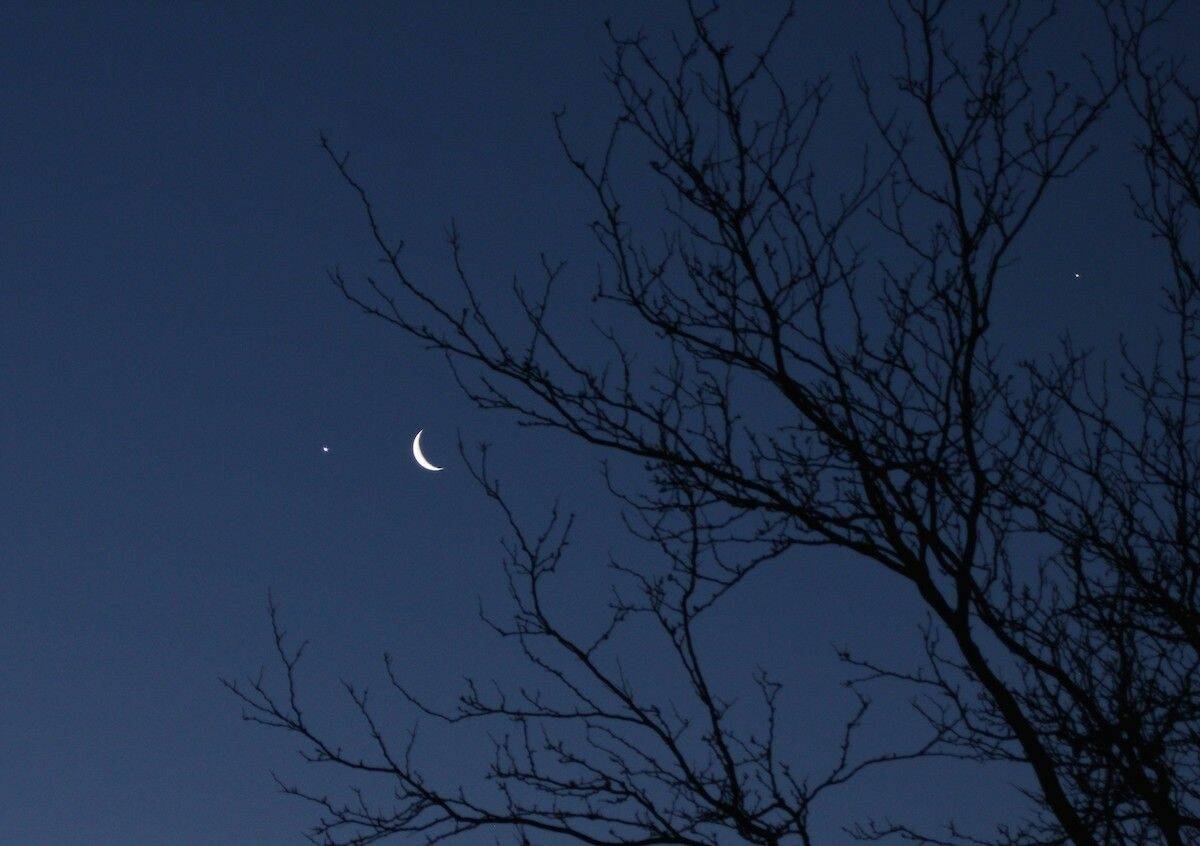
Take a look east around 5 a.m., about an hour before sunrise, on Wednesday and Thursday. Jupiter and a crescent moon will take center stage, complimented by Venus, the Gemini constellation and the twin stars Castor and Pollux.
Upcoming celestial events:
Aug. 20-21: Jupiter and more friends
When: 60 minutes before sunrise (around 5 a.m.)
Where to look: East
The crescent moon and Jupiter will be surrounded by other interesting bright objects. Venus will be out, and the Gemini constellation will be visible as well, between the twin stars Castor and Pollux.
Sept. 20: Life’s better on Saturn
When: Sunset (around 7 p.m.)
Where to look: East
Saturn will be at its brightest this evening, directly opposite the sun in the sky. Earth is positioned right in the middle of these two, making it a special time of the year, said Beatty. Unfortunately, you’ll need a telescope to see the finer points of this planet — something with a magnification power of at least 50. Even then, the rings will appear to be a line because of the way the planet is positioned.
Dec. 13: The best meteor shower of the year
When: 9 p.m. to 3 a.m.
Where to look: East, the entire sky
Another moonless, perfect evening for a meteor show. All the astronomers we spoke to pointed out this evening as a great way to wrap up the year. During this meteor shower, which is associated with the Gemini constellation, there will be around 60 meteors per hour. Most of them will be dim, said Goss, but some will be visible.
It will emanate from the east, but the meteors will move across the sky all night.
— The Seattle Times contributed to this report.