Season 3 of fish passage construction on the Oly Pen
Published 1:30 am Wednesday, July 9, 2025
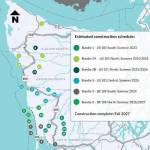
It may not be the show you’ve been waiting for the past several years (looking at you, Stranger Things), but it’s sure to be the talk of the town for summer travelers on the Olympic Peninsula.
With eight new episodes — uh, we mean work zones — it’s lights, camera, action — OK, well it’s just lights. Red, yellow and green ones. Traffic lights, to be specific. But don’t worry. They are all temporary.
If your summer plans include taking the “loop” (U.S. 101 on the Olympic Peninsula), you’ll want to include some extra travel time. But we’ll keep you moving through the work zones.
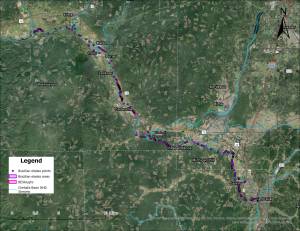
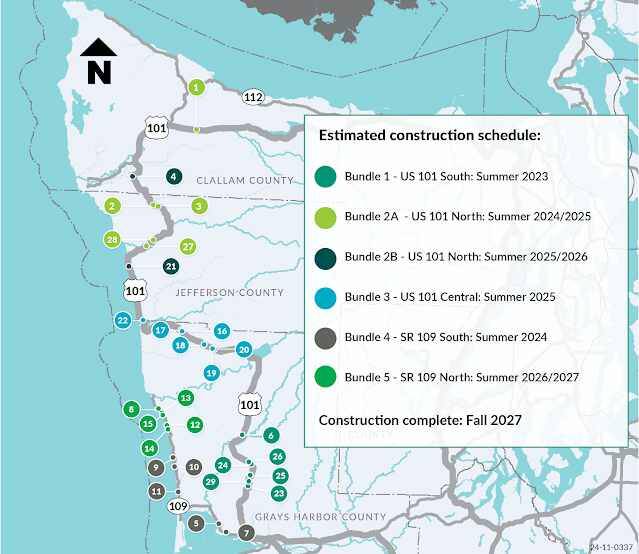
This is the third season of the Washington State Department of Transportation’s “Coastal 29” project. The work removes barriers to fish at 29 locations under U.S. 101 and state Route 109.
WSDOT has reached the halfway point for the project last fall after completing work at five locations under state Route 109 near Ocean Shores and four locations under U.S. 101 south of Forks. This summer, WSDOT is getting U.S. 101 ready for its closeup.
Bonus episode
In addition to the fish passage sites, they have a ninth location where U.S. 101 is reduced to one lane of alternating traffic. This is due to erosion along the highway near Kalaloch. In the next several weeks, their contractor will work to repair the hillside and reopen both lanes.
Plot summary
The temporary changes will remain in place at the eight fish passage work zones through the end of the year.
The changes include a temporary bypass road. Most of the locations already have traffic on bypass roads. These locations all have one-way alternating traffic around the clock. The bypass roads will open at the remaining locations within the next couple of weeks.
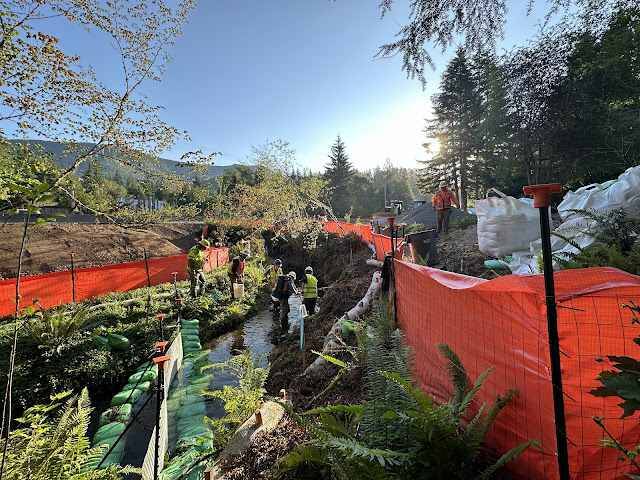
Once traffic is shifted onto the bypass road at each location, crews will start digging up the highway and relocating aquatic life in the stream. Before stream work begins, WSDOT will temporarily divert the stream. This happens during a time when fish are less active in the stream. They call this the “fish window.” This window varies by location. For these streams, it starts in July.
Up next
With the Fourth of July behind us, WSDOT will block off the project area with fencing and move fish and other species up or down stream of the project. They will also document the number and types of species found in the stream during this time. A pipe is then used to divert the stream around the project area, which gives crews the room they need to rebuild the stream bed.
Once that work is complete, tree trunks and native plants are added for shelter and nutrients. In addition to the stream work, they build the new structure.
Main character arc
One of the projects just hit a big milestone. WSDOT placed girders, or large support beams, on the new bridge over May Creek on U.S. 101. This project is located at the Jefferson/Clallam county line south of Forks. Girders act as the backbone of a bridge. They are placed on top of the piers and support the driving surface. The new May Creek bridge has five girders that are each 175 feet long — the size of the Seattle Ferris Wheel.
Now that the girders are in place, WSDOT is working on the bridge deck. The contractor expects to finish most of the bridge work and open it by the end of this year. If this happens, they will pause work for winter and perform stream work when the fish window opens in summer 2026. WSDOT expects to complete the whole project in fall 2026.
Next season on Coastal 29
All binge-worthy series come to an end. By the end of this year, WSDOT will have removed barriers to fish at 22 locations under U.S. 101 and state Route 109. It’s been blockbuster work since 2023.
That means WSDOT’s construction series finale will be a little shorter. They’ll only have seven culverts left to replace along the coast in 2026 and 2027. Crews will finish work at the two sites under U.S. 101 near Forks next summer. They will also replace culverts under state Route 109 at five locations to complete this massive endeavor.