Grays Harbor Noxious Weed Control Board receives $1.3 million in funding to remove Brazilian elodea
Published 1:30 am Friday, June 12, 2026
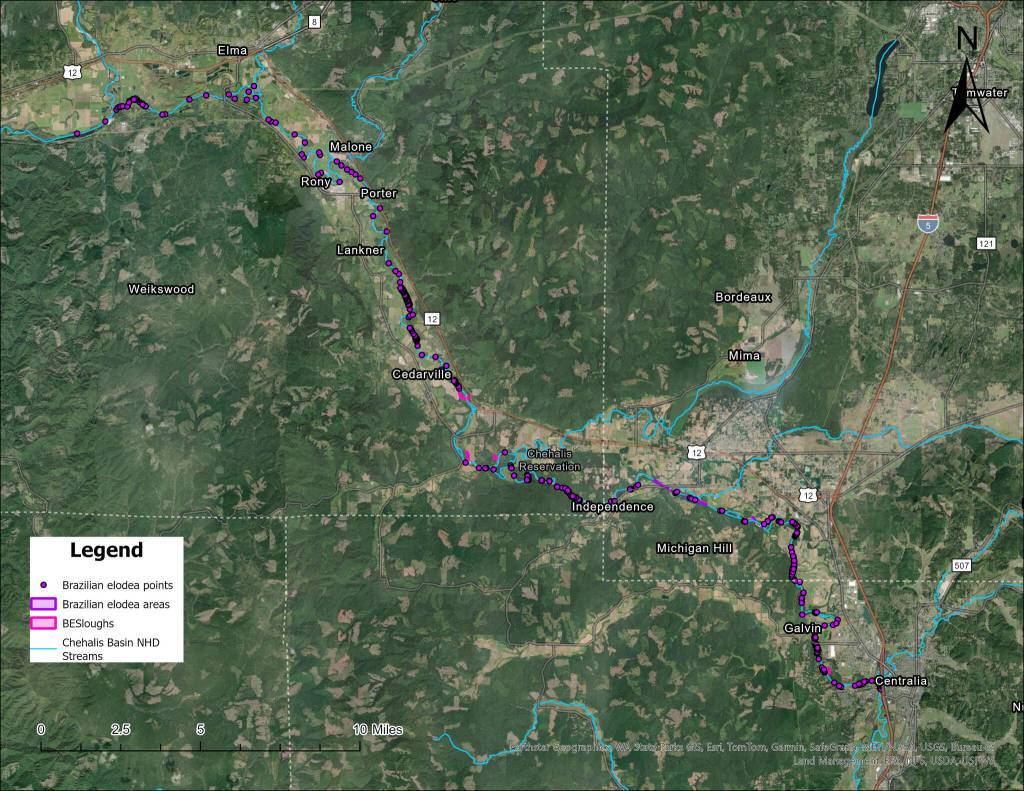
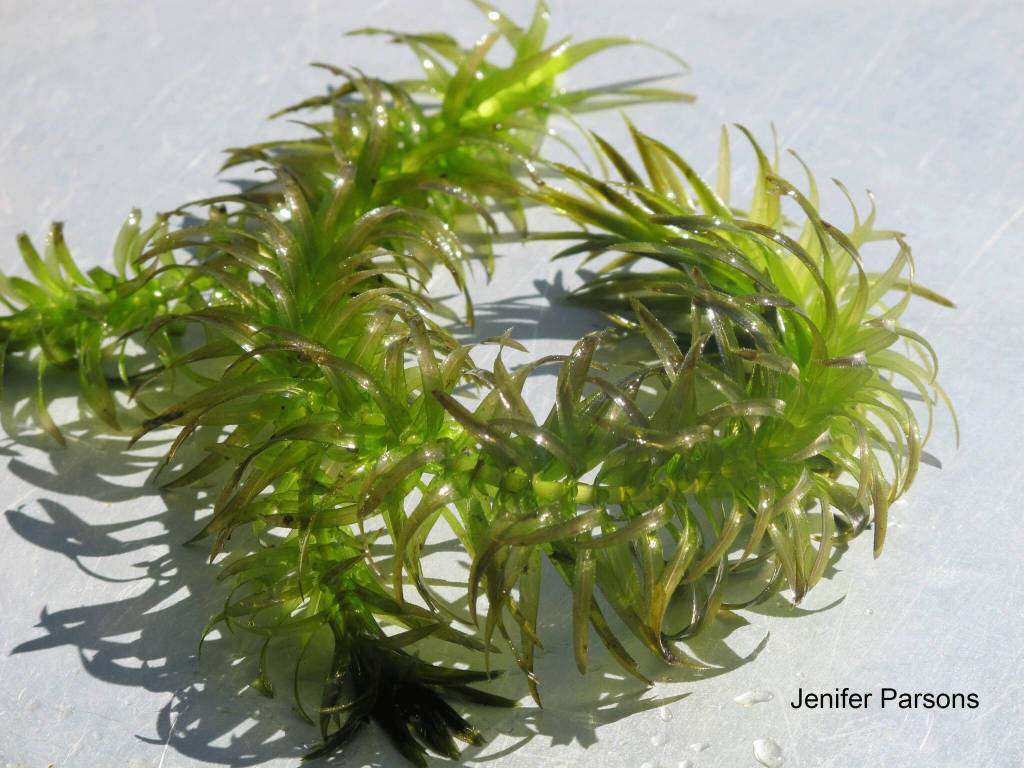
In stretches of the Chehalis River between Montesano and Plummer Lake, which is located in Centralia, grows the aquatic noxious weed Brazilian elodea. This perennial herb is commonly used in home aquariums, and following its introduction into the Chehalis River, it has had negative effects upon aquatic ecosystems, which is the reason for its designation as a Class B noxious weed by the Washington State Noxious Weed Control Board.
“When it grows very, very dense, it doesn’t let the water flow the way that it would, even if it was minimal flow,” said Sofia Sherman, the Chehalis Basin noxious weed coordinator. “It basically just lets the water sit there and bake.”
As a result, water temperatures increase, which affect the quality of the salmon habitat.
“Its removal is conducive with salmon restoration, especially spring Chinook which are really heavily impacted by increasing stream temperature,” said Danika Davis, the Grays Harbor noxious weed coordinator.
Because this aquatic plant is submerged, it’s not readily visible from the bank.
“It grows up to touch the surface of the water and then puts out these tiny white flowers, so if you know what you’re looking for, you could see it maybe walking close to the water or kayaking,” Davis said.
The spread of Brazilian elodea is limited to counties in Western Washington, and Grays Harbor, Lewis, Snohomish and Wahkiakum counties have infested acres totaling between 10 to 100 acres as per a map produced by the Washington State Department of Agriculture in February 2024.
Earlier in May, the Grays Harbor Noxious Weed Control Board received a four-year funding from the Aquatic Species Restoration Program (ASRP), with funding available up to $1.3 million, to remove Brazilian elodea from the Chehalis River. This project builds upon an earlier ASRP-funded project for a comprehensive survey of Brazilian elodea that Kiley Smith, the previous Grays Harbor noxious weed coordinator, had conducted.
Sherman, whose position is also ASRP funded, applied for the funding, and she described the application window as being on a “rolling basis,” which coincided in the spring with her having time to pull together the application materials.
A reason for applying for funding this year is because Plummer Lake — which is “the point source for the infestation,” Davis said — received a comprehensive treatment within the past couple years, and there’s been a significant reduction in Brazilian elodea.
“It was that action that really motivated us to start looking at how we can obtain funding to address the whole river, because it’s been an uphill battle for Thurston County, and it was time for all of us to come together and get something done about it,” Davis said.
Treating Brazilian elodea will be a combination of snorkel teams manually removing the plant from the main channel of the Chehalis River and applying herbicide treatment in the sloughs, which Davis described as being “completely inundated with” Brazilian elodea.
Herbicide treatments in the sloughs are necessary because manual removal stirs up sediment, which in the slough results in cloudy water and little visibility for the snorkel teams. Many of the sloughs are on private land, and Davis will reach out to secure permission to begin treatment.
Davis is hopeful to begin treatment work in August, once contractors are selected.
“We might have a short kind of incomplete removal season this year, but we are pretty confident that we’re at least going to get in the water this year, and then we’ll have full treatment seasons in the following years,” she said.
Work will begin downstream of Plummer Lake and move toward Montesano. A reason why Brazilian elodea has not continued further downstream of Montesano is because of the river’s changing salinity.
Once the Brazilian elodea is pulled out of the water, crews will pile it on the bank until it dries out. After which, people are welcome to haul it off, because it’s a great compost, Davis said.
Complementing this ASRP funding is additional funding that Davis has received this year from the Washington Coast Restoration and Resiliency Initiative, which funds her staff to do on-the-ground treatment work. She has also learned that a project to treat purple loosestrife and knotweed has been ranked third by the Salmon Recovery Fund Board, and Davis will hear shortly whether that project was funded.