
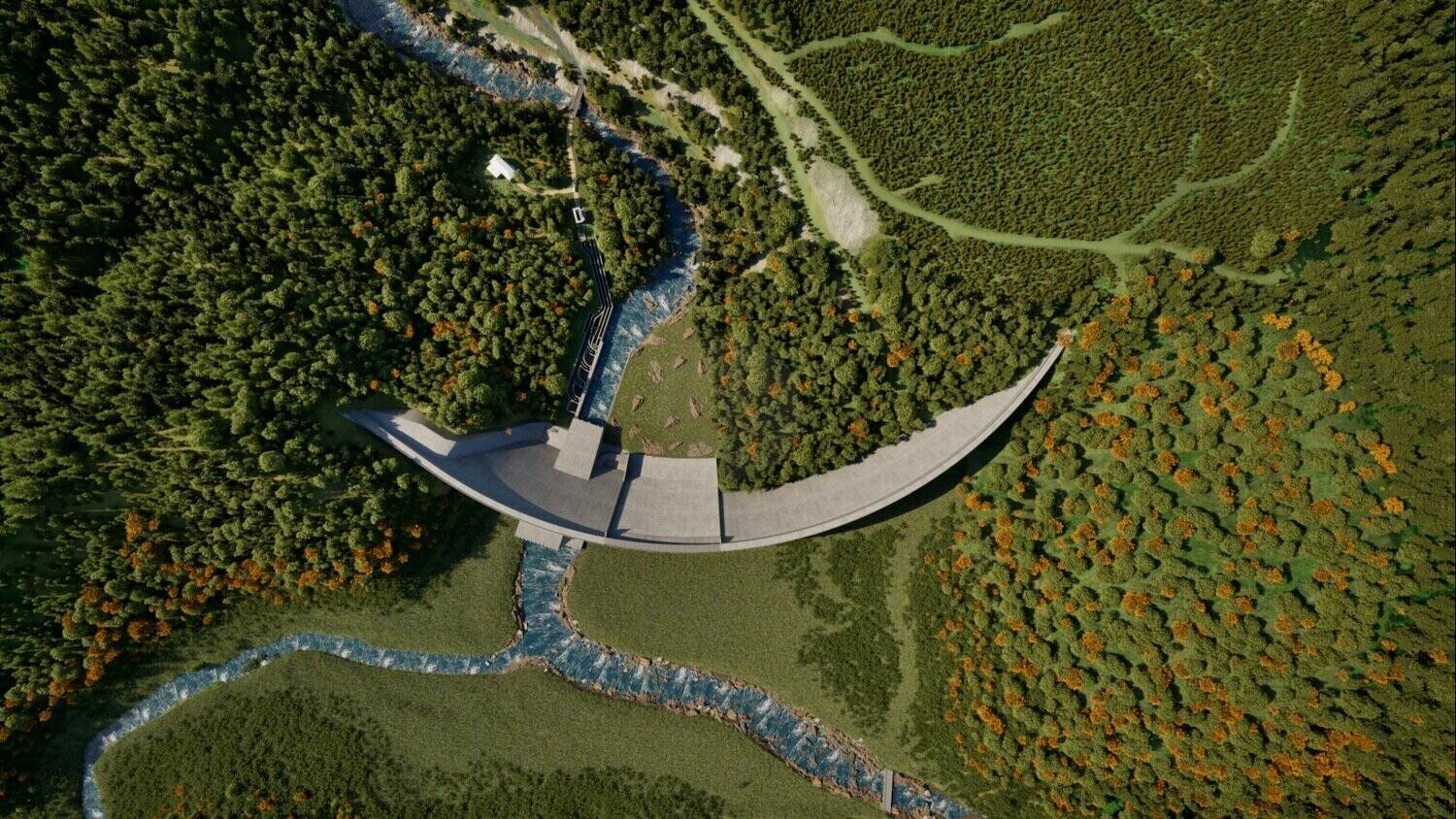
A preliminary study of a proposed flow-through dam on the Chehalis River near Pe Ell shows the installation could have negative impacts on wildlife, forestland, a local water system and more.
However, it could also protect more than 1,000 structures in the basin from major flood damage for the next 60 years.
The Washington state Department of Ecology released a new draft environmental impact statement (EIS) for the most recent design proposals for a flow-through dam near Pe Ell late Thursday morning.
The structure proposed by the Chehalis Basin Flood Control Zone District and titled the Flood Retention Expandable (FRE) would be used to create a temporary reservoir to hold back water during major flood events. When not used to hold flood waters, the facility would remain open, allowing the river to flow freely.
The EIS identifies a list of serious and unavoidable impacts to the basin from the construction of the facility. It also notes that the state has not yet considered a plan being created by the Chehalis Basin Flood Control Zone District, which would attempt to mitigate or lessen some of the project’s negative impacts, like those to vulnerable fish such as Chinook salmon and steelhead trout.
“Ecology had a cutoff deadline and the mitigation measures that the district has produced is not part of this draft. So, you know, that’s a huge piece, and it will be submitted, and we hope, before this EIS becomes final, they will incorporate that,” Chehalis Basin Basin Board member J. Vander Stoep said.
Without mitigation, the state expects the project would impact fish, wildlife, habitat, recreation, earth, water, tribal resources, cultural resources and more. Those impacts are expected across the basin, with some specific to the area around the facility itself and others expected further downstream.
The full revised draft EIS is available on the Office of the Chehalis Basin website. To see the document directly, visit https://tinyurl.com/27yn635m.
The EIS is titled as a revised draft because it is the second to be released on the flow-through dam project in recent years. The Chehalis Basin Flood Control Zone District received an EIS for an earlier design of the facility in 2020. The analysis led the district to make changes to the facility in an attempt to reduce environmental impacts. That included moving the dam further upstream to reduce the size of the reservoir and the impact to water, wildlife and the land itself.
The EIS is part of a greater process for the state to measure how a proposed project might impact the environment under the State Environmental Policy Act, more commonly referred to simply as the SEPA process. That law was passed by the Washington state Legislature in 1971 and makes sure that the state evaluates environmental effects of large projects.
The SEPA process is expected to conclude sometime next year. The exact date was left ambiguous in the EIS draft released earlier this week. A federal process to similarly evaluate environmental impact under the federal policy, the National Environmental Policy Act, or NEPA, is also underway. The United States Army Corps of Engineers is in charge of the process and has not released any information about the timeline of completing its impact study.
The studies are not a final decision on whether a facility like the FRE can or cannot be built. Instead, it is an analysis that will be used by the state and other authorities when deciding whether or not to approve licenses and permits for the construction and operation of the dam. As such, the study will impact the future of the facility, but it will not provide a yes or no answer on its construction outright.
Simultaneously, the Office of Chehalis Basin, under direction from its advisory board, the Chehalis Basin Board, is also conducting an analysis on the impacts of the FRE and a number of other projects. The release of the EIS is another step in the years-long process for the Office of Chehalis Basin to develop a long-term plan for addressing flooding throughout the basin.
Regardless of the timing of the release of government impact statements, the board has committed to approving a long-term flood strategy for the basin just under one year from now on Nov. 20, 2026.
“The overall schedule for that is modeling and technical analysis should be done in the April to May time frame, and, then, May through August is going to be analysis, especially like economic analysis, but all sorts of other analyses,” Office of Chehalis Basin Principal Planner Nat Kale said. “That will be wrapped up and presented to the board. The Chehalis Basin Board is going to be deliberating on those different options from September through November.”
The release of the state’s draft EIS also marks the start of a 75-day public comment process, which is longer than the standard 60-day process due to the holidays, according to Kale. Public comments will be reviewed and included in the final version of the EIS.
The Department of Ecology will be accepting comments through the mail, online and also in person at one of multiple live open house meetings scheduled in the coming months. The public comment period is scheduled to close Feb. 4.
Those looking to submit written comments can do so by mailing their comments to the Department of Ecology Southwest Region Office. To submit a written comment online, visit https://tinyurl.com/p3scxy96.
In-person and virtual comments can be submitted at one of two planned in-person public hearings and two additional online public hearings. In-person public meetings are scheduled for Dec. 9 and Jan. 6 in the TransAlta Commons on the Centralia College campus. In-person public hearings will start with a 30-minute open house starting at 5:30 p.m. before the two-hour long formal public hearing begins at 6 p.m.
The online meetings are scheduled for Dec. 11 and Jan. 8 for the same time periods from 6 p.m. to 8 p.m.
For more information, including summaries and additional background information on the FRE and its environmental impacts, visit https://tinyurl.com/yyf2y8d5.