A counting of the birds in Grays Harbor County
Published 1:30 am Tuesday, January 13, 2026
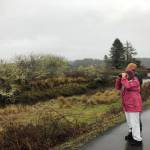
On the morning of Dec. 28, the freezing fog in Elma was an auspicious start for the Satsop Christmas Bird Count.
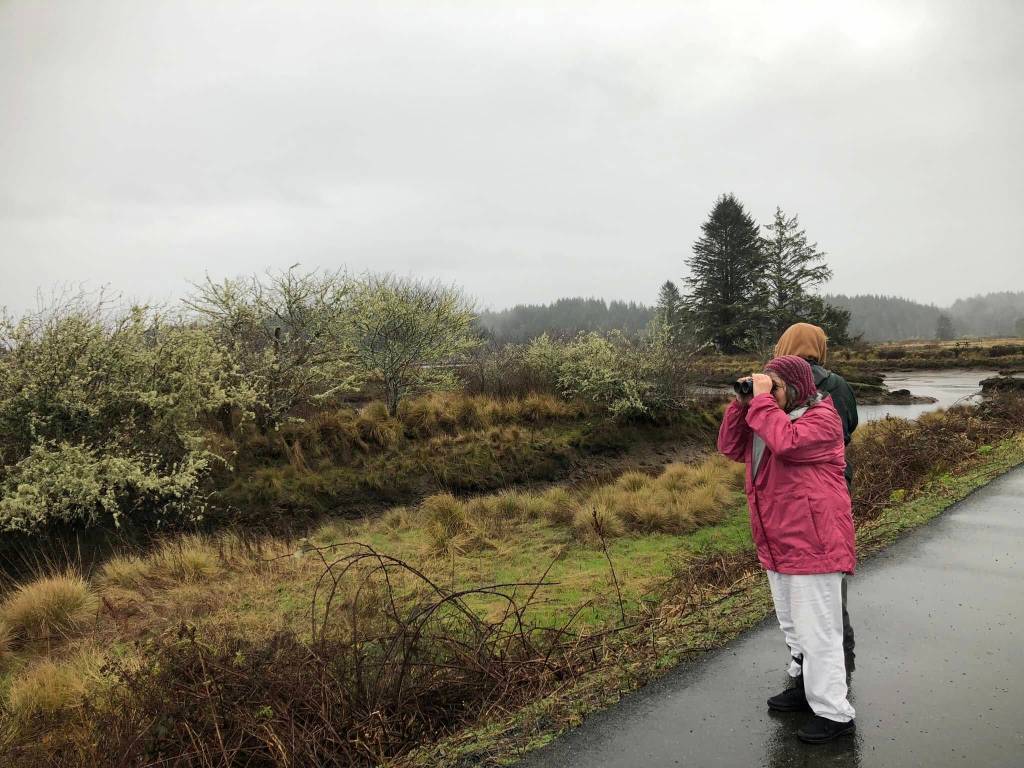
Mary O’Neil and Janet Strong, members of the Grays Harbor Audubon Society, started their count at 8 a.m., but it proved challenging to find birds. A visit to Summit Pacific Medical Center where there’s a pond usually visited by birds was empty, so they drove the side streets looking for sightings.
“All of a sudden, I noticed motion on either side of the car, so I just stopped and we just zeroed in on the shrubs on either side of the road in the edges of the yards, and they were just hopping with little birds,” said Mary O’Neil. “We were just so amazed, we couldn’t count so many birds.”
Among the bird species they observed were juncos and golden-crowned sparrows. And once they added their observations to eBird, O’Neil and Strong continued driving.
Grays Harbor Audubon Society member Dianna Moore was out at the Satsop Business Park that morning too. Up there, it was also foggy and cold.
“Which is why the birds were probably just hunkering down and staying warm,” Moore said. “We could hear birds, but we couldn’t see them. … We went somewhere else, and by the time we came back, the fog was lifting.”
Fortunately, for the Ocean Shores Christmas Bird Count held on Jan 3, it stayed mostly clear, with a few minor showers, and Moore said that in Westport they didn’t report any weather problems either.
The Christmas Bird Count (CBC) is an annual event held by Audubon from Dec. 14 through Jan. 5. It’s described as the “nation’s longest-running community science bird project,” and this was its 126th year.
“The main purpose of the Christmas Bird Count is to keep track of what’s going on with birds, so this is a citizen science project that really, really, really has a great deal to do with what’s actually going on in the bird world,” Moore said.
Audubon has predetermined locations where the CBCs are held, which are represented as circles on a map. These circles are then divided into sections, and birders survey within their assigned section.
Grays Harbor County hosts two locations for the CBC: Grays Harbor and Satsop. The Grays Harbor circle is in the western half of the county with its center on New Island, a small sand island out in the middle of Grays Harbor. The Satsop circle’s center is in Huttula Lake and stretches out to Montesano, past Elma and up to the Satsop Business Park.
Moore was in charge of the Grays Harbor CBC, and Liam Hutcheson oversaw the Satsop CBC.
For over two decades, Moore has participated in the CBC and has served as the Grays Harbor Audubon Society’s compiler for around 15 years. She hasn’t finished compiling everyone’s check sheets yet, but she has until the end of February. The observations and supporting details, such as length of time out observing, number of participants, and miles driven or walked, are then reported to Audubon.
Though some birders still record their observations on paper, many now use eBird, an online platform that curates bird observations worldwide and is managed by the Cornell Lab of Ornithology. It’s “among the world’s largest biodiversity-related science projects” and annually eBirders contribute over 100 million bird sightings.
This year, as in year’s past, birders participating in the Grays Harbor and Satsop CBCs aren’t only Grays Harbor locals but come from Seattle and Portland.
“These are serious birders,” said Moore.
And for many, they participate each year at the same location, so they know the area well.
“They know what to expect,” Moore said. “And, more importantly, they know when something’s missing.”
Within the Grays Harbor circle is Westport and Ocean Shores, and in Ocean Shores is where “we see the most variety and if there are unusual birds, we often see them there,” said Moore.
This year at Westport had the unusual sighting — a female King eider was observed at Half Moon Bay, which is an unusual bird, because it’s supposed to be off Alaska, Moore said.
But not all sightings result in unusual birds. This year, Moore said she observed more crows than she’s seen in quite a while.
Collectively, the sightings from these annual CBCs can be analyzed for population trends, such as declining presence of some species or an increase in others; however, there is a caveat of what can be inferred because weather can affect the counts.
“Birds don’t really like heavy wind and they don’t like heavy rain,” Moore said. “They hunker down, especially the little birds. So it’s always a catch, a balance between was it bad weather that kept them out or are we losing birds?”
And the length of time spent observing can also be a consideration. On Jan. 3, it’s possible the participants ended early to be home in time for the Seahawks game.
As for why Moore keeps participating in the Christmas Bird Count, “the excitement of being out there with a bunch of people that are doing the same thing and have the same ideals,” she said.
O’Neil backs into how many CBCs she’s been on based on how many years she’s lived in Grays Harbor County — 20 years. A memorable experience for O’Neil was with Moore doing a Satsop CBC in the area on U.S. Highway 12 toward Malone and Porter.
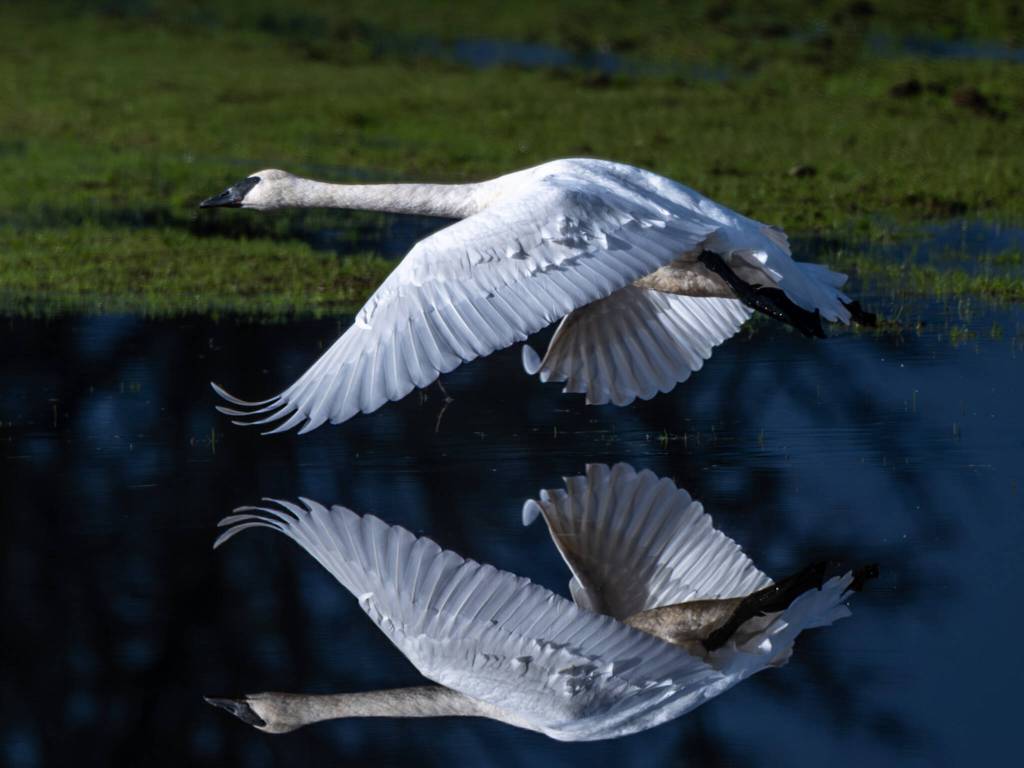
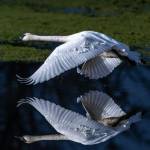
“There’s a little side street that takes you back into the fields, and we parked at the edge of this field and raised our binoculars,” O’Neil said. “We were just blown away. The field was full of snow geese and swans. It was just a white field. To a birder this is the most profound experience you’ll ever find.”
And after that moment of awe came the counting.