Quinault launch Shoalwater and Willapa bays takeover bid
Published 1:30 am Monday, June 1, 2026
Federal, state and tribal officials met May 29 at the Quinault Indian Nation’s Business Council Chambers in Taholah to discuss a push by the Quinault to expand their fishery boundary down to Cape Disappointment and up the Columbia River past Cathlamet.
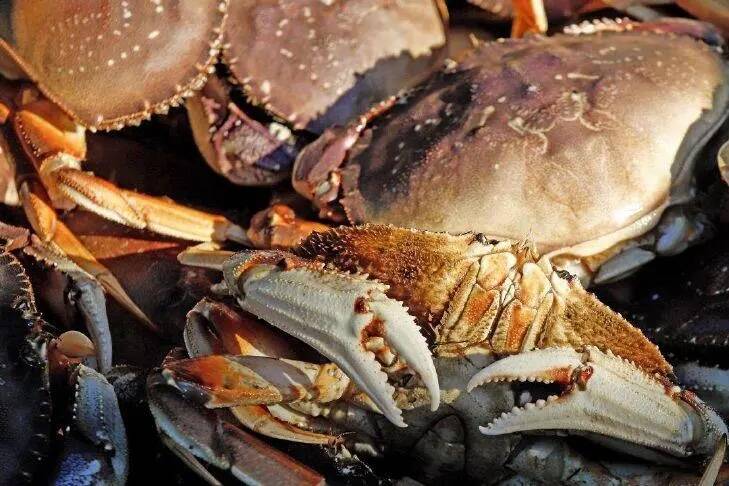
Over the past several months, word emerged that the Quinault were planning a push to claim half of the lucrative Dungeness crab fishery in the area, salmon and other marine species in Pacific and Wahkiakum counties. This news was initially confirmed by an email obtained from the Washington State Department of Fish and Wildlife on May 28.
The Chinook Indian Nation is strongly condemning the Quinault effort to wade into waters dominated by the Chinook since time immemorial.
“The Quinault have indicated their intent to seek a determination from the federal court in U.S. v. Washington alleging they have a treaty right to harvest throughout Shoalwater and Willapa Bays and about 60 miles up the Columbia River,” the email written by Ryan Lothrop, WDFW’s Columbia River Fishery Manager, said.
“Before Quinault can bring their allegations to the court, they have to hold a ‘meet and confer’ with the U.S. v. WA parties, including Washington and treaty tribes. The meet and confer is scheduled for this Friday,” Lothrop added.
According to sources with knowledge of the negotiations, last week’s talks did not make significant progress, This means the issue is more than likely set to become a contentious legal battle. Local tribes including the Shoalwater Bay Indian Tribe and the still federally unrecognized Chinook are vowing to oppose the move.
Legal document tells the tale
Last Thursday, the Observer obtained a copy of the “Notice of Meet and Confer Concerning Quinault Indian Nation’s Proposed Request for Determination to Establish Non-Exclusive Marine and Fresh Water Usual and Accustomed Fishing Areas.”
The document shows that the meeting was initially scheduled to be held on April 23 but was moved to May 29, according to WDFW.
Citing past court actions, “the Quinault Indian Nation… seeks to invoke the continuing jurisdiction of the Court in order to determine and declare the non-exclusive treaty and equitable rights of the Nation to harvest all species of finfish, shellfish, and marine mammals in the marine waters within and throughout the Shoalwater Bay and Willapa Bay, and within and throughout the waters of the Columbia River, specifically from Peacock Spit to Oak Point, including Fort Canby, Cape Disappointment, Ilwaco, Sand Island, Chinook, McGowan, Cathlamet, and Dahlia within the State of Washington,” the notice added.
The Quinault are represented by attorneys Rob Roy Smith and Derek Red Arrow of Kilpatrick Townsend & Stockton LLP, a major multinational law firm with a local office in Seattle.
According to the notice, “the Court has never adjudicated Quinault’s southern treaty fishing boundary or made any determination regarding Quinault fishing rights in Willapa Bay, Shoalwater Bay, or on the Columbia River.”
“The Court has already recognized that the Quinault have fished and traded southward into Willapa and Shoalwater Bay, and to the Columbia River,” the notice states. “This Request for Determination seeks to determine exactly where the Quinault ‘customarily fished from time to time at and before treaty times’ within those specific waters.”
United States v. Washington — commonly known as the Boldt Decision — in 1974 gave tribes that were parties to 1850s treaties the right to half the catch in their “usual and accustomed grounds and stations,” with the tribes and the state managing the fisheries together. Willapa Bay, the south Washington coast and the Columbia River estuary were largely spared many direct consequences of Boldt because there weren’t ratified fishing treaties covering this area.
The Lower Columbia is co-managed by WDFW and the Oregon Department of Fish and Wildlife. Carving out a half share for the Quinault would impact both states’ managerial decisions.
Quinault argue long history of incursions
According to the notice, the Quinault allege they are documented all the way back to the 1700s moving about the Washington coastline and river systems. They also “possessed large, seaworthy ocean canoes capable of extended offshore and coastal travel, enabling regular movement well beyond the immediate vicinity of the Quinault River and Lake Quinault.”
These accounts were allegedly documented by “Spanish explorers, French fur traders, fort records, United States Indian Agent journals and regional shellfish documentation.” Other accounts reportedly show the Quinault traveling all the way to the Columbia River for “salmon and sturgeon harvest.”
The agenda for the “meet and confer” states the sides plan to discuss: the basis for the push, possibly reaching a settlement, address technical issues, address disagreements, discuss narrowing and resolving the issue, discuss going into mediation or arbitration, and attempt to avoid litigation.
The Quinault plans have been circulating for several months but there was no documentation to validate the allegations, and none of the parties were willing to speak on the record.
Sources disclosed to the Observer that the Shoalwater was notified via letter months ago. The tribe did not respond to an email from the Observer seeking confirmation they had been notified.
The Observer submitted a public records request with WDFW on April 15 asking for the letter and/or emails regarding the matter. On April 21, WDFW Public Records Specialist Keri Street issued the Observer a formal notification that the agency had received the request but provided an estimated time of fulfillment of Nov. 13.
The letter in question is the letter that the Observer obtained on May 28.
Tribes issue formal statements
The Shoalwater were directly involved in the talks and would — officially — be the most affected tribe if the Quinault are successful in their boundary push. Willapa Bay is not currently tribally co-managed, although the Shoalwater have a lucrative stake in fisheries.
The tribe is bracing for a fight, and appealing to tribal members and the public to come forward and unite in preserving their sovereignty.
“The Shoalwater Bay Indian Tribe honors and respects the inherent sovereignty, history and treaty rights of all Tribal Nations,” the tribe stated in a May 30 press release. “Our request is that Shoalwater Bay’s history, homeland, resources and interests are considered and protected during this process. Willapa Bay is more than a geographical area on a map. It’s our home. It’s where our ancestors hunted, gathered, and raised families creating generational ties to this land and water.”
“It’s where our Tribe conducts business today and plans to pass on to future generations.
If there is a proposal to alter or expand who has rights to this land, we believe it should be done with evidence to support the claims, through government-to-government consultation, and with full consideration of how it will affect Shoalwater Bay’s reservation, tidelands, shellfish resources, local businesses and Tribal members.”
“We will continue to stand up for our Tribal members and protect our interests throughout this process. Shoalwater Bay will engage in this process professionally, respectfully, and tenaciously. Please join us in helping to preserve and document our history. If you have photos, family histories, historical documents, maps, journals or oral histories that speak to Shoalwater Bay’s history in Willapa Bay and the surrounding waterways please contact Tribal Administration or Chairman Quintin Johnson-Swanson.”
The tribe added that “it’s time for the story of Shoalwater Bay to be told by the people who have lived here for generations.”
The Chinook Indian Nation also issued a statement on May 30, standing united with neighboring tribes that undoubtedly includes the Shoalwater, with which they have maintained a strong relationship.
“The Chinook, alongside neighboring tribal nations, is standing up for our homelands, our waters, and our communities,” the tribe said. “For generations, Chinook people have lived, fished, worked, and cared for these places. These are not abstract lands and waters. They are homelands our ancestors never left. Many of us share relatives, ancestors, and relationships across communities.”
“Standing for Chinook homelands does not mean standing against our relatives. It means standing for the responsibilities we carry to these lands and waters, and to all who call Chinook territory home. The decisions being discussed today will shape the future of our region for generations to come,” the Chinook added.
Initial local reaction
Social media chatter over the news has been lively, with some cheering on the Quinault expansion hopes. Others are seeing it as another potential major blow to the public fishing privileges in western Washington.
Locally comments have been made on the Observer’s Facebook page following preliminary coverage of the details emerging.
Most are taking it as a major slap in the face to the Shoalwater Indian Nation and Chinook, which historically have been the tribal presences in Pacific County including Willapa Bay and along the Columbia River.
“Quinault is going beyond their territory into other tribes’ territories to fish and hunt,” commenter Mary Johnson said.
Another commentor, Mechele Johnson, said, “I believe this includes hunting and gathering as well.”
“Time to start carving the battle canoes,” commenter Sara Jones replied.
Most of the comments were strongly against the Quinaults’ push for expansion of their fishery rights.
“Because fighting to get the Chinook recognition rescinded wasn’t enough,” commenter Taylor Fischer said. “Greed will be the end of us all.”