Sen. Cantwell-led weather forecasting legislation passes committee
Published 1:30 am Wednesday, March 18, 2026
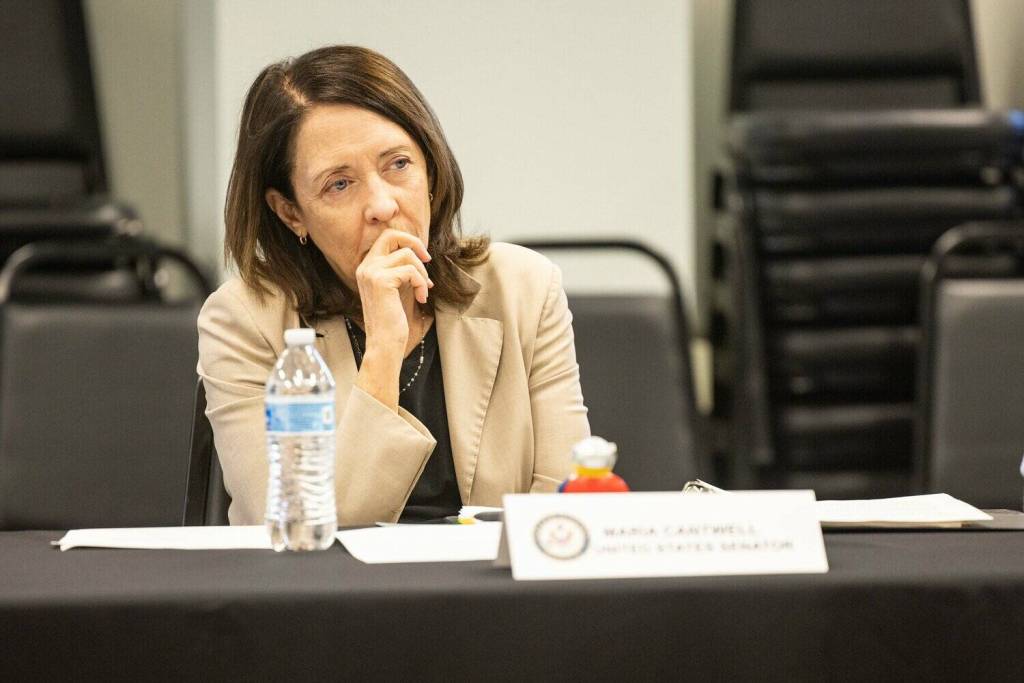
Recently, the U.S. Senate Committee on Commerce, Science and Transportation passed the bipartisan Weather Research and Forecasting Innovation Reauthorization Act of 2026, a news release from Sen. Maria Cantwell, D-Washington, stated.
The legislation, led by Cantwell, ranking member of the Senate Committee on Commerce, Science and Transportation Committee and senior member of the Senate Finance Committee, authorizes programs at the National Oceanic and Atmospheric Administration (NOAA) that will strengthen weather research and forecasting to save lives and better prepare the nation against dangerous weather disasters.
“In the State of Washington, we know firsthand how extreme weather has become costly and dangerous,” said Cantwell, who first introduced the Weather Act in 2024. “In December, Western Washington endured back-to-back atmospheric rivers that dumped nearly 5 trillion gallons of rain causing massive, devastating floods. Over 70 landslides were reported, blocking major transportation routes, disrupting communities, threatening lives and livelihoods. The devastating floods in Kerrville and Asheville, the fires in Palisades and Lahaina and too many other natural disasters have shown us that providing Americans with more timely and accurate weather information can avoid billions of dollars in property losses and save lives. In 2025 alone, weather disasters cost the United States $115 billion. That is why this bill matters.”
“It establishes an atmospheric river forecast improvement program, modernizes hazardous weather alerts, (weather) radio infrastructure … strengthens landslide preparedness and helps rural farmers plan for drought and bring new tools to better forecast wildfires, hurricanes and heat waves,” Cantwell added in the release. “This legislation advances many of the recommendations in a Five-Point Plan I outlined last year to the President and to NOAA. That plan, we need to continue to make more progress on, but the Weather Act will ensure that America’s weather enterprise is nimble, innovative and equipped to meet the evolving challenges of the 21st Century.”
Highlights of the legislation include:
Addressing NOAA’s aging radar network by directing the agency to design and deploy the next generation of weather radar technology by 2040. It also authorizes NOAA to manage existing gaps in the current radar network by supplementing weather radar coverage with data, services and technologies from third parties.
Establishing an atmospheric river forecast improvement program to develop tools and improved forecast models to address the increasingly frequent and powerful atmospheric rivers impacting the U.S., especially across the West Coast.
Directing the National Weather Service to include turbulence events and icing conditions in their forecasting capabilities and establishes an airborne observation program to acquire atmospheric data from commercial aircraft.
Directing NOAA to improve accuracy and timeliness of weather, water and space weather forecasts and effective dissemination of critical information using artificial intelligence.
Creates a project to improve forecasts of coastal marine fog with the goal of enhancing vessel safety and reducing the economic impact of coastal marine fog events.
Requiring NOAA to maintain and improve the system that communicates potential hazardous weather or water events to the public.
Requiring upgrades to outdated weather radio technology to provide reliable and continuous weather and emergency alerts and expands radio coverage to rural areas that do not currently have access to the National Weather Radio alert system.
Updating the Tsunami Forecasting and Warning Program to evaluate tsunami alert levels, maintain fail-safe warning capabilities and align the analytic techniques and methodologies of the two existing tsunami warning centers in Hawaii and Alaska.
Building on the progress of the Hurricane Forecast Improvement Project by establishing it as a long-term program that will incorporate social, behavioral, risk and communication science into modeling, forecasting, and response guidance.
Expanding the goals of the Tornado Warning Improvement and Extension Program to improve the effectiveness and timeliness of tornado forecasts, predictions and warnings by increasing lead times, improving forecasting and updating the system to rate the severity of tornadoes in collaboration with local communities and emergency managers.
Providing funding for weather laboratories; tornado, severe storm and next generation radar research; and transitioning the latest scientific and technological advances into operations.
Directing the National Integrated Drought Information System to advance and deploy next-generation drought monitoring technologies and transition existing drought products to probabilistic forecasts, as well as use observations from state or regional hydrological monitoring projects.
Reauthorizing the National Weather Service’s work to provide agricultural and silvicultural weather and climate information and directs NOAA to establish at least two pilot projects to support improved sub-seasonal to seasonal extended range precipitation forecasts for agriculture and water management.
Codifying and authorizing the National Mesonet Program, a network of automated weather stations that are used to monitor and observe weather events and microclimates. The program is directed to obtain observations to improve understanding of and forecast capabilities for atmospheric, drought, fire, and water events and increase the quantity and density of environmental observations.
Increasing NOAA’s access to critical forecasting data by expanding its authority to contract with the private sector to acquire commercial weather data.
Codifies the Commercial Data Program to coordinate and acquire a variety of weather and environmental data and services from the private sector for operational use.
Modifies the existing commercial data pilot program to be a testing program within the Commercial Data Program, and authorizes the program to test and evaluate all sources and types of observation services, imagery, products and data from private sector entities.
Committee passage of the bill is the next step to Cantwell’s 5 Point Plan to bolster the United States’ weather readiness, according to the release.