Timberland Regional Library to lay off 61 ‘frontline’ employees
Published 1:30 am Tuesday, March 17, 2026
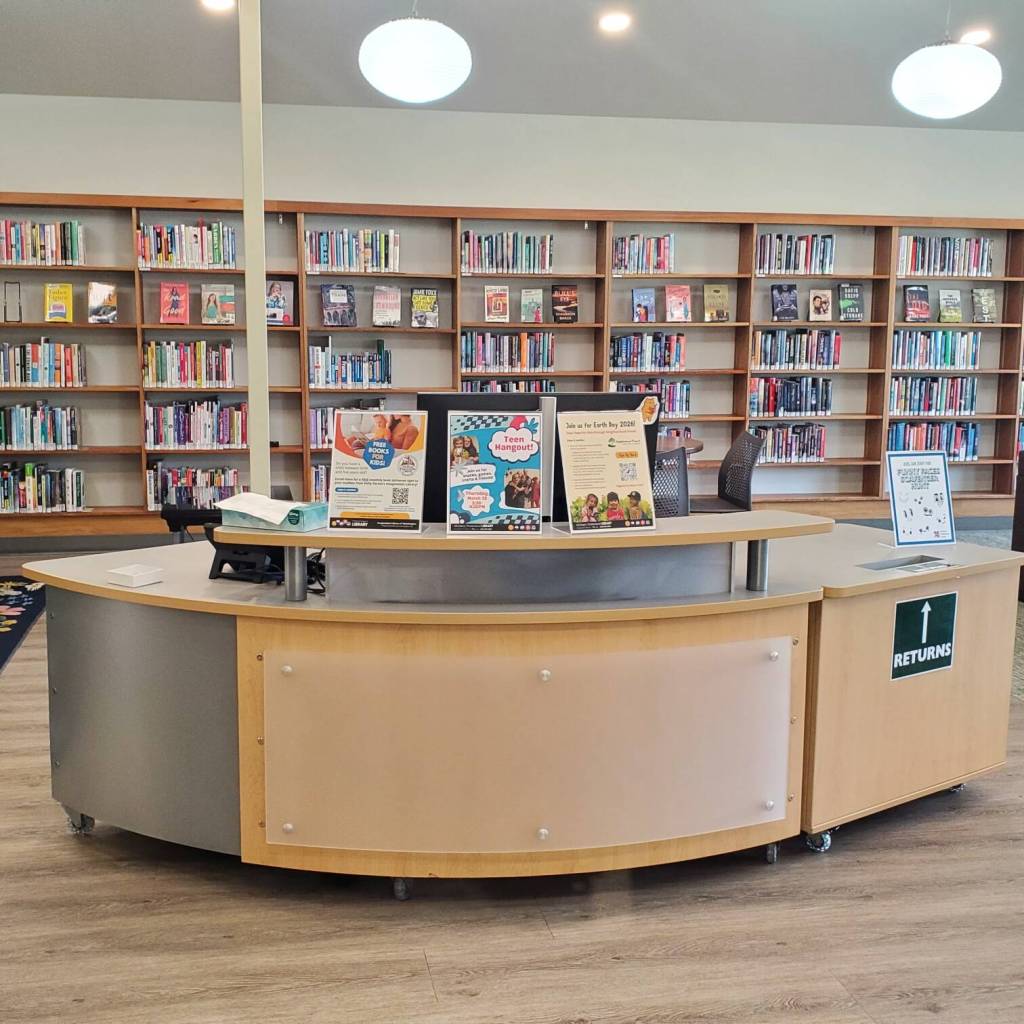
3 branches, 2 in Grays Harbor County, to transition to staffless operations
Despite vehement public opposition to reducing staff, Timberland Regional Library (TRL) announced the layoffs of 61 “frontline” employees — library assistants, librarians and public services specialists — 17 who took a voluntary option and 44 involuntary, in a press release issued on Monday. The involuntary layoffs will go into effect on May 15.
TRL also confirmed that the Hoodsport, McCleary, and Amanda Park branches will transition to an Expanded Access Hours (EAH)-only, self-service model.
TRL cited the $3.8 million budget shortfall, which was announced on Jan. 29, as the reason for these layoffs. After a three-hour marathon budget workshop on Feb. 10, and a board of trustees meeting of similar length on Feb. 25, the board of trustees — consisting of Brian Mittge, Dustin Loup, Toni Gwin, Mary Beth Harrington and Hal Blanton — voted to slash $2.3 million from the budget and approved “force reduction” measures. The budget cuts include $1.9 million for books and materials.
“Our goal throughout this process has been to find a sustainable path forward while maintaining our commitment to the communities we serve,” said TRL Executive Director Cheryl Heywood via press release. “Some things may look different in the months ahead, but we know how important it is for patrons to see familiar staff and continue accessing the services they rely on, and this plan was developed with that in mind.”
Loup, the trustee who represents Grays Harbor County, made the motion to “approve the implementation of a reduction in force as discussed for the purposes of ensuring financial stability for the remainder of the 2026 fiscal year and authorize the Executive Director to take all necessary action to implement the reduction in force in accordance with applicable policies, procedures, and legal requirements.”
The trustees are appointed by their respective county commissioners. Grays Harbor County District 3 Commissioner Vickie Raines said she spoke to Loup following the vote at the Feb. 25 meeting and suggested holding off on initiating layoffs and requesting an internal investigation and an independent audit of the financials, but her pleas fell on deaf ears.
“Watching TRL employees and many others noticeably frustrated and pleading with the trustees was very painful; however, the board’s decision was devastating,” Raines said via email on Feb. 26.
Since that decision, TRL has been in negotiations with AFSCME Local 3758-B, the union representing its library workers. The union responded with its own press release on Monday.
“AFSCME Local 3758-B Timberland Regional Library is devastated to share that on Sunday, [March 15, 2026], library administration sent out 60-day layoff notices to 44 Timberland Regional Library (TRL) workers. All library workers who received layoff notices on [March 15] are ‘frontline’ staff who work directly at local library branch locations in the regional library system. In addition, 17 library workers recently chose a voluntary layoff option offered by leadership, and will also be leaving library employment due to the ongoing, shocking budget crisis at TRL.”
The union called out that “no additional layoffs or pay cuts have been announced for non-represented leadership, administrators, and other behind-the-scenes departments.”
This is the third consecutive year that TRL has operated in the “red” even as top-level executives have received substantial incremental pay raises, and the administrative arm continues to add or reassign personnel who receive six-figure salaries. The annual budget deficits of the past three years have averaged approximately $3 million.
The human resources administrator’s salary has increased from $98,828 in 2023 to $142,963 for 2026. TRL also added an employee experiences advisor position at an annual salary of $120,376 in 2025, with an increase to $127,335 in 2026. The administrative coordinator, whose position listed is under the executive director, made $89,554 in 2023, was re-titled as executive administrator in 2024 at $95,931, was bumped to $115,718 in 2025 and $133,760 for 2026. Heywood’s salary has increased from $155,000 in 2023 to $189,000 in 2024 and to $206,788 in 2025. A third position, special projects coordinator, was added to administration for 2026 at a salary of $105,847.
In the wake of the budget crisis and pending “force reduction,” a grassroots effort led by former TRL employee Rachelle Martin, who spent nine years of her 13-year career at the Raymond branch, and Kylie McQuarrie have formed the Patron Coalition for Local Libraries. The group, which meets online weekly, is organizing protests, letter-writing campaigns and petitions.
“I was with Timberland for a really long time and I’m really passionate about it. I have the history and experience with those people,” Martin said. “I felt like somebody needed to do something. I love the library and I love working with community members. There’s such an intense lack of trust between the community and the trustees in the administration that I really struggle to find a path ahead. There’s a deep concern that the layoffs are going to be weaponized. And there’s a culture of retaliation at Timberland. This is a really good way to create a workforce that is really scared. We can’t put it on the staff members to advocate for themselves because they have been going through years of these issues. When we’re talking about rural communities, this is the thing that unites us as our library. It’s not the building, it’s the staff.”
Martin said she was impressed with the people who attended the first online organizational meeting of the Patron Coalition.
“What was the most impressive to me was that I was just like, ‘Oh my gosh, this is gonna be great,’ was the absolute breadth of people that showed up and how different they were, that we had different generations. We had every county represented. We had just so many different people all saying, ‘I have an idea’ or ‘I want a task.’ ‘How can I help?’ And when you organize, that’s not what happens, especially at your first meeting,” Martin said. “To see how many incredibly capable, very motivated people showed up. … We went from people being really upset, to how can we channel this into something else?”
Expanded Access Hours-only branches
Prior to Monday’s press release, it had been speculated that some branches were moving to an EAH-only service model. The press release didn’t specifically mention this, instead stating that “Although some services and hours may change in the coming months, TRL remains committed to providing essential library services across its service area and will continue working to support communities during this transition.”
However, Communications & Media Coordinator Anna Lisa Rasmussen confirmed via email that Amanda Park, Hoodsport and McCleary branches would move to an EAH-only, self-service model.
“During discussions with Union leadership regarding the reduction in force, TRL management had proposed to keep these three additional libraries regularly staffed with one employee each,” Rasmussen said. “The most recent Collective Bargaining Agreement (CBA) includes language that allows rural libraries to utilize solo staffing during lunch periods and unplanned absences, and TRL’s proposal sought to expand the solo staffing provision to keep staff in as many smaller libraries as possible. This proposal was not approved by the Union membership, so the alternative, EAH-only, plan is being implemented.”
As for what patrons can expect when visiting these branches, TRL’s FAQ on EAH explains it this way.
“Expanded Access Hours (EAH) are additional hours of library access available to patrons outside of the normal operating hours. EAH is available at select branches daily from 7 a.m. until 8 p.m. During Expanded Access Hours, the library building is open for patrons to enter and use resources, such as books, computers, printing and study spaces. During these hours, library staff are not available to provide assistance or answer questions.”
However, McQuarrie believes the EAH-only model goes against what TRL stands for.
“Moving libraries to a staffless EAH model inherently undercuts the idea of creating welcoming spaces. Indeed, requiring patrons to apply for an electronic fob to access libraries is inherently uninviting, especially since it excludes key population segments (unhoused patrons, unaccompanied minors, temporary visitors to the city, and nonresidents) from what should be a public building,” McQuarrie wrote in an email addressed to county commissioners. “Turning rural branches into staffless or solo-staffed buildings inherently puts these communities at a disadvantage compared to urban branches. … Minority communities suffer more than the majority when library cutbacks occur, especially those focused in rural areas. … Firing frontline staff effectively removes the assistance needed to provide digital literacy across generations.”
McQuarrie added that unaccompanied minors are not allowed to access EAH libraries and that library remodels have not been friendly to younger patrons.
Of the EAH model, Martin said, “I do think my fear is that people are happy about the way things are going, that they want our beautiful community libraries to be just empty buildings that are automated. And the only metric that matters if you’re a staff person is how many books did you put on the shelf? And that really breaks my heart, because that’s not what the library is supposed to be.”