What’s new to see at Ocean Shores Coastal Interpretive Center
Published 1:30 am Monday, June 1, 2026
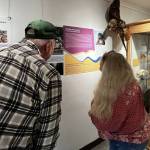
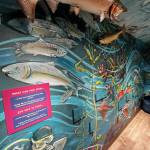
As the Coastal Interpretive Center in Ocean Shores (CIC) readies for its summer hours that will begin on June 15, there are several new features to check out.
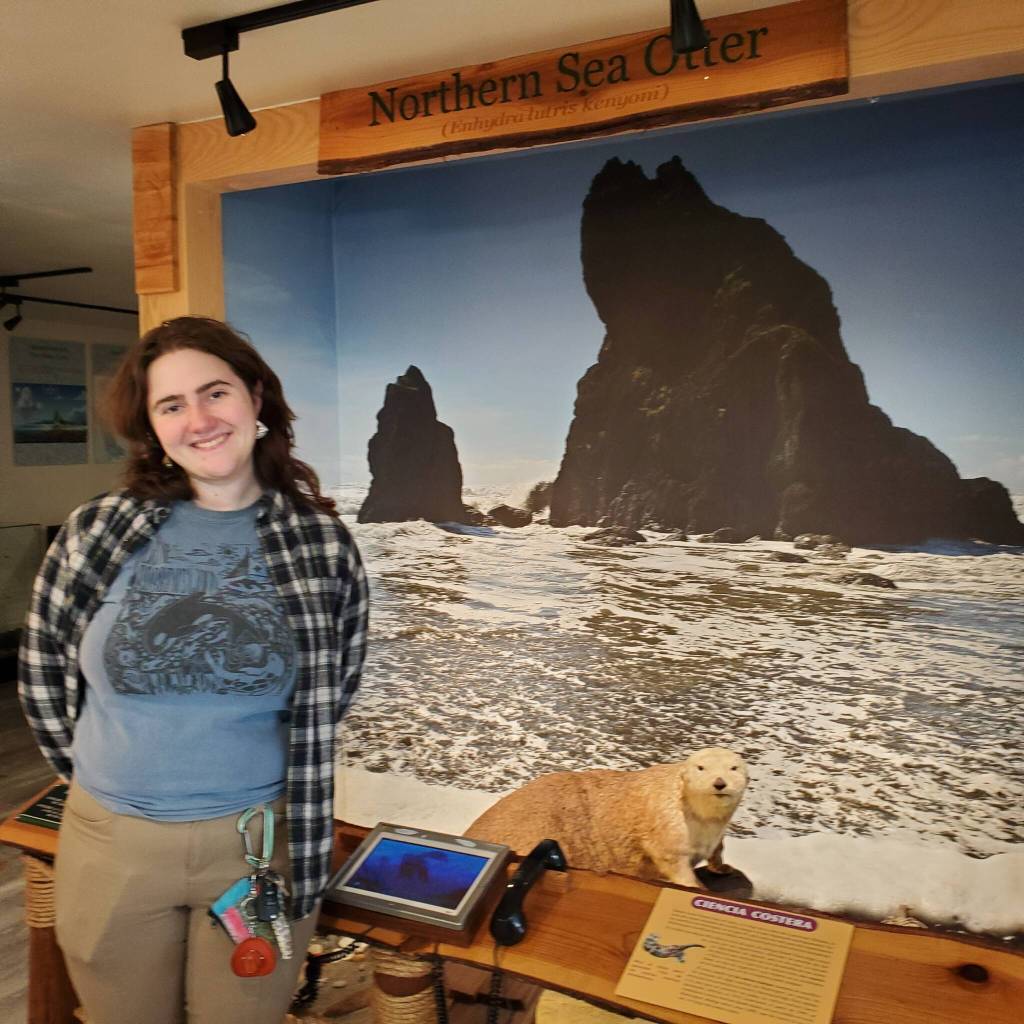
Among CIC’s regular exhibits is a temporary exhibit on Human Wildlife Interactions created by museum research intern Kelly Hewitt. Hewitt graduated last May with an undergraduate degree from Gonzaga University, double majoring in wildlife biology and ceramics. She grew up in the Montesano area and visited the CIC on several occasions for field trips or class projects.
“It’s been really cool to see this place grow and change, and when I saw the opportunity for the internship, I got really excited,” Hewitt said, adding that “there’s not really that many opportunities for wildlife and environmental education here in the Harbor.”
Both of which Hewitt brings to the internship. For the past three years, she’s managed the marine biology program at Camp Robbinswold on Hood Canal for the Girl Scouts of Western Washington, where she leads programs on marine sciences and ecology.
As the museum intern, Hewitt wrote articles that described the social context of 16 items within the CIC’s collection, such as their ecology, biology, anthropology or geology. Although these items are identified within their respective exhibits, the information is brief; Hewitt sees her articles as sharing the history of the items before they joined the CIC’s collection.
She had free rein to choose which items to profile, but when it came to selecting among the animals in the exhibits, it was really hard.
“I mostly just went for ones that I already knew a fair bit about and gravitated toward,” Hewitt said.
One of the birds Hewitt selected was the snowy owl because her mom, who is an avid bird watcher, took her to see the snowy owls. Another animal was the American beaver, because of “how beavers are kind of the heroes of climate change,” she said. “They’re really good at restoring aquifers and really reducing the overall temperature of an area, which could become really important in the upcoming years.”
In the Earth Sciences exhibit, Hewitt wrote articles on the different forms of silica. Of the items on display, those that have a QR code are ones that have an article written about them.
In addition to writing the articles, Hewitt restaged the animal exhibits, and because of her knowledge of animal morphology and species identification, corrected specimens that were mislabeled. In one case, three cormorants were labeled as different species when they actually represented the Brandt’s cormorant at different stages of life.
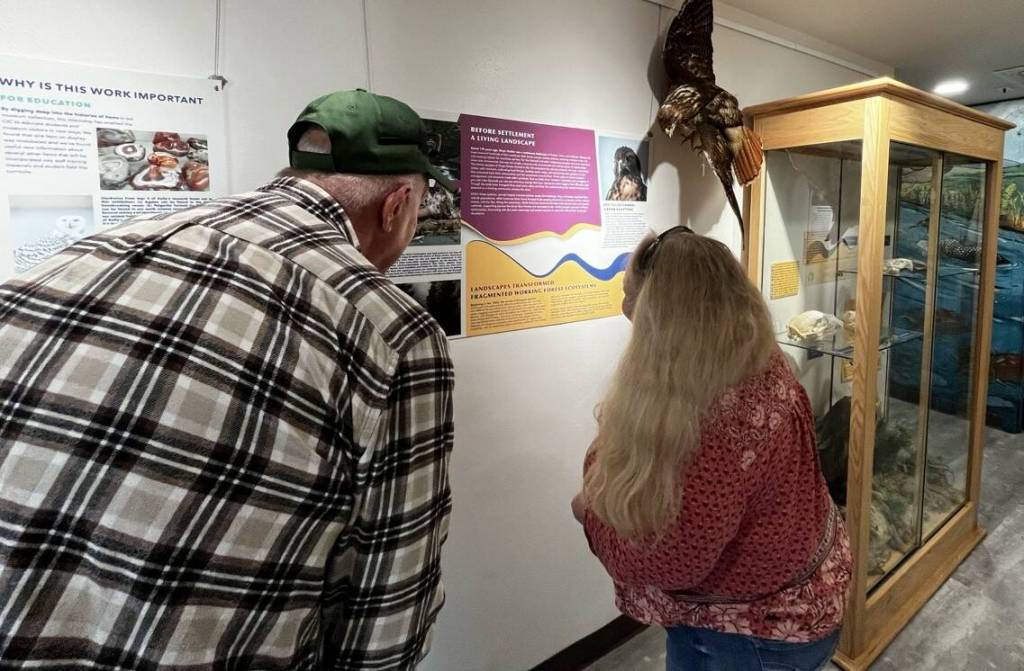
For her other project, Hewitt created a temporary exhibit that highlights how industry has shaped Grays Harbor County since the 1800s though the view of black bears, coyotes, beavers, blue herons and red-tailed hawks.
“It’s showing that humans have changed, altered the landscape, and it’s also causing animals to alter their behavior,” she said.
As with this project, “I was able to totally just pick whatever I was most passionate about,” Hewitt said, “And I felt really passionate about talking about how our ecosystems have been changing and they’re still extremely rich, diverse ecosystems, but they aren’t as abundant and great as they once were.”
With her internship beginning in mid-October and ending in April, Hewitt said, “It’s been really wonderful to kind of rediscover this place and watch it actively grow and become something entirely different. Jacob [Baker] and Becky [Stitt], they’re trying really, really hard to bring quality environmental and wildlife and the education of what’s going on in Washington and Grays Harbor specifically to everybody.”
To the question of what she loves about environmental education, “you don’t realize how amazing the world is until you have someone who’s passionate about, the world or can show you something about the world that maybe you didn’t otherwise think to seek out,” Hewitt said. “And I feel like interpretive centers and spaces like these give both kids and adults alike an opportunity to really engage hands-on with the cool things that are happening here in Washington.”
Other additions to Coastal Interpretive Center
Hewitt’s work isn’t the only new addition to the CIC. Jacob Baker, executive director of CIC, shared that a capital campaign called “Next Waves” has been launched in anticipation of CIC’s 50th anniversary next year.
“As we’ve grown into the biggest educational services provider and the biggest museum in Grays Harbor County, we want to make this a focal point for as many people as possible,” Baker said.
Beginning last autumn, CIC staff, board members and volunteers have been making small steps to prepare for bigger steps to come.
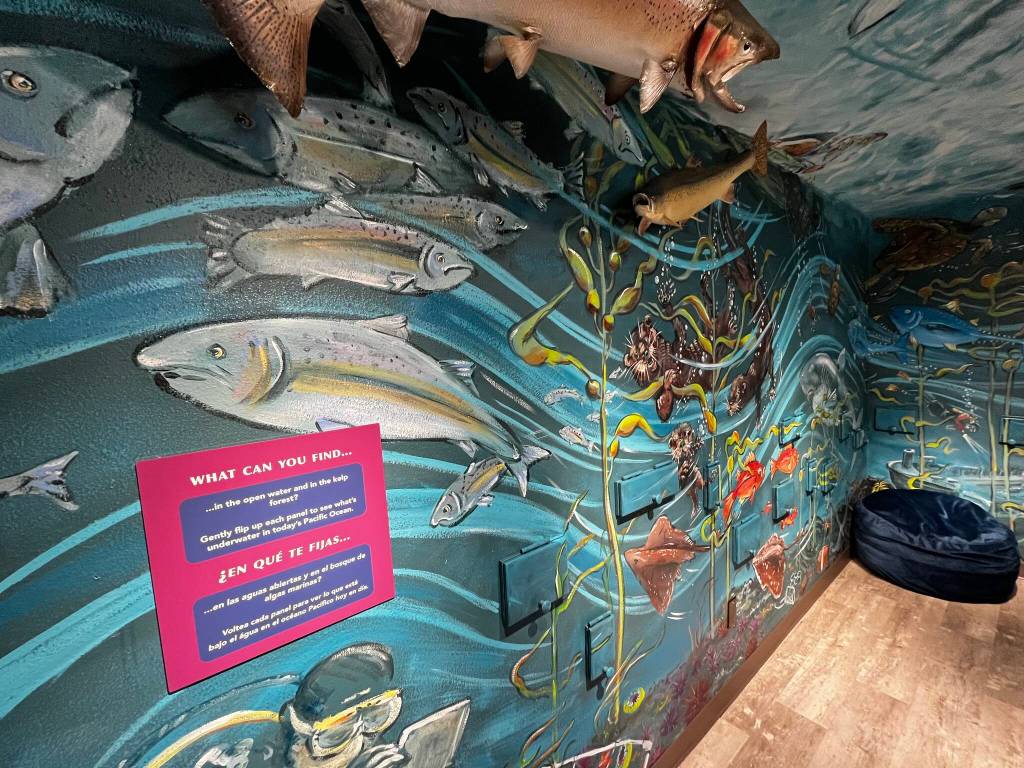
One of these small steps was creating Open Ocean and Deep Sea areas in the children’s discovery rooms. Additionally, panels and labels for all exhibits are being refreshed to be written in English, Quinault and Spanish. For the Quinault translation, Baker worked with Cosette Terry-itewaste, the language developer/lead teacher with the Quinault Language Department, for the translation.
“It’s an important regional language, culturally and historically and socially and politically,” said Baker.
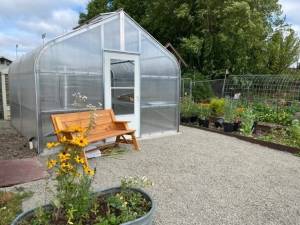
Outside the CIC, visitors can visit the new dune ecosystem demonstration garden, and the trails are being rehabilitated by removing noxious weeds and planting of native plants; a new interpretive story walk is in development too.
The dune ecosystem garden features 17 different native dune plant species. Eventually, there will be a riparian, meadow and alpine ecosystem gardens located at different areas of the campus to both showcase the diversity of ecosystems in Grays Harbor and to encourage people to explore.
Other goals are building a pole barn to host year-round outdoor education classes and rebuilding the entryway to accommodate more people.
The reactions to these improvements by staff and board, said Baker, is it’s been “exciting and energizing to see yourself in a new and different light.”
As for what community members have shared, “we’ve had a lot of positive reception from museum goers, from partners, students and teachers on field trips, that they really appreciate the direction that the Coastal Interpretive Center is heading by working very hard to include more stories in whatever we do,” Baker said.
Looking ahead to their 50th anniversary next year, there will be activities planned throughout the year, and a new strategic plan will also be launched in 2027.
Coastal Interpretive Center Summer Schedule
Beginning June 15, the Coastal Interpretive Center will be open daily from 10 a.m. to 5 p.m.
The exhibit articles that Hewitt wrote are available at https://www.interpretivecenter.org/news.