21st dead gray whale of spring 2026 washes up at Bay Center
Published 1:30 am Friday, May 15, 2026
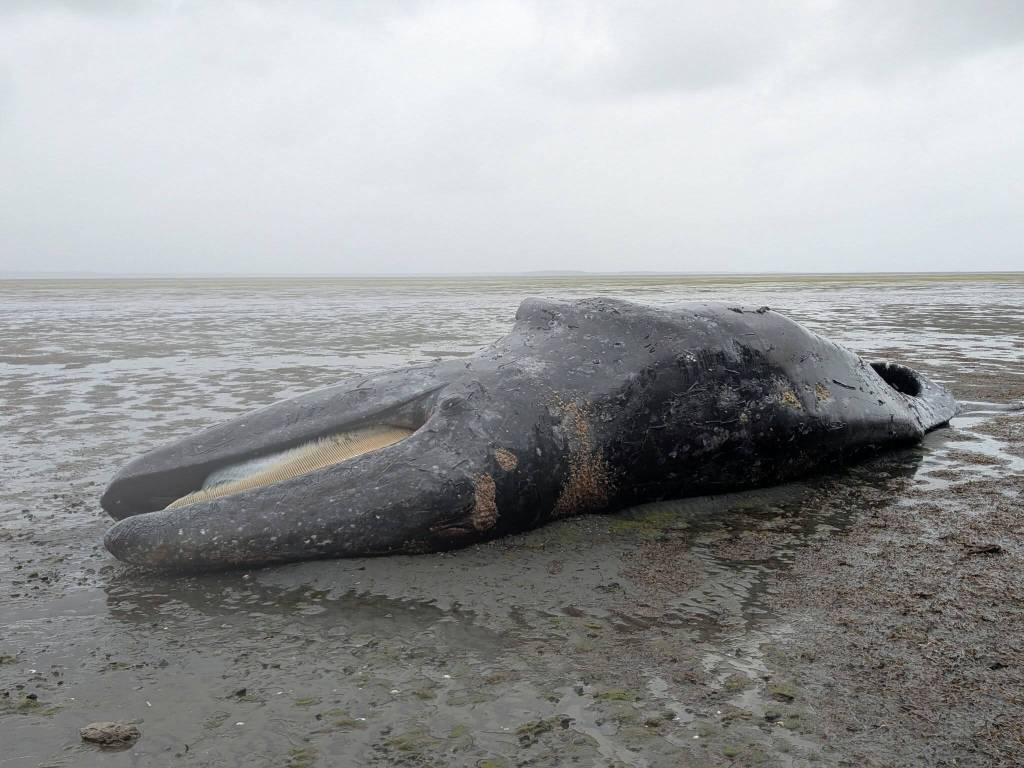

The Chinook Indian Nation notified the Cascadia Research Collective (CRC) and Pacific County Emergency Management Agency Friday morning, May 15, that a deceased gray whale has been discovered in Bay Center — where the tribe is headquartered. The whale was found on Johnson Beach.
This is at least the 21st deceased gray whale to wash ashore in Washington state this spring.
“We do not have any information [to provide] on that whale right now,” Jessie Huggins, a biologist with CRC, said. “I am actually on my way to a different whale in Whidbey Island, and so it will be a while before we are going to have any additional information on the Bay Center whale. We may have to wait until next week to come out and examine [the whale].”
The latest death comes about six weeks after another gray whale, dubbed Willapa Willy, swam miles up Willapa River and died April 4 after becoming stuck on a rock-bed and tree in the river. Willy was among the first deaths in what is proving to be an unprecedented die-off in Pacific Northwest waters.
The Bay Center whale may be one sighted in the Tokeland marina on Sunday, May 10. “It looked rough,” a witness said.
Researchers are pointing to malnutrition due to food scarcity as the main cause of the deaths.
Several of this spring’s gray whales have come ashore in Grays Harbor and Pacific counties. In addition to the grays, on April 17 a Baird’s beaked whale’s body was found on the Long Beach Peninsula.
Gray whales mostly consume amphipod crustaceans — tiny shrimp-like species they scoop up from the bottom sediment of the ocean — and in saltwater/brackish estuaries like Willapa Bay, which is a customary grazing ground. The whales move up and down the Pacific Coast, with the northward spring migration now coming to an the end.
“The alarmingly high number of gray whale strandings in Washington has continued…. The common finding among examined whales has continued to be malnutrition,” CRC said its website. “In addition to poor body condition, at least four of the whales have also had internal trauma consistent with vessel collision, and one had evidence of a recent entanglement, although the gear was no longer on the animal.”