What macroinvertebrates do we spy?
Published 1:30 am Tuesday, May 12, 2026
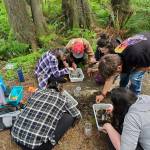

After the macroinvertebrate ID night and sampling techniques training session, the citizen scientists participating in the Grays Harbor Stream Team Macroinvertebrate Program were ready for their first field event. On Saturday, May 9, they met at a site on the east fork of the Wildcat Creek in McCleary where they spent the afternoon collecting macroinvertebrates samples.
Under the direction of Breana Downs, the education and outreach coordinator with Grays Harbor Conservation District, the citizen scientists collected measurements of the site conditions, such as temperature and pH of the stream. Next was assessing the bank stability using a rating of 1=unstable and 5=stable, with the right bank assigned a 3 due to exposed tree roots while the left side of the bank received a 5.
Viewing the forest from a vertical perspective, the group compiled a list of plants growing in the riparian area, starting with the overstory and then moving to the mid-level and finally the forest floor. Cascara, western redcedar, red alder, miner’s lettuce, sword fern and salmonberry were among the native plants readily identified.
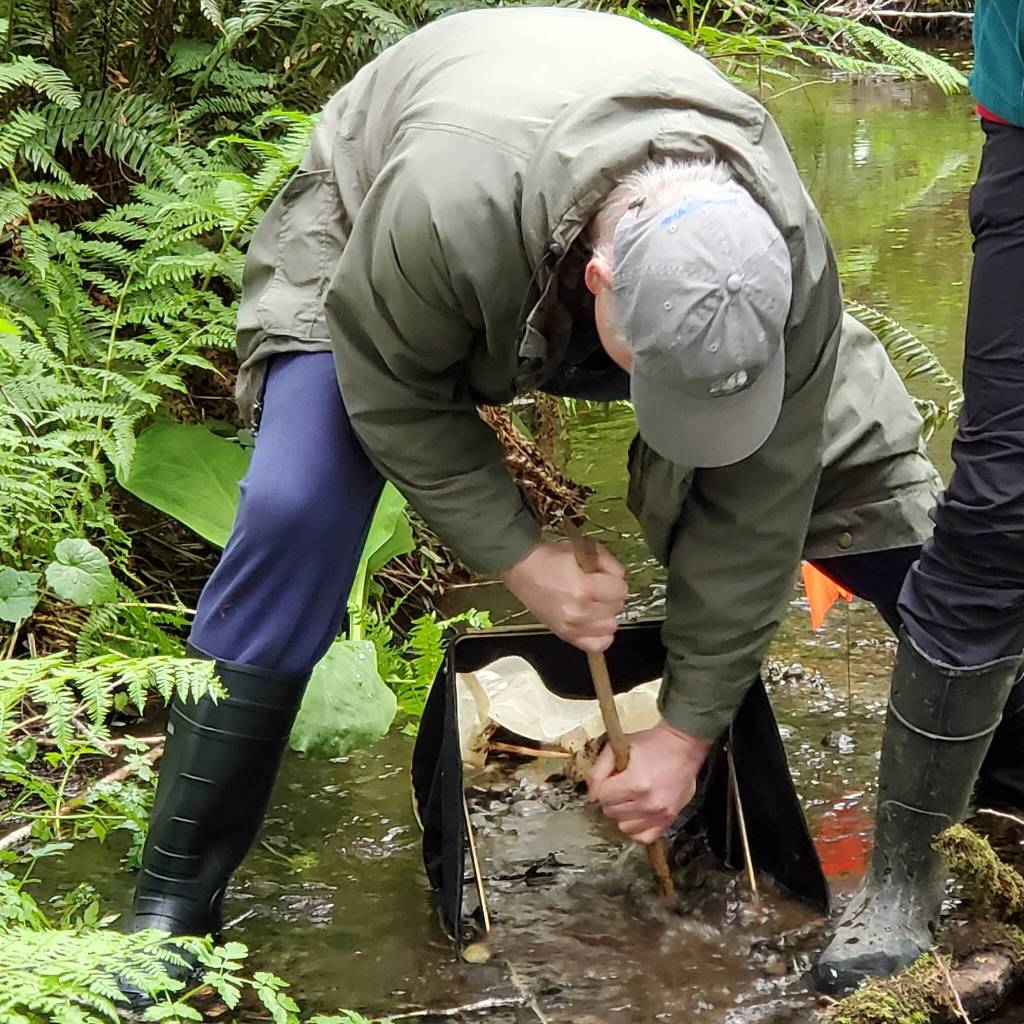
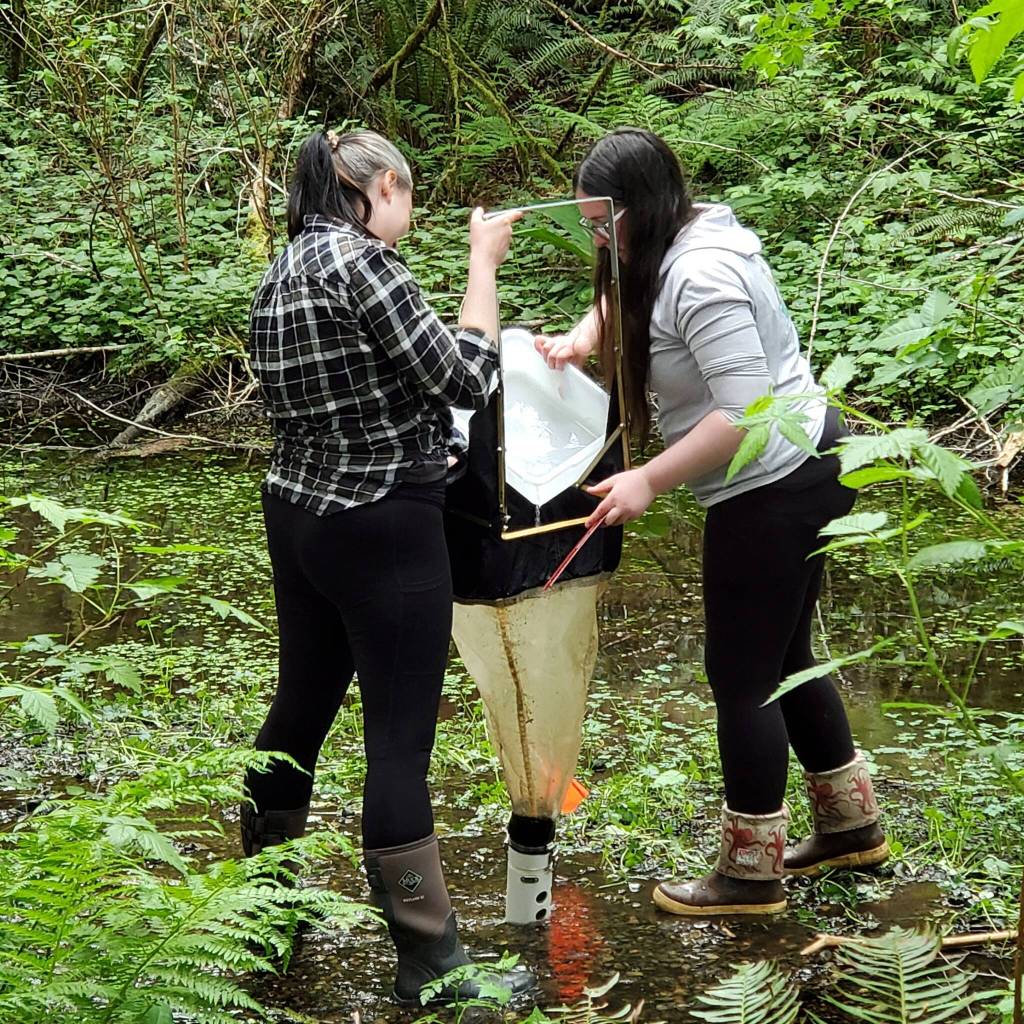
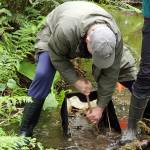
Then came the collecting of macroinvertebrates. With a surber sampler in hand, Downs waded into the stream to the first of two riffles that she flagged as the collection sites. (Where the water flows fast over a shallow portion of the creek bed is called a riffle.) A surber sampler has mesh that is fine enough for water to flow through, but sediment becomes trapped in a container at the end of the sampler. Hunched over the sampler, each volunteer took turns stirring up the gravel bed for a minute.
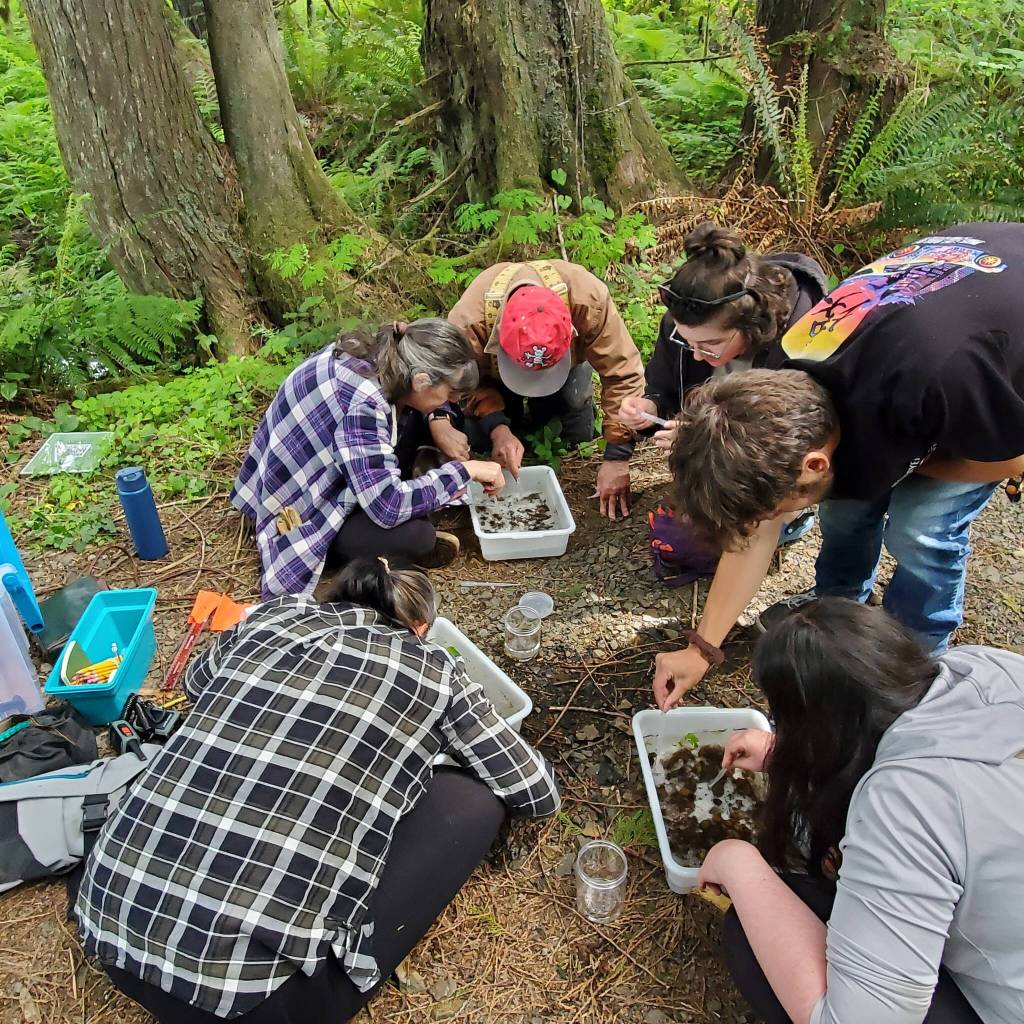
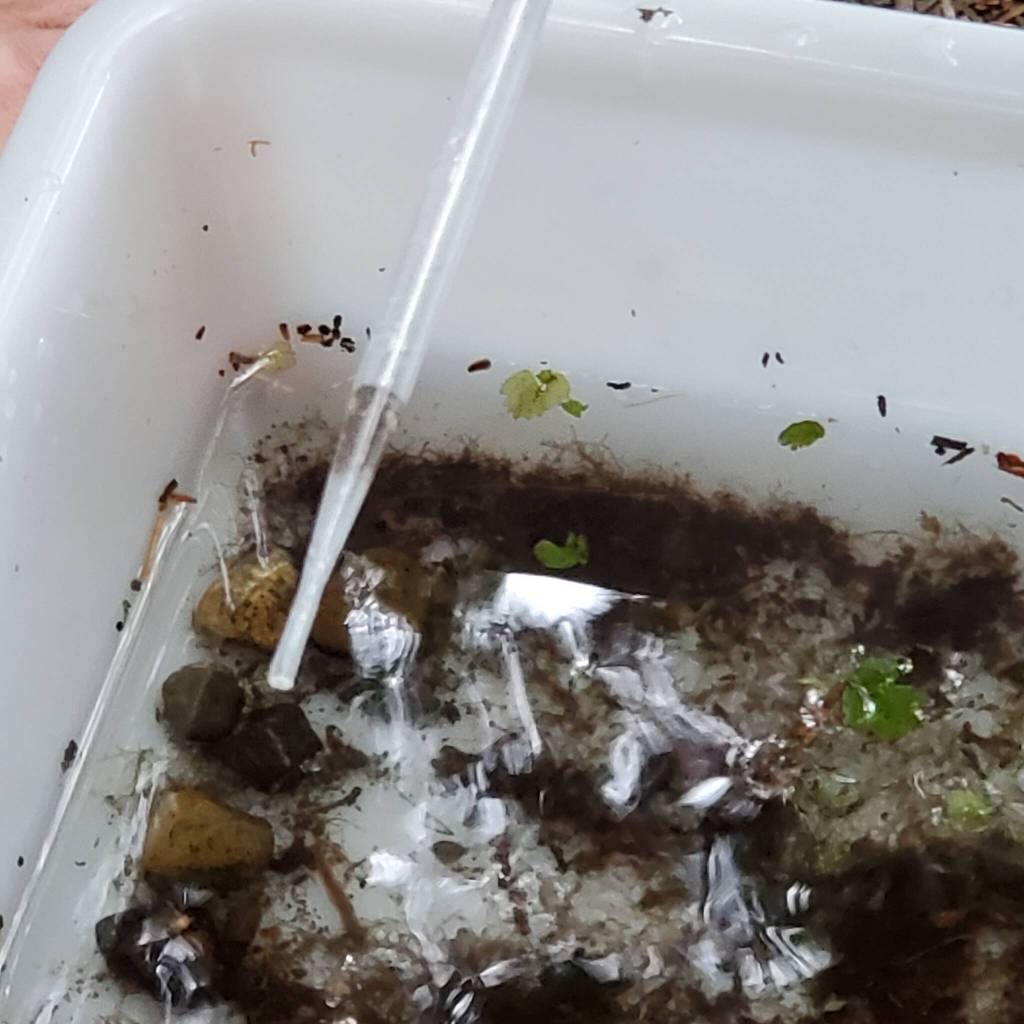
The large rocks collected in the container were rinsed off to remove any macroinvertebrates and discarded, and the remaining mixture of smaller sediment and leaves was carefully run through a sieve, then into white containers containing water the mixture was dumped. Sitting on the forest floor, hunched over the containers, the citizen scientists searched among the creek bed material for macroinvertebrates. Using a spoon or pipet, they extracted the macroinvertebrates and placed them into a container containing alcohol. Some were easy to catch but others required patience and multiple attempts.
What species of macroinvertebrates were caught? And how healthy is that section of the east fork of Wildcat Creek? Come to the Bug ID event on May 30 to learn the answer to those questions by identifying the samples.
The Bug ID event will be held at the WSU Extension Center Building at Grays Harbor County Fairgrounds, 34 Elma McCleary Rd. in Elma. The session is scheduled from noon to 4 p.m. Everyone is welcome, and please RSVP using this link: https://www.graysharborcd.org/event-details/macroinvertebrate-id-event-1.
If you missed this field event, three more will be held later in the summer at Lake Sylvia State Park, a Chehalis River floodplain site in Elma and at Mill Creek Park. For the dates and times, visit https://www.facebook.com/GraysHarborStreamTeam.