Tackling English holly trees in the city of Elma’s Masonic Cemetery
Published 1:30 am Friday, February 27, 2026
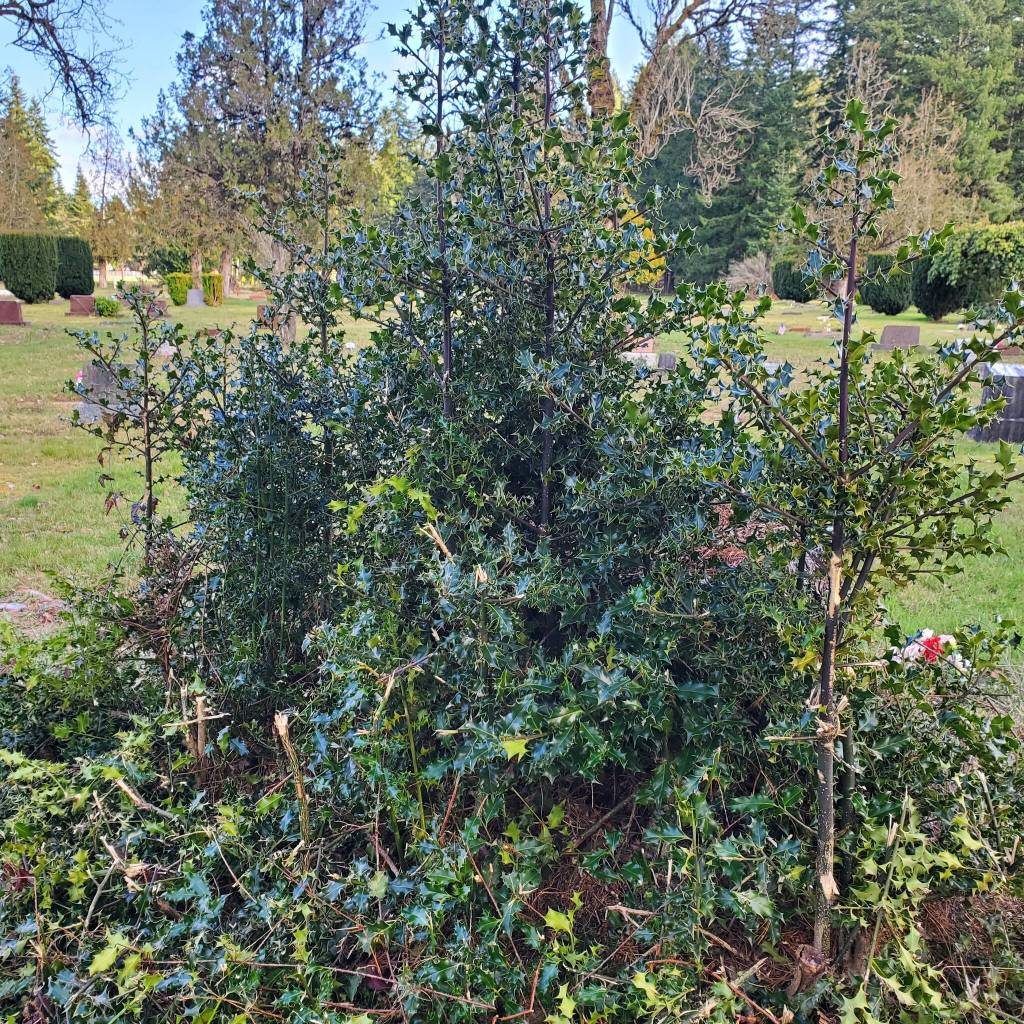
In the city of Elma’s Masonic Cemetery along Monte-Elma Road, there are 12 fewer trees amongst the landscaping and headstones.
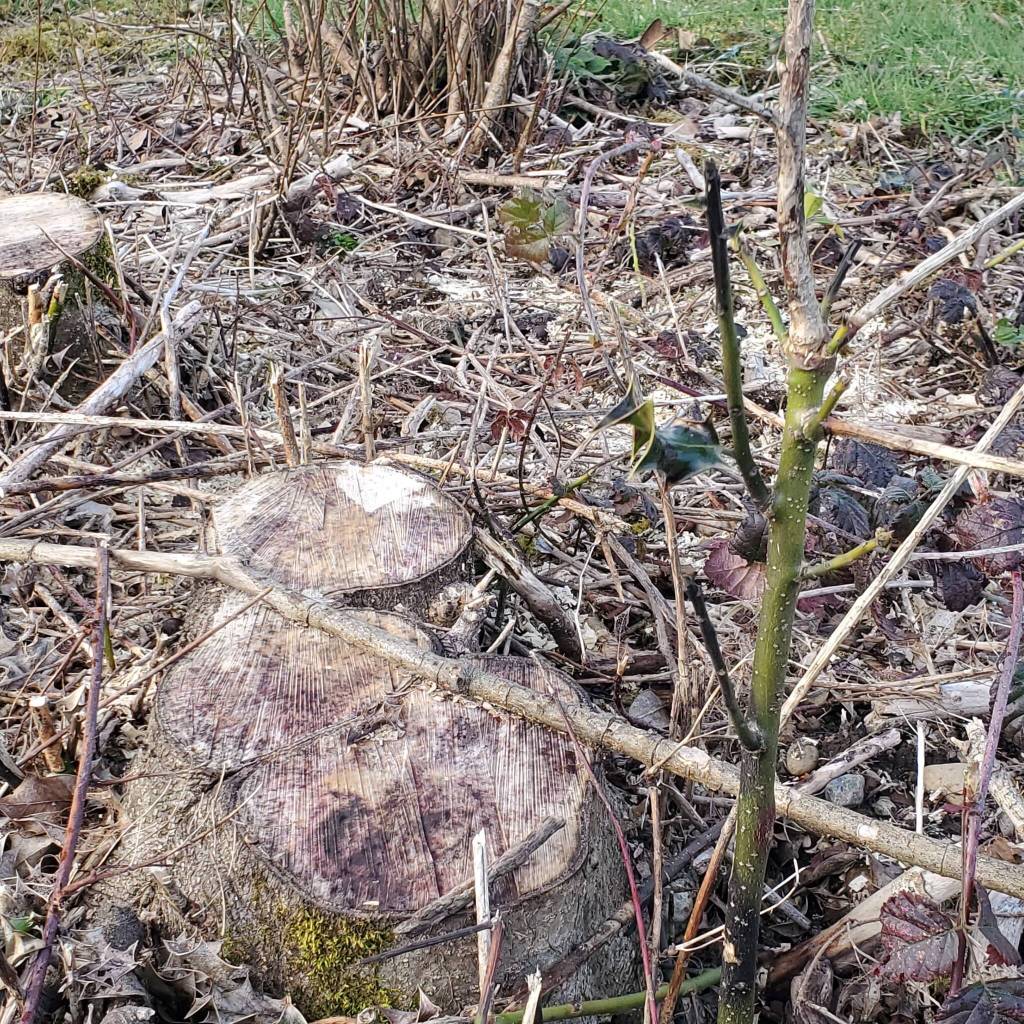
About a year and a half ago, Frank Dickson began visiting the cemetery to tidy the bushes and clean the headstones. Alongside some of the headstones grew English holly; weathered cut stumps indicated past attempts to remove the plant. Some of the stumps are two or three inches in diameter, said Dickson, and new growth was sprouting from these stumps.
English holly is a recent addition to the Washington State Noxious Weed Control Board list, having been added in 2025 as a Class C. As a Class C, it’s not required for control; however, counties can choose whether to require control. English holly, also known as common holly, is on the Grays Harbor County 2025 noxious weed list as a Class C.
This invasive plant spreads vegetatively when its branches or stems comes in contact with the soil under the right growing conditions and via seed by birds. In the cemetery, these trees likely sprouted from seeds spread by birds. In one of the berry-bearing holly trees, Dickson had observed that in “early morning, right after the berries ripened, in one tree, I bet you two dozen cedar waxwings flew out of it.”
If he was cleaning a headstone that had holly growing in the plot, Dickson would cut it back with loppers, but “it’s just obvious that there needed to be a stop made to it.”
At an event at the Grays Harbor Fairgrounds, Dickson connected with Dan Bonnell, owner and operator of Bonnell Tree Technicians, and asked if Bonnell would take care of the English holly trees and other shrubs that needed cut back as part of the work that the Grays Harbor Genealogical Society planned to do that fall. Bonnell agreed to donate crew time for the work.
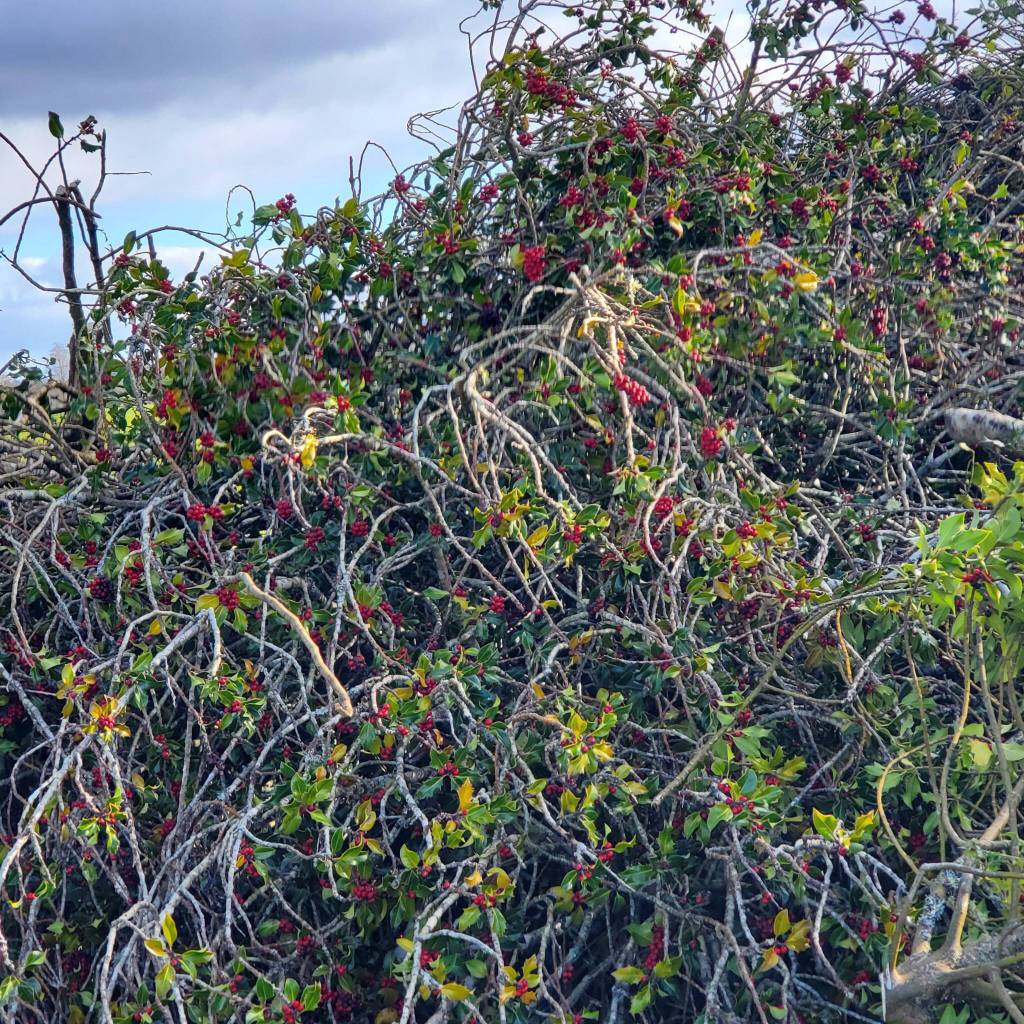
It took some time until the removal happened. The Grays Harbor Genealogical Society had to reschedule their work party. In the meantime, Dickson hosted a walk-through of the cemetery with Mayor Josh Collette, so the mayor could see the landscaping needs. And in January, Bonnell Tree Technicians donated crew time to cut down the berry-bearing English holly trees. And at the back of the cemetery where the debris pile, the English holly trees are piled on, with their green leaves and red berries still vibrant.
To ensure the berry-bearing trees aren’t allowed to regrow enough to produce berries, continued efforts will be needed to cut back the new growth. “Hopefully they [the city] can keep up with the others as they come up,” said Dickson.