Can you get fined for feeding deer in Washington?
Published 1:30 am Monday, January 12, 2026
As temperatures drop in Washington state, you might notice more deer gathering near gardens, yards, parks and even golf courses.
The graceful, antlered animals are likely searching for something to eat.
“Winter can be a good time to view deer because they are often concentrated at lower elevations,” the Washington State Department of Fish and Wildlife said on its website, adding that you can view them by “using binoculars and spotting scopes to scan open, sunny areas, especially those with significant shrub cover.”
Although you may be tempted to offer deer some food, wildlife experts say it’s a bad idea.
In Western Washington, the most common deer subspecies is the Columbian black-tailed deer, according to the Washington State Department of Fish and Wildlife.
Deer are “most active near dawn or dusk,” the state Fish and Wildlife Department said, feeding in meadows and clearings before retreating to “more secure areas, such as thickets and closed canopy forests, to rest and chew their cud.”
If you want to observe deer, position yourself in a feeding area near cover close to sunrise or sunset.
“Remain absolutely still, because deer are alert for any movement,” the state wildlife agency said on its website. “They also have a good sense of smell; stay downwind of the feeding area to prevent deer from detecting your scent.”
Don’t get too close to deer, experts warn. If threatened, the wild animals can cause serious injuries.
“When the temperature drops and snow falls, or when does arrive with their new fawns in the spring, many people want to feed deer and other wildlife in an effort to ‘help’ the animals,” the agency said. “We generally discourage citizens from feeding deer, elk and other wildlife species any time of year because of the potential for harm.”
Feeding can attract animals “across well-traveled roads where they are more likely to present a safety hazard and be hit by cars,” the Washington State Department of Fish and Wildlife said, adding that deer can “damage nearby agricultural areas, trees or landscaping” in their search for “artificial feed.”
What’s more, deer’s stomachs have trouble breaking down corn, apples and other treats.
“Fruit and grains are not a normal part of a deer’s diet and can be extremely difficult for deer to digest,” the Washington State Department of Fish and Wildlife said.
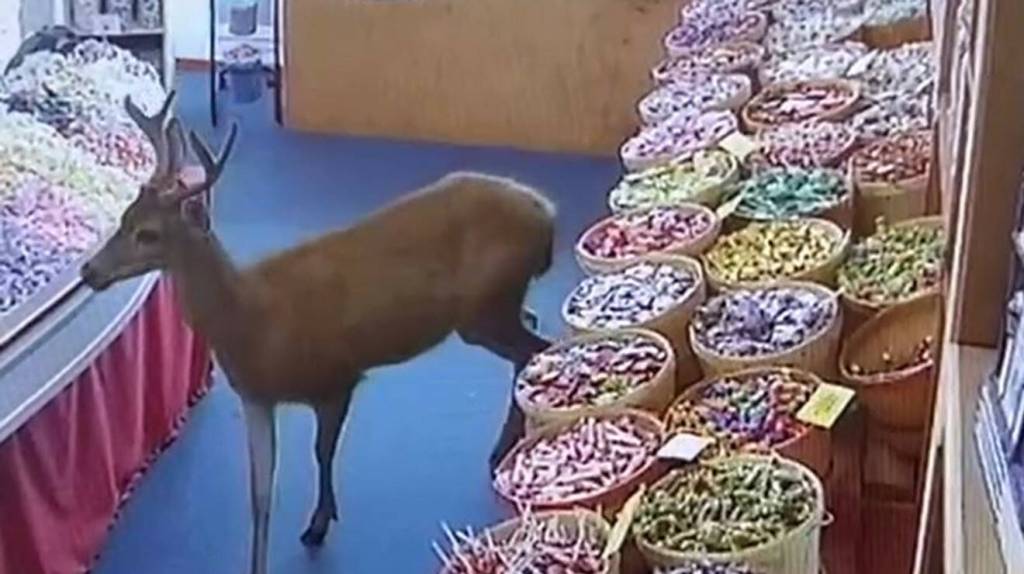
These foods also don’t have the “right amounts and types of vitamins, minerals and especially fiber that deer and elk need to stay healthy,” state wildlife officials explained. “Feeding these alternative foods is similar to feeding your children nothing but candy bars.” What are other risks of giving deer food?
When a group of wild animals gather in a central location, it also makes them vulnerable to poaching, predators and disease, according to wildlife experts.
Specifically, deer and elk can contract chronic wasting disease, state wildlife officials said.
This “always fatal” disease is spread through contact with infected animals’ saliva, blood, urine and feces as well as indirectly through the environment, according to the federal Centers for Disease Control and Prevention.
“Once an animal gets sick, the disease moves to its brain and spine and eventually kills the animal,” the CDC said.
Kelly Susewind, director of the Washington State Department of Fish and Wildlife, recently approved a ban on feeding deer, elk and moose.
The new rule also makes it illegal to place feed for other wildlife if it “causes deer, elk or moose to congregate.”
“Feeding draws animals together where they can spread disease,” the state Fish and Wildlife Department said on its website.
In Washington state, feeding deer, elk or moose is punishable by an infraction and a fine of $179, Chase Gunnell, communications manager for the Washington State Department of Fish and Wildlife, said.
“Fines from infractions are issued through the county court system, similar to a traffic ticket,” Gunnell explained.
However, Fish and Wildlife police officers in Washington “have some discretion” when dealing with offenders and “typically focus first on education, including expert advice to avoid unlawfully feeding wildlife,” he said.
In addition, anyone who “intentionally feeds, attempts to feed or attracts large wild carnivores to land or a building” can be charged with a misdemeanor under Washington law.
That includes feeding deer, which can draw cougars, wolves, coyotes and other predators.