Washington forestland owners in ‘most contentious’ battle in quarter century
Published 1:30 am Tuesday, November 11, 2025
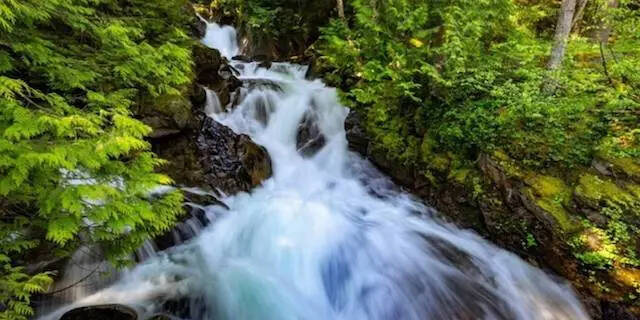
The Washington Forest Practices Board may vote today to widen and lengthen riparian buffers, taking millions and maybe even billions of dollars worth of timber out of production.
Forest landowners and the wood-products are mounting a last-ditch effort to persuade the board to not adopt what they say would be a massive taking of private property.
The state Department of Ecology says wider and longer buffers would keep timber harvests from raising temperatures in non-fish bearing streams in most cases.
Timber groups haven’t been in a battle this divisive since the industry, state agencies and tribes settled on seminal logging rules in 1999, Washington Forest Protection Association forest policy director Darin Cramer said.
“There have been a lot of contentious issues in the last 25 years, but nothing like this. Nothing even in the same universe as this,” he said.
Currently, timber harvests are generally prohibited within 50 feet of sections of streams without fish. The new rule would generally widen buffers to 75 feet and eliminate the gaps.
Studies confirmed logging raises water temperatures. The timber industry argues that even if temperatures rise, they soon go down and generally do not exceed acceptable levels.
Massachusetts-based consultant Industrial Economics, hired by the state, estimates the rule will take somewhere between 67,000 acres and 170,000 acres out of production.
University of Washington research scientists Luke Rogers and Jeffrey Comnick estimated the new buffers will take 204,000 acres out of production.
“It speaks to the uncertainty of what the consequences of the rule will be. We don’t really know,” Cramer said.
Forestland owners will lose between $320 million and $1 billion in land values, according to Industrial Economics. Forestland owners will lose $2.8 billion worth of harvestable timber, according to Rogers and Comnick.
“Anyway you look at it, it’s a ginormous number,” Washington Farm Forestry Association Executive Director Elaine Oneil said.
Besides state-level impacts, the UW researchers estimated losses in timber production by county. Pacific and Wahkiakum counties will lose the highest percentages of production followed by Lewis, Cowlitz and Grays Harbor counties, they said.
Industrial Economics did not do a county-by-county analysis. The firm estimated lost timber sales throughout Western Washington will be $5.1 million to $23 million a year. Spread over 34,000 forestland owners, the annual losses would be $150 to $680 per landowner, according to the firm.
The losses, however, won’t be evenly spread. The new buffers will only affect timberland owners with property bordering streams without fish. Wider buffers already are required along streams with fish. Rogers and Comnick estimated losses will be concentrated on about 15% of the forestland parcels.
“Some landowners are unaffected, and some are devastated,” Oneil said. “Southwest Washington is going to get creamed.”
Industrial Economics also did a cost-benefit analysis and concluded the benefits outweigh the costs, though acknowledged the benefits are hard to put a dollar figure on.
The firm estimated the rule will reduce the state’s output of carbon emissions by between 0.005% and 0.07%. The benefits will include 8 billion people avoiding “climate damage,” according to the firm.