Kalaloch clam surveys guide harvest management
Published 1:30 am Wednesday, October 15, 2025
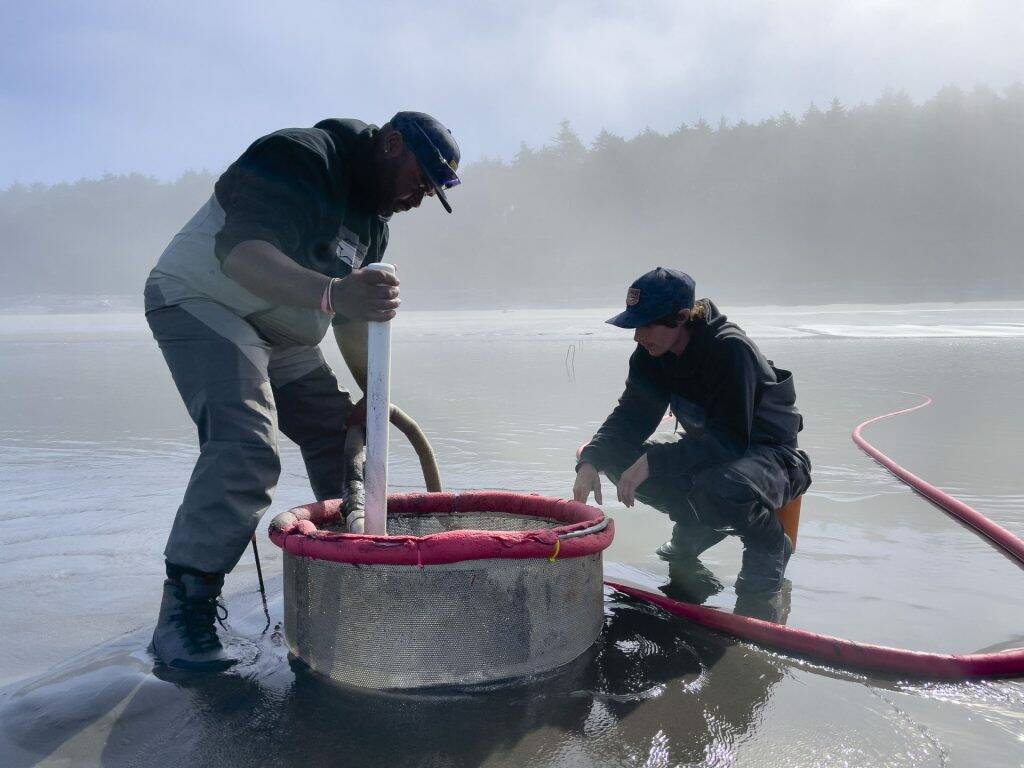
An abundance of young razor clams along the south end of Kalaloch Beach caught the attention of the staff from the Quinault Indian Nation and Hoh Tribe during this year’s population survey.
“It’ll be interesting to see if they survive to grow big and for us to find them again next year during the assessment,” said Scott Mazzone, Quinault’s marine fish/shellfish biologist.
Each year, the tribes survey Kalaloch to assess the razor clam population, check for new sets on the beach, and determine if the population will support subsistence harvest for tribal members. This process also takes place on other beaches where the tribes harvest subsistence and commercial clams.
“Razor clams are an important resource to Quinault Indian Nation, as we have been taking care of this resource since time immemorial or as I like to say, ‘since the first sun,’” said Cleve Jackson, Quinault fisheries policy spokesperson. “This resource nourishes our bodies, souls and life. As time continues, Quinault will always manage this resource, as our ancestors have, for future generations.”
In addition to noting the number of young clams, surveyors encountered more harvestable clams on the north end of the beach than the south, Mazzone said.
The survey estimates the number of harvestable clams, defined as 3 inches or larger. If the population is harvestable, per their reserved treaty rights, tribes may harvest 50% of the total allowable catch (TAC) and the Washington Department of Fish and Wildlife may schedule recreational digs for the remaining 50%.
With an eye toward protecting the future of the harvest, tribes help make sure the TAC isn’t exceeded.
“We’ll monitor the digs and if we get close to the TAC, we’ll shut it down,” Mazzone said.