Bear Gulch Fire grows to 1,094 acres, 10% contained
Published 1:30 am Tuesday, July 29, 2025
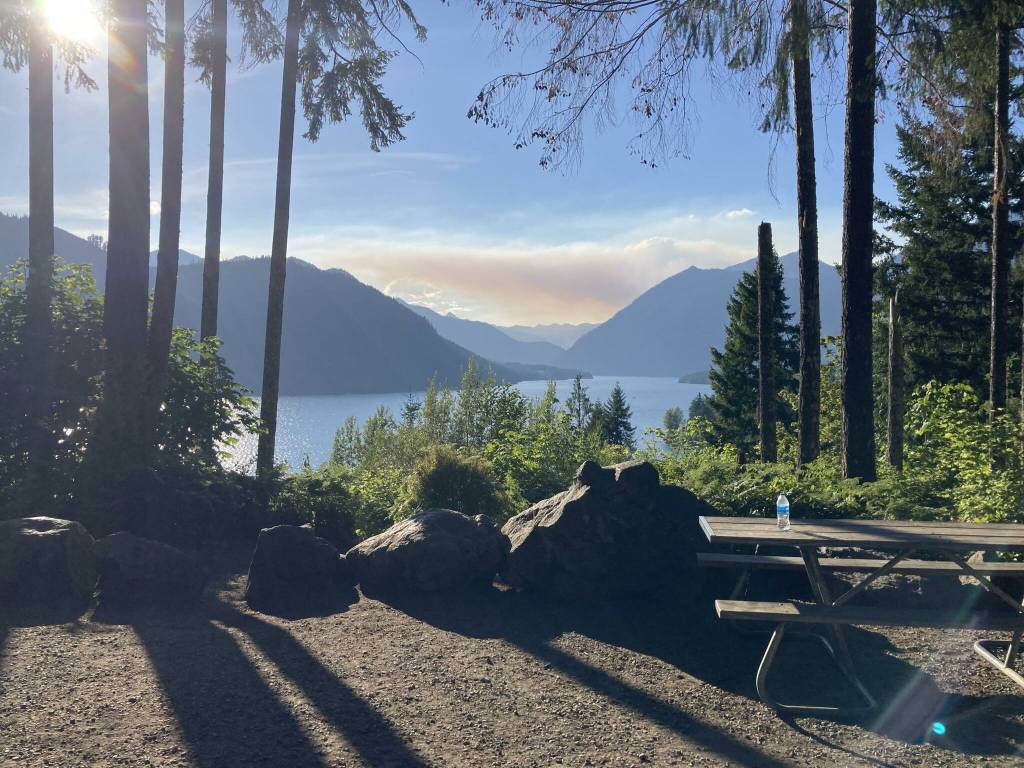
Bear Gulch Fire on the north side of Lake Cushman near Hoodsport continues to grow, reaching 1,094 acres with only 10% containment as of Monday afternoon.
The incident management team managing the Bear Gulch Fire has also assumed command of the nearby Hamma Fire. Firefighters are using direct attack to suppress the Hamma Fire.
The Hamma Fire was reported yesterday evening, along the Hamma Hamma drainage on Washington Department of Natural Resources (WA DNR) state land. WA DNR personnel provided initial response in cooperation with local support resources. It is located northeast of the Bear Gulch Fire.
On Monday firefighters were working to keep the fire south and west of Forest Service Road 2480 and south of Forest Service Road 2441. To support firefighter efforts and safety the public is being asked to avoid the area. Helicopter activity may be visible.
The Bear Gulch Fire has been backing toward the Staircase area of Olympic National Park. Sprinklers are in place and structures and infrastructure in the area have been prepared with protective structural wrap. Firefighters are working around the clock to protect natural resources, and historic and critical infrastructure should rolling fire debris encroach upon the area.
Firefighters are preparing Forest Service Road 2451 to become a potential control line to protect the Copper Creek Community on the southwest side of Lake Cushman. Crews are reducing fuels on the Mt Ellinor Trail. Firefighters are also constructing indirect fireline along roads and trails to prevent the spread of the fire east toward Big Creek Campground, Lake Cushman Mt. Rose Village, the community of Hoodsport and U.S. Highway 101.
The Bear Gulch Fire continues to burn in the Skokomish Wilderness and Olympic National Park. The surface fire is active during the warmest part of the day, primarily creeping and smoldering with isolated torching and short-range spotting.
Warmer and slightly drier weather is expected to continue for the next few days.
Smoke may be more visible in the afternoon as the temperature rises and humidity falls. Locations in the immediate vicinity of the fires should expect intermittent periods of smoke.
When weather allows, aircraft will use the north end of Lake Cushman for dipping water for fire suppression.