The Harbor tries to gird for coastal flooding as ‘super El Niño’ nears
Published 1:30 am Monday, August 3, 2026
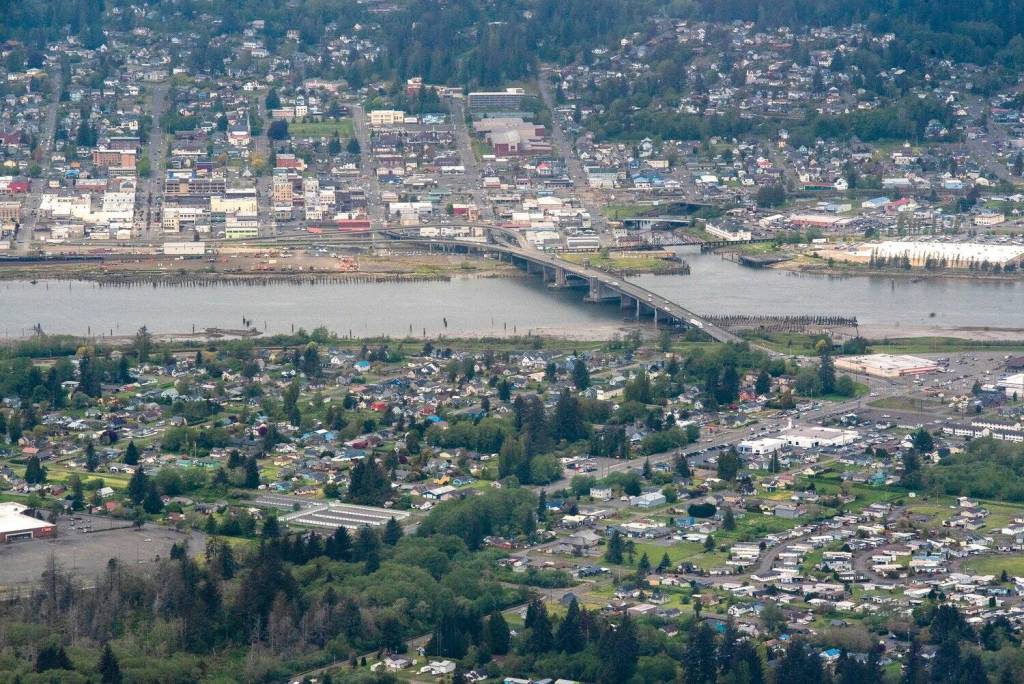
With a record-breaking El Niño in the forecast, it could be a rough winter for low-lying communities on the West Coast.
Two levee projects aimed at protecting Washington cities from coastal flooding have hit repeated roadblocks.
One flood-prevention project on Puget Sound is moving ahead on an emergency basis, while one in Grays Harbor is still awaiting its promised funding from the Federal Emergency Management Administration [FEMA] despite a federal court order.
Stanwood officials expect to break ground Thursday on emergency repairs to a century-old levee that protects most of the city from flooding where the Stillaguamish River meets Skagit Bay. The project got emergency approvals and $1.75 million in Snohomish County funding in July.
“I am very excited to see some movement,” Stanwood City Engineer Alan Lytton said by email. “Feeling much better about king tide season with a repaired levee.”
The highest tides of the year, known as king tides, arrive in November, December, and January in Washington, often flooding low-lying coastal areas.
Waves and wind gouged the outer side of a half-mile stretch of the aging Stanwood levee during a king tide in January 2026.
If it were to fail, floodwaters could displace 1,100 people in the Stanwood area and damage buildings worth $480 million, according to a 2022 Snohomish County study.
Stanwood City Hall, a police station, three schools, and three nursing homes could flood with sea water.
Since the Stanwood levee was built a century ago, a warming climate has boosted sea level around Puget Sound an average of six inches, enough to increase the frequency of levee-topping floods.
When sea water, or any liquid, gets warmer, it expands. It’s the main reason that climate change has been raising sea levels, along with glaciers melting.
The expected arrival of a strong, if not record-breaking, El Niño later in 2026 could further boost sea levels temporarily by heating up much of the Pacific Ocean.
Oceanographer Ian Miller with Washington Sea Grant at the University of Washington said strong El Niños in 1982 and 1997 raised sea level on the Pacific Northwest coast by almost one foot, while another big El Niño in 2015 raised it about 6 inches.
An El Niño in the winter of 2023-24 added six to eight days of high-tide flooding on the Oregon and Washington coasts and two to four days on Puget Sound, according to the U.S. Department of Agriculture’s Northwest Climate Hub.
National Oceanographic and Atmospheric Administration researchers say there’s an 80% chance of a very strong El Niño weather pattern by autumn.
Most global climate models, operated by scientists at different institutions, are forecasting an El Niño of unprecedented strength.
“The vast majority of models, about 90% of the runs now, expect a record-setting El Niño event, stronger than anything that we have observed since records began in the mid-1800s,” Berkeley Earth climate scientist Zeke Hausfather said.
El Niños originate in the tropical Pacific yet affect weather around the world. For the Pacific Northwest, El Niño boosts the odds of a warm, dry winter and a bad wildfire season afterward due to a meager mountain snowpack.
Aberdeen and Hoquiam will have to face this winter’s El Niño without protective levees the cities have been hoping to build since 2015, when floods devastated the area.
“It was a combination of high tides and 11 inches of rain in a 24-hour period,” said Hoquiam City Administrator Brian Shay.
Rep. Emily Randall (D-WA 06) is urging the Trump administration to speed up its long-delayed funding to help the cities near Grays Harbor improve their flood defenses.
Aberdeen and Hoquiam have been planning to build 11 miles of levee along the north shore of Grays Harbor, protecting more than 5,000 properties. The cities have been anticipating more than $80 million of federal funding for the pair of levee projects.
FEMA terminated its disaster-prevention grants program, called Building Resilient Infrastructure and Communities [BRIC], in April 2025. The agency called the program wasteful, ineffective, and politicized.
A federal judge in December ordered the administration to restore the program.
“If the program hadn’t been canceled, we would have signed the grant agreement last spring,” Shay said. “And here we are now, you know, 18 months later.”
Shay said the levee will not get built if the federal funding doesn’t materialize.
“Hoquiam is a city of 8,800 people,” he said. “There’s no way we could bear the burden of an additional $35 million.”
An unnamed FEMA spokesperson said by email that FEMA is currently reviewing $34.65 million in funding for the Hoquiam levee, which is more than $12 million shy of the original $47 million allocation. Aberdeen continues to wait for $37 million in BRIC grant money for its levee project.
“We continue to work with our state and local partners on this project,” the FEMA official said.
But Rep. Randall said the community has waited long enough.
“This is unacceptable and it is dangerous,” she wrote in a July 22 letter to FEMA Acting Administrator Robert Fenton.
The Washington Military Department coordinates federal funding for emergency-preparedness projects in Washington state. Spokesperson Karina Shagren said the department has received none of the $150 million in grants it is awaiting from FEMA’s BRIC program.
If FEMA does provide the mandated funding in September as Shay now expects, levee construction would start in spring of 2027, after the season of El Niño-influenced king tides has passed.
— The Daily World contributed to this report.