Movin’ shell: Willapa Bay oystermen shuffle beds ahead of summer
Published 1:30 am Friday, June 5, 2026

WILLAPA BAY — The work never ends for oystermen, instead it ebbs and flows like the Willapa Bay tide.
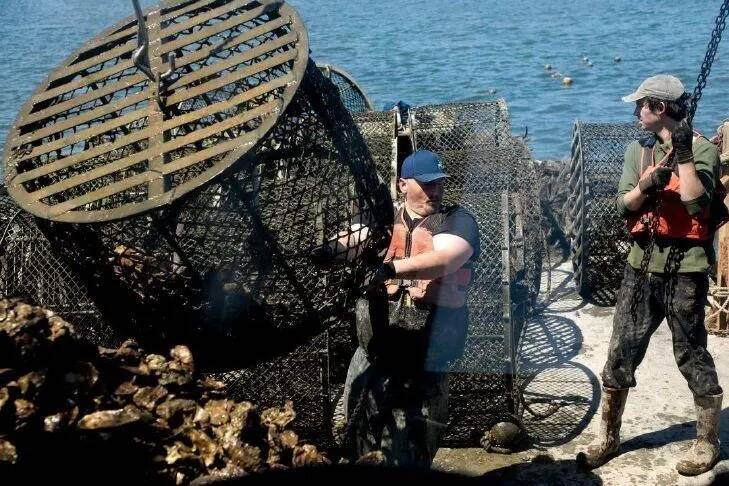
On Saturday, May 30, crew from Long Island Oyster Company were busy moving juvenile oysters to a new bed across Willapa Bay, where the young oysters will grow over the next two years in preparation for harvest.
The goal isn’t to grow a giant oyster, however. It’s the bite-sized petite oysters, coveted for their tender and delicate flavor, that’s most prized.
“In a couple years we’ll be able to pick these oysters,” said fourth-generation oysterman Otto Kemmer as he unloaded tubs of oysters alongside crew Brandon Cristman and oyster dredge operator Corbin Sutherland. “The summer is when they grow best.”
Spreading more shell
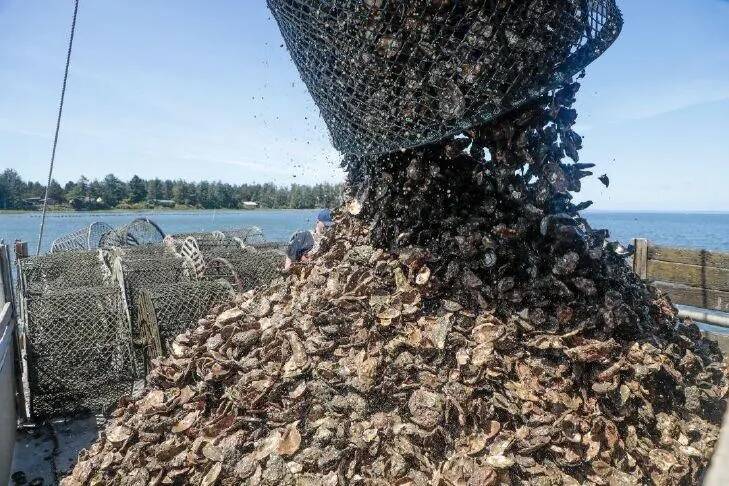
Towering piles of oyster shells sit near the port, remnants of a “poor” oyster set last year, a crucial time when the oyster larvae must permanently attach — or ‘set’ — to the shell in order to continue to grow.
“Last year the natural set wasn’t so good,” Sutherland said as he maneuvered the 55-foot dredge toward the east side of the bay.
“The numbers were good, but halfway through it the weather changed and the water got colder and a lot of the set died off. The reason why those piles are all extra big is because we didn’t put any shells out last summer. We normally just bulldoze it onto the deck and go dump it.”
The plan is to put more shells out this year, Sutherland explained.
“We have a bunch of bags made, but we’re going to start making more. Each oyster company hopes for the best, so they all put a bunch of shells out. On the good years, everybody puts the shell out.”
The oystermen first unloaded dozens of tubs, each containing hundreds of pounds of juvenile oysters. As the oysters were piled on the deck, the occasional invasive green crab could be spotted scurrying from the stack. The crabs pose a significant risk, particularly to young oysters.
Once all the oysters were loaded, they were transferred to a new bed on the east side of the bay, a roughly 30-minute boat ride. Along the way, the oystermen recalled how the industry has matured, particularly over the past 50 years, involving bigger, faster, more efficient barges and better harvesting methods, including the use of dedicated firehoses instead of shovels, to spread the shells off the deck.
El Niño summer concerns oyster farmers
Rising fuel prices and invasive green crabs are concerns for oyster growers along Willapa Bay, but it’s the potential impact from a looming El Niño summer that’s the biggest concern right now.
“The biggest thing on the oyster industry’s radar is that it’s supposed to be an El Niño summer,” Sutherland said.
El Niño, defined as a seasonal climate phase characterized by warmer-than-average surface temperatures in the Pacific Ocean, can have significant impacts on oyster farming and harvesting driven by dramatic weather shifts.
During a heatwave in June 2021, temperatures in Long Beach reached nearly 100 degrees over a three-day period, exceeding previous records set in August 1981. The heatwave had disastrous impacts on the local oyster and salmon hatcheries, which depend on water temperatures ideally staying below 55 degrees.
“That year, along the Puget Sound, there were miles of oyster and clam beds that got so hot that they all cooked and died,” Sutherland said. “Their entire operation died because of the water temperature.”
One natural advantage of Willapa Bay is the proximity to the Pacific, which allows for easier exchange of water with the rising and falling of the tides, whereas beds along Puget Sound are more stagnant and susceptible.