Drug maker releases GLP-1 in cheaper pill form
Published 1:30 am Friday, January 9, 2026
Of the nearly 78,000 souls who reside in Grays Harbor County, 10% are diabetic.
That’s nearly 7,800 people living with either Type 1 or Type 2 diabetes. Data USA reports that 36.5% of county residents are currently considered obese.
A press release issued by the USDA on Wednesday stated, “Nearly 90% of health care spending goes toward treating chronic disease, much of it linked to diet and lifestyle. More than 70% of American adults are overweight or obese, and nearly one in three adolescents has prediabetes.”
According to a 2019 Harvard Medical School article, there are numerous factors that contribute to obesity — excessive caloric intake, genetics, environmental factors, food availability and portion sizes, lack of exercise, sedentary snacking, stress and lack of sleep. When it comes to environmental factors, the article stated, “They encompass anything in our environment that makes us more likely to eat too much or exercise too little. Taken together, experts think that environmental factors are the driving force for the causes of obesity and its dramatic rise.”
The World Health Organization also cited “environmental factors” in a December 2025 article. “Key environmental factors affecting the prevalence of overweight and obesity are those that limit the availability of healthy and sustainably-produced food at locally affordable prices, spaces for physical activity and the absence of adequate legal and regulatory environments. A further factor is the lack of an effective health system response to identify excess weight gain and fat deposition at an early stage.”
While the cause of Type 1 diabetes is unknown, the Mayo Clinic says that “being overweight and not moving enough are key factors” when it comes to developing Type 2 diabetes.
In 2025, The Grays Harbor County Public Health team was dispatched throughout the county for public health emergency preparedness education. The other part of that outreach involved free A1C testing. A1C is considered the “gold standard” when it comes to blood sugar measurement. Public Health also continued a series of free diabetes workshops designed to help individuals and their caregivers manage symptoms, improve quality of life and reduce healthcare costs.
Enter GLP-1s.
According to an article posted by the Yale School of Medicine in July 2024, “The first drug in a class known as GLP-1 agonists was approved in 2005 to treat diabetes. GLP-1 drugs subsequently proved their mettle to treat obesity and prevent major cardiovascular events and will likely soon be available to treat sleep apnea as well.”
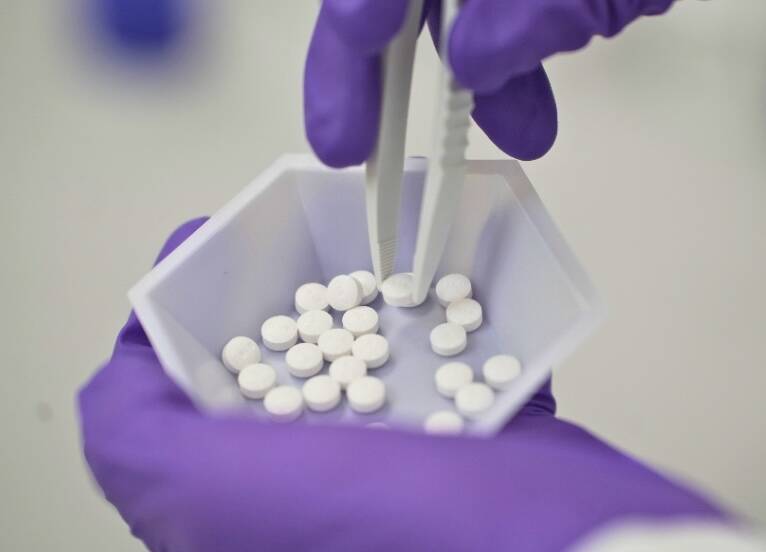
Weekly injectable GLP-1s have been cost prohibitive for most, however, Novo Nordisk’s Wegovy is first FDA-approved GLP-1 to be released in pill form. The cost for the pill form is expected to range from as little as $25 per month with commercial insurance to a self-pay price of $149 to $299 per month, depending on the dosage. The pill’s efficacy promises to be in a similar range as the injectable variety.
“We know there are people who are interested in addressing their weight but have been waiting on the sidelines for a medicine that was right for them. For many of them, that wait is over as we can now offer the powerful efficacy of Wegovy in a once-daily pill that demonstrated about 17% weight loss, if all patients stayed on treatment,” said Ed Cinca, senior vice president, Marketing and Patient Solutions at Novo Nordisk, via press release. “Wegovy pill is here, and it represents a significant innovation as the first and only GLP-1 pill for weight loss. This moment is about changing what’s possible in weight management, and to make that possible, we have worked to ensure Wegovy pill is affordable and accessible to those who need it, however they choose to receive their care.”
Despite this apparent breakthrough in weight loss medication, Grays Harbor County Public Health Director Mike McNickle urges caution.
“It appears that this new formulation has shown that the average body weight lost was 13.6% over 64 weeks for the participants in the study (versus 2.2% for the participants on the placebo) — and the average weight loss for participants who stayed with the trial longer was 16.6%. I think that this is a good solution for those who suffer from chronic obesity, which in and of itself can cause a myriad of other morbidities — diabetes, heart disease, increased risk of stroke, kidney problems, liver problem, etc.,” McNickle said via email. “But the downside is that without controlling caloric intake and adding proper nutrition, along with exercise to their daily regimen, what will happen to patients when they no longer take the medication? I think there needs to be a study of folks who have taken any version of a GLP-1 medication, lost the weight, and then stopped taking the medication. What are the long-term results for patients who relied solely on a GLP-1 for weight loss?”
According to a January 2025 press release, “scientists at Washington University School of Medicine in St. Louis and the Veterans Affairs (VA) St. Louis Health Care System have systematically evaluated health outcomes among more than 2 million people with diabetes taking the popular weight-loss drugs. They found widespread associations with benefits to cognitive and behavioral health, while also revealing increased risks for pancreatitis and kidney conditions, among others. … ‘GLP-1RA drugs can have broad health benefits,’ the study’s senior author, Ziyad Al-Aly, MD, a clinical epidemiologist and nephrologist at WashU Medicine, said. ‘However, they are not without risks. Our findings underscore the possibility for wider applications for these medications but also highlight important risks that should be carefully monitored in people taking these drugs.’”
According to an article by Paula Span published by KFF Health News on Tuesday, Jan. 6, older Americans are quitting the drugs en masse. Former users cite Medicare coverage issues to muscle loss as reasons to stop taking GLP-1s. Span wrote, “Patients 65 and older were 20% to 30% more likely than younger ones to discontinue the drugs and less likely to return to them. … Some patients find that medication-induced weight loss lessens rather than improves fitness, because another side effect is muscle loss. Several trials have reported that 35% to 45% of GLP-1 weight loss is not fat, but ‘lean mass’ including muscle and bone. …
“The high rate of GLP-1 discontinuation may also reflect shortages; from 2022 to 2024, these drugs temporarily became hard to find. Further, patients may not grasp that they will most likely need the medications indefinitely, even after they meet their blood glucose or weight goals.”
Approximately 23% or nearly 18,000 Grays Harbor County residents are 65 and older.
In a May of 2024 University of Chicago Medicine article, Grace Niewijk wrote, “These drugs are extremely effective for blood glucose control and weight management, which, combined with their relatively limited side effect profile, makes them very appealing for diabetes treatment — the purpose for which they originally received FDA approval. However, off-label use fueled by celebrities and social media is a growing concern. And even when physicians are prescribing GLP-1RAs for their intended uses, it’s not a magic formula — there are complex considerations such as dosages, costs, side effects and comparisons between specific drugs.
‘The current fervor for GLP-1RAs in the capital markets as well as in the general public, especially in terms of weight reduction, is probably going to result in overuse,’ said Chun-Su Yuan, MD, PhD, the Cyrus Tang Professor of Anesthesia and Critical Care at the University of Chicago. ‘This should raise a red flag.’”
And in Nov. 2024, Todd Neale wrote for TCTMD, “There are, however, estimates that 50% to 75% of patients stop treatment within a year, leading to a rebound in body weight in many cases, the loss of other benefits, and a potential worsening of cardiometabolic measures.”
To prevent diabetes, the Mayo Clinic recommends losing weight, being more physically active, eating healthy plant-based foods and healthy fats, and skipping fad diets and making healthier choices.
The American Diabetes Association (ADA) recommends routine screening with tests to diagnose Type 2 diabetes for all adults age 35 and older. The ADA also recommends screening for the following groups:
• People younger than 35 who carry excess weight and have one or more risk factors associated with diabetes.
• Women who have had gestational diabetes.
• People who have prediabetes.
• Children who carry excess weight and who have a family history of Type 2 diabetes or other risk factors
For preventing obesity in adults, the University of Rochester (N.Y.) Medical Center recommends keeping a food diary, making half your plate with fruit and vegetables, weighing and measuring food, learning to read food nutrition labels and use them, understanding caloric intake, not eating foods that are high in energy density, reducing portion sizes, exercising each week and building activity into your day.
The Grays Harbor County Public Health’s website offers listings of numerous resources that can help. https://www.healthygh.org/