EPA begins Cosmo Specialty Fibers clean-up
Published 1:30 am Monday, August 10, 2026
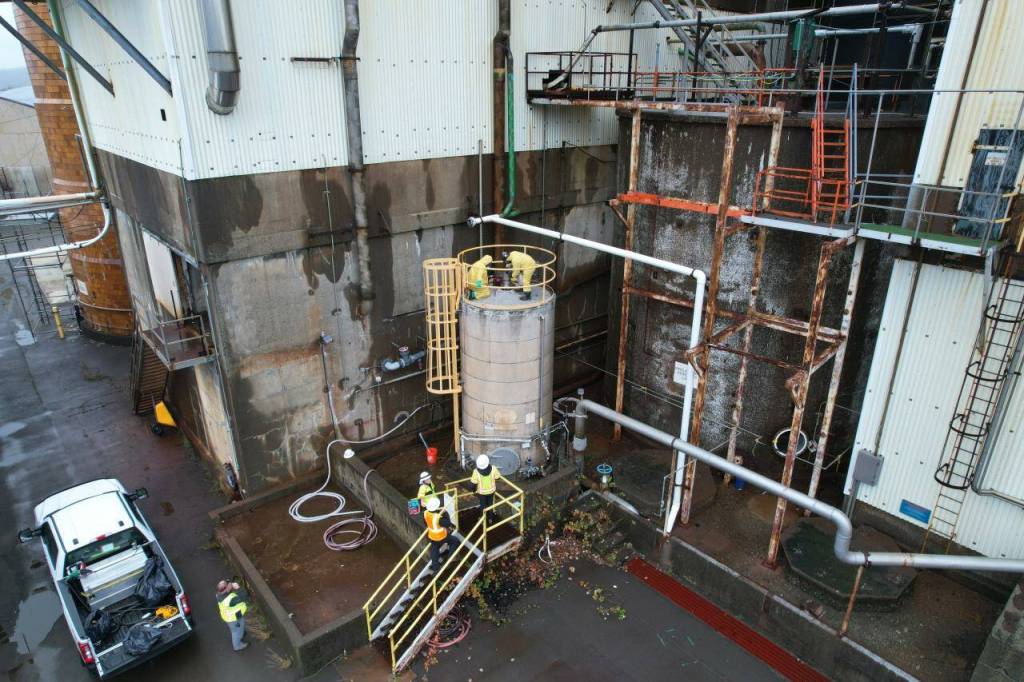
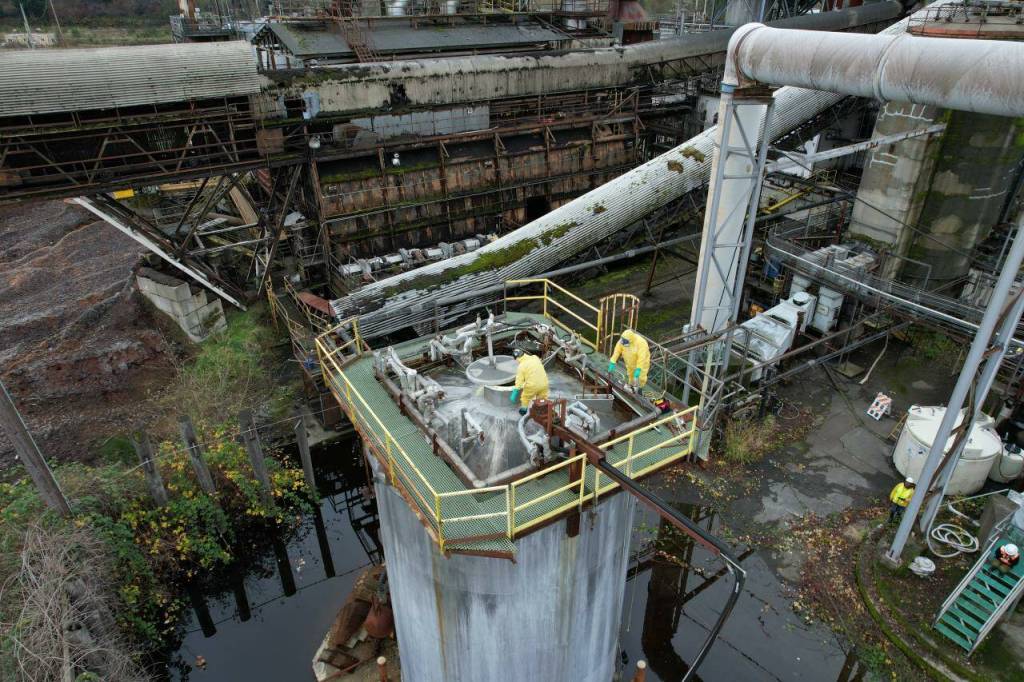

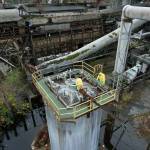

On Monday, Aug. 3, the United States Environmental Protection Agency [EPA], in coordination with the Washington State Department of Ecology, began a time-critical chemical removal action at the dormant Cosmo Specialty Fibers pulp mill in Cosmopolis, the EPA announced.
The announcement states that for the past two years, the EPA and Department of Ecology have worked closely to assess conditions at the non-operational facility and identify actions needed to reduce potential risks to the community and the environment. More than 750,000 gallons of waste chemicals remain at the site, and the facility has accumulated more than $2 million in environmental fines.
In April 2026, the Department of Ecology requested EPA assistance with the removal of the remaining chemicals in tanks and containers.
According to the Department of Ecology’s website, “Ecology requested that EPA take this action. We believe that the deteriorating conditions at the mill and the lack of staff to maintain equipment mean that the chemicals remaining at the site pose an unacceptable threat to the community of Cosmopolis and the environment of Grays Harbor. Ecology will support the response by removing oils and other dangerous wastes stored at the site. Ecology will also work with responsible parties to ensure the long-term cleanup of any contamination at the mill site. EPA’s time-critical removal action at Cosmo is expected to continue through the end of 2026.”
Weyerhaeuser operated the mill until September 2006, when production shut down. The company mothballed the facility the following year in preparation of selling the mill. In May 2011 the mill resumed operation as Cosmo Specialty Fibers, owned by Gores Group, LLC. The pulp mill had been in intermittent operation since 2011 and shut down in December 2022.
U.K.-based Charlestown Investments and Richard Bassett acquired Cosmo Specialty Fibers in early 2023 with the intent of restarting the mill. According to Bassett, the pulp mill’s output is used in 300 end products such as screen coatings for smart phones, aspirin, toothpaste, paint and nail polish components, textiles, and other items used in daily life. Ecology’s website says that in the past, with “around 200 employees, the mill makes about 550 tons of dissolving pulp (acetate, viscose, and ether grades) each day. It treats its wastewater, and sends it to Grays Harbor and the Chehalis River.”
Last summer, Ecology announced $2.3 million in fines against Cosmo Specialty Fibers for alleged lack of action on leaking hazardous chemicals and said that storage tanks, treatment systems and environmental equipment continue to steadily deteriorate, leading to dangerous conditions and mounting threats to nearby neighborhoods, the Chehalis River and Grays Harbor.
In August of last year, Ecology negotiated an agreed order with each of the “potentially liable parties,” Cosmo Specialty Fibers and Weyerhaeuser. The agreed orders require Cosmo and Weyerhaeuser to conduct a remedial investigation/feasibility study and draft a cleanup action plan.
The agreed order between Ecology and Cosmo states, “This Order requires Cosmo to begin the investigation and cleanup process for the Site per the Model Toxics Control Act,” while the agreed order between Ecology and Weyerhaeuser states, “This Order requires Weyerhaeuser to begin the investigation and cleanup process for the Site per the Model Toxics Control Act. … No change in ownership or corporate status shall alter Weyerhaeuser’s responsibility under this Order.”
Ecology also conducted a public comment period to solicit input from local residents. The public comment period concluded on Sept. 16, 2025. A public hearing was held at Grays Harbor College on Sept. 9, 2025. Other community meetings have been held as well.
According to the EPA, Bassett, chairman of Cosmo Specialty Fibers, was required to submit an EPA-approved work plan by late June of this year and begin conducting the chemical removal under EPA oversight by mid-July. Because these required milestones were not met, the EPA has mobilized to the facility and will complete the removal effort.
Grays Harbor County Emergency Management posted the following on Facebook On Aug. 4: “The U.S. Environmental Protection Agency (EPA) is beginning chemical removal at the dormant Cosmo Specialty Fibers facility in Cosmopolis. Over the coming months, EPA and the Washington State Department of Ecology will safely remove and dispose of hazardous chemicals, fuels, oils and other dangerous wastes remaining at the site. Residents can expect to see increased activity, personnel, and equipment at the facility during this work. There is no immediate threat to the public, and this proactive cleanup is being conducted to reduce long-term environmental risks to our community.”
However, Bassett maintains that Ecology’s and the EPA’s concerns are overblown and that characterizing conditions at the mill as needing a “clean-up” is a misnomer.
“There is no ‘clean-up.’ What they are doing is removing material that is safely stored in the tanks on site. A clean-up would be if there was a spill or some other issue that put public health and safety at risk. I believe that the last spill at Cosmopolis of this type was in 1979 and it was quickly contained,” Bassett said via email. “What the EPA are doing today is to remove the red liquor, which is a byproduct from the pulping process from tanks that are purpose built to hold and store red liquor. In a pulp mill like ours, red liquor is a raw material and not a waste or hazardous material. It is not comparable to the material that caused the devastation at Longview. The red liquor at Cosmo is 80% water and it is neither combustible nor explosive.
“We ask ourselves why the EPA suddenly believes that there is a need to remove the material when it is safely stored on site and not a risk to public health and safety. This is particularly hard to understand as the process they propose to remove my property, the red liquor, could create a problem that currently does not exist. The EPA is introducing a risk, not solving a problem.
“As the material has been safely stored for three years and as it is essential for the restart of the Cosmo mill we consider this to be a very disturbing intervention for no benefit to the community.
“By contrast the continued interventions of the EPA and Ecology have made the financing and restart of the mill close to impossible. Time and time again we have had investor groups close to providing the mill restart funding and at the 11th hour they have pulled back because of fear of the EPA and Ecology.”
On Thursday, Aug. 6, the city of Cosmopolis issued a press release that indicated that the city has started notifying residents of the EPA’s efforts.
According to the press release, the city of Cosmopolis participated in a coordination meeting with the EPA, Washington State Department of Ecology, the Office of Land and Emergency Management, Grays Harbor County Emergency Management, and local emergency-response partners to support public safety and community communications on Aug. 5. Crews will remove chemicals from above-ground tanks, neutralize acids and bases where appropriate, and transport the materials to approved disposal facilities. Work is expected to continue for approximately five months, generally Monday through Saturday from 7 a.m. to 5 p.m.
“Protecting the safety of our community remains our highest priority,” said Cosmopolis Mayor Linda Springer. “We appreciate the strong partnership between local, state, and federal agencies as this long-planned effort moves forward. The city will continue working closely with our partners and will keep residents informed throughout the project.”
The release added that residents may notice contractor personnel, equipment, and increased truck traffic. Ecology spill-response vehicles may also be seen at the site as part of planned oil removal; their presence does not indicate that a spill has occurred. There may occasionally be odors similar to those produced when the mill was operating, but at much lower levels. Air monitoring and site security will remain in place throughout the project. Based on information provided by the EPA and participating agencies, there is no immediate threat to the public.
Bassett maintains that the restart of the mill would be an economic shot in the arm for the city of Cosmopolis and the Grays Harbor region.
“The economic prospects for Cosmo have never been better in the past 70 years. The prices in our end markets have never been higher and our wood costs have never been lower. Also, the opportunities for producing sustainable electricity and fuels have never been better,” Bassett said. “The initial restart of the mill will result in a minimum investment into Grays Harbor of $100 million and the restoration of 210 high paid jobs — Cosmo was the highest paying private sector employer in Grays Harbor before it shut-down and will be again. When we are operating, more than $200 million a year will flow into the Grays Harbor community to the benefit of our employees, customers and other local businesses. Unfortunately, these economic benefits are of no interest whatsoever to some people in the federal and state governments.
“Nevertheless, I am not leaving, I am not quitting and I continue to believe in the opportunities at Cosmo as I have for the past 20 years. I did get it going once before and I am confident that in spite of the obstacles continually placed before us, we will do so again.”
The EPA will provide updates on its efforts online at https://response.epa.gov/site/site_profile.aspx?site_id=17379