Boundary review board holds meeting for McCleary annexation petition
Published 1:30 am Monday, August 10, 2026
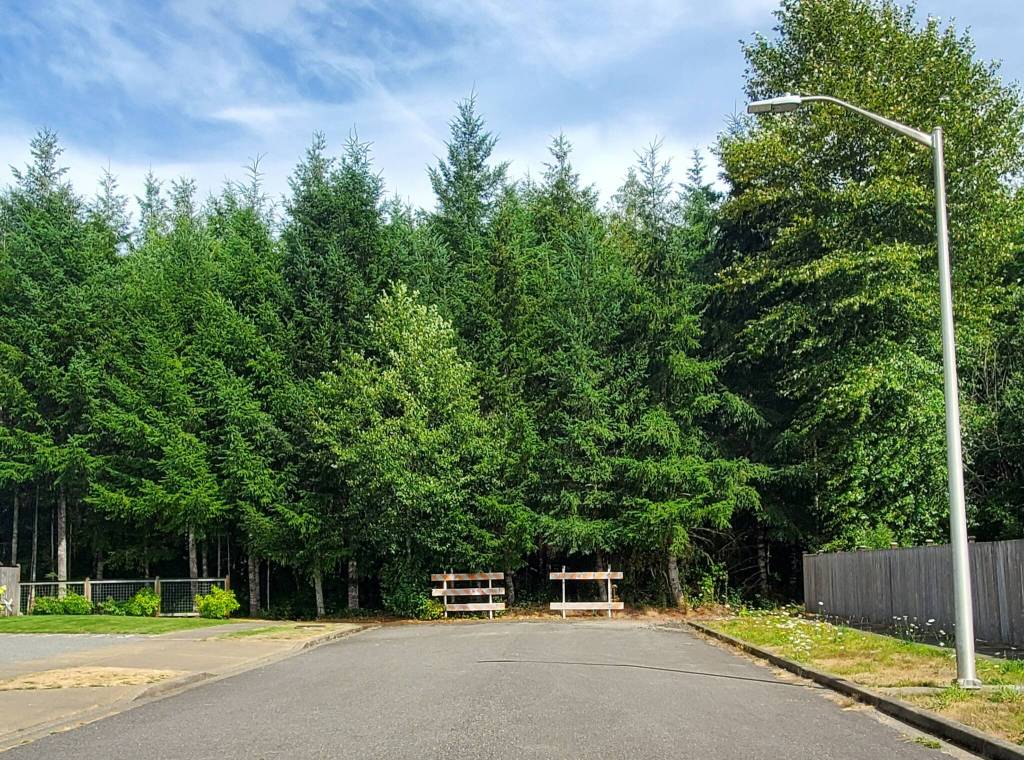
For the Boundary Review Board’s Aug. 5 meeting, the only agenda item was a public hearing for the city of McCleary notice of intent application for the annexation of 42.65 acres located behind Summit Place 2 plat along North Summit Road.
Board members in attendance were Chair Bill Messenger, Jill Warne, county representative, and Dell Carter, city representative; Rick Lovely, the special district representative, was absent, and the governor appointee position is vacant.
This isn’t the first time this parcel has come before the Boundary Review Board for annexation. In 2022, this parcel came before the board but it was owned by Port Blakely then. Now it’s owned by Mark Studer, a Montesano-based developer.
Following introductions, Messenger gave an overview of the Boundary Review Board’s purpose, how the public hearing would be conducted, and the basis for their decision.
“The Boundary Review Board is required to base its decision on several regulation guidelines. Specifically, the board must consider RCW 36.93, sections 170 factors, and section 180 objectives. This is the state law that creates and guides the board,” Messenger said.
The objectives of RCW 36.93.180 are as follows:
The decisions of the boundary review board shall attempt to achieve the following objectives:
(1) Preservation of natural neighborhoods and communities;
(2) Use of physical boundaries, including but not limited to bodies of water, highways, and land contours;
(3) Creation and preservation of logical service areas;
(4) Prevention of abnormally irregular boundaries;
(5) Discouragement of multiple incorporations of small cities and encouragement of incorporation of cities in excess of ten thousand population in heavily populated urban areas;
(6) Dissolution of inactive special purpose districts;
(7) Adjustment of impractical boundaries;
(8) Incorporation as cities or towns or annexation to cities or towns of unincorporated areas which are urban in character; and
(9) Protection of agricultural and rural lands which are designated for long term productive agricultural and resource use by a comprehensive plan adopted by the county legislative authority.
For the public testimony period, the applicant, city of McCleary, went first with City Administrator Darrin Raines speaking on behalf of the city. He cited three reasons why the annexation is relevant to the objectives of the city.
“The parcel lies within McCleary’s adopted urban growth area and is contiguous existing city limits. Approval would not create an irregular or unserviceable boundary,” Raines opened with. “It closes a gap consistent with the city’s comprehensive plan.”
He added that annexation is the only way to provide municipal water and sewer service and that the city has capacity for this extension.
“Today, outside city limits, this parcel could develop on an individual septic system with no city oversight whatsoever. Third, and directly relevant to this board’s environmental factors. The Wildcat Creek aquifer is McCleary’s sole source of municipal water. Staff has heard the concern that annexation threatens the resource. The record supports the opposite conclusion. Annexation brings the parcel under city’s development standards, which include aquifer protection provisions currently being formalized through our Title 17 update.” (Title 17 is the Zoning section of the city’s municipal code.)
Studer, as the owner of the parcel, spoke next and was frank about the future of the parcel.
“The intent of this annexation is future development, and by being in the city will make the aquifer more protected because it will be on city water and city sewer,” he said. “Again, this hearing is not about development, but my proposal is to put 70 lots, plus or minus, depending on the final layout.”
Teri Franklin spoke as the representative of the citizens who petitioned to invoke jurisdiction.
After emphasizing that they aren’t opposed to growth and development, she said, “The property proposed for annexation lies within one of the most environmentally sensitive areas affecting the city’s groundwater recharge. Decisions involving this property should be made with extraordinary caution because once a critical recharge area is urbanized, the natural function cannot easily be replaced.”
Franklin referenced the studies that have been conducted on the Wildcat Creek aquifer, most notable the recent Wildcat Creek Aquifer Sustainability Plan. (This plan was never finished, with the Plan Implementation and Conclusion sections not written.)
“The next 5 to 10 years represent an important period for implementing the recommendations of the Aquifer Sustainability Plan, continuing groundwater monitoring and evaluating how changing land use, precipitation patterns, and groundwater demand affect the resource,” she said. “Annexing environmentally sensitive property before these efforts have had sufficient time to inform future planning would unnecessarily reduce further options and increased long-term risk.”
No representative of other government agencies signed up to speak, so public comments were then taken. Those who provided testimony expressed support for development but not at the expense of compromising the aquifer. They also questioned the ability of the city to provide the required sewer and water services for the development, raised the issue that additional traffic would add to the roads and that the city’s comprehensive plan includes undeveloped land within the city limits.
Following public comments, Raines was invited to provide a rebuttal, which he did. To the concerns about water availability, he said that the city’s consultants have calculated there is enough water and sewer capacity for the development.
“If we want to protect the aquifer, would we not want to try to eliminate individual septic systems? So if this development does not come into the city [and is] on city sewer, you’re going to see growth out in the county, to county standards with individual septic systems on top of your aquifer,” he said. “To me, that’s going to be much, much worse than hooked up to the city sewer, you know, and taken care of by the city of McCleary.”
Following public testimony, the Boundary Review Board members walked through the objectives to determine if the parcel met the criteria for annexation and reviewed the materials included in their meeting packet.
Warne made a motion, which was seconded and approved, to direct staff to prepare a resolution and hearing decision approving the proposed annexation to the city of McCleary.
For the record, Messenger stated that the Boundary Review Board would continue the public hearing at its monthly meeting regular on Sept. 2 at 3 p.m.