A treasure trove found in coastal tidepools
Published 1:30 am Wednesday, June 17, 2026
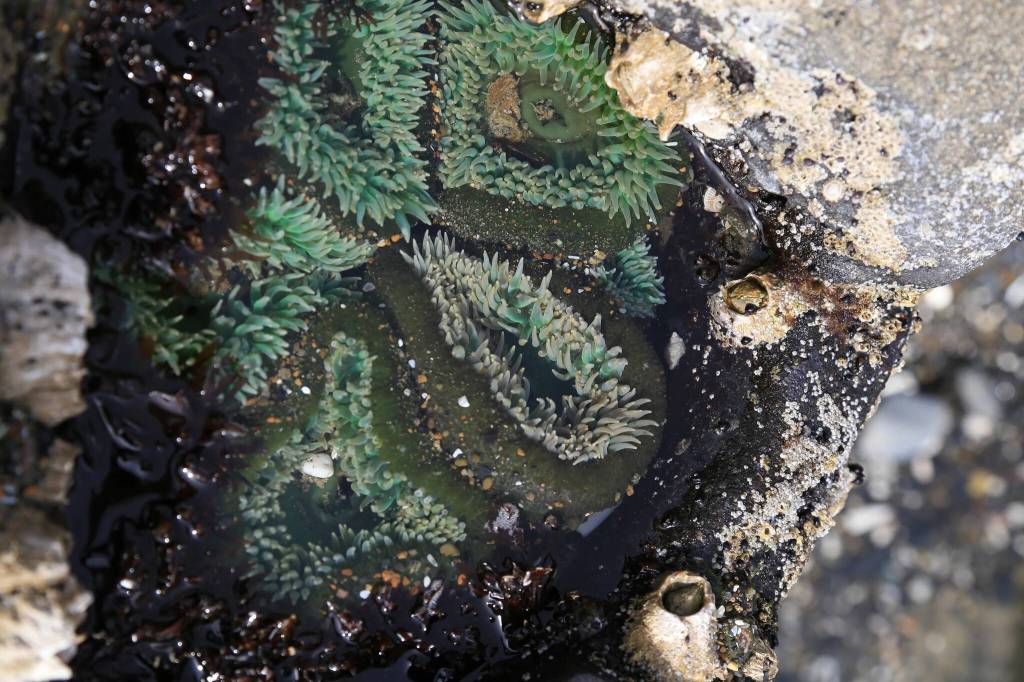
Summer is a great time to take advantage of extreme low tides in coastal Washington and Puget Sound. As tides roll back in rocky shores, they reveal a treasure trove of Washington’s marine biodiversity. Explore rainbows of bright green, orange, purple, pink, blue, and red. Take advantage of a rare opportunity to observe and learn about life under the sea. It’s time to go tidepooling.
Anemones, sea stars, seaweeds, algae, limpets, chitons, barnacles, and sponges are all tidepool creatures.
With constant changes in water level, living in intertidal habitats can be tough. However, Washington coastlines are a great place to celebrate the biodiversity of our state.
What are tidepools?
The ebb and flow of the ocean along the coast makes intertidal habitats places of constant change. At high tide, organisms must withstand the constant drumming of waves against the shoreline. As the tides begin to recede, these organisms face increased stress from sunlight and warmer water temperatures, lower oxygen levels, and predators like shorebirds and small mammals.
When tides ebb, they leave behind water in the cracks, depressions, and holes of our complex coastlines. These pools serve as a low-tide habitat for organisms that require saltwater such as barnacles, limpets, chitons, algae, mussels, anemones, nudibranchs, sea stars, urchins, sculpins, crabs, seaweeds, and more! Tidepools vary greatly in size, some are feet long while others may only be a few inches.
Where are tidepools?
Tidepools are most common along rocky shores of coastal Washington and Puget Sound. However, pools can also be along sandy beaches or in mudflats. Depending on where you go, you may find habitats that support different types of intertidal marine life. In Washington, the tidal range is large enough that when tides change, different tidal zones become exposed. Tidepools can be found between the low tide zone and the high tide zone. You are likely to find different types of intertidal organisms in the high tide zone than in the low tide zone. The lower the tide, the more diversity of life you might see. Extreme low tides of-2.5+ feet will expose the most marine life.
What kinds of intertidal life am I likely to find?
Tidepools are a great chance for you and your family to hone observational skills. By going slowly and waiting, you might see fish and crabs come out from under seaweed or move among rocks. To identify species, print out an identification guide in the resource section of this blog, or try using the free iNaturalist app on your smartphone. Here are just a few of the most common organisms you might see. Don’t forget to look all around you as many marine and avian animals are also found in and around tidepools.
In most rocky shore tidepools you are guaranteed to see coralline algae. Coralline algae is a magenta pink plant partially made of calcium. It is a resilient species that requires less sunlight than other sea plants so it can live deep in rocky crevices and sea caves. Its magenta crust is composed of layers of cells and once these layers are attached to rocks, they are not easily moved. Coralline algae are eaten by limpets, snails, and chitons. Scientists have recently found that coralline algae that forms crusts on rocks may indicate increased ocean acidity due to carbon increase. Higher acidity impacts the species’ ability to build and form calcium, making it sensitive to changes in ocean chemistry.
When most people think of barnacles, they think of acorn barnacles, which are volcano shaped organisms that cover rocks. Gooseneck barnacles however are commonly found in beds with California mussels. They grow out of a long tube above the rock’s surface. When exposed to air, hard plates protect the barnacle and underwater the plates open and a hairy creature is revealed. Gooseneck barnacles are a common snack for shorebirds such as gulls and black oystercatchers as well as ochre sea stars.
Anemones are a group of animals related to jellyfish and corals. They use stinging cells in their rubbery arms to stun prey like fish and small invertebrates. The giant green anemone also receives energy from algae that live in its tissues. Anemones don’t have a digestive system, so their disc-shaped mouth also excretes their waste. Yup, that means they poop out of their mouth. Be careful when walking in tidepool areas at low tide as many anemones close up and become covered in sand, making it easy to mistake them for a rock.
Ochre sea stars are a very important animal in intertidal communities. Sea stars are predators, munching on mussels, limpets, urchins, and other mollusks. Sea stars have thousands of tiny tube feet that help them move, climb onto prey, and pull open shells. Ochre sea stars are vulnerable to gulls and other avian predators when out of water too long, so make sure to not pick any up or move them. Ochre sea star populations on the Pacific Coast are recovering from sea star wasting syndrome, a deadly virus that caused mass die-offs of this important predator.
Sea lettuce is one species of green algae. Its Latin name, fenestrata means holes or windows. When you observe sea lettuce in tidepools you’ll know why! You may also see lettuce on rocks or floating in the ocean. This alga is an important food species for marine invertebrates, sea worms, and humans. It is high in protein, vitamins, and minerals.
Chitons are a prehistoric mollusk. Some chiton fossils have been dated back to 400 million years ago. This means they are older than some dinosaurs! Chitons have eight overlapping plates that give them an armored appearance. Their size varies from less than one inch to over one foot in length. They have one foot that helps them move across and stick to rocks. When removed from rocks chitons will form a ball to protect their soft underside. Some chitons eat algae that is hardened on rocks while others eat sponge and zooplankton. Predators of chitons include sea stars, sea ducks, and sometimes sea otters.
Spots to tidepool around Washington include:
Dash Point, Tacoma
Constellation Park, Seattle
Richmond Beach Saltwater Park, Shoreline
Mukilteo Lighthouse Beach
Seahurst Park, Burien
Double Bluff Beach, Whidbey Island
Saltwater State Park, Des Moines
La Push beaches