Willapa area highways are deer killing zones
Published 1:30 am Friday, June 12, 2026
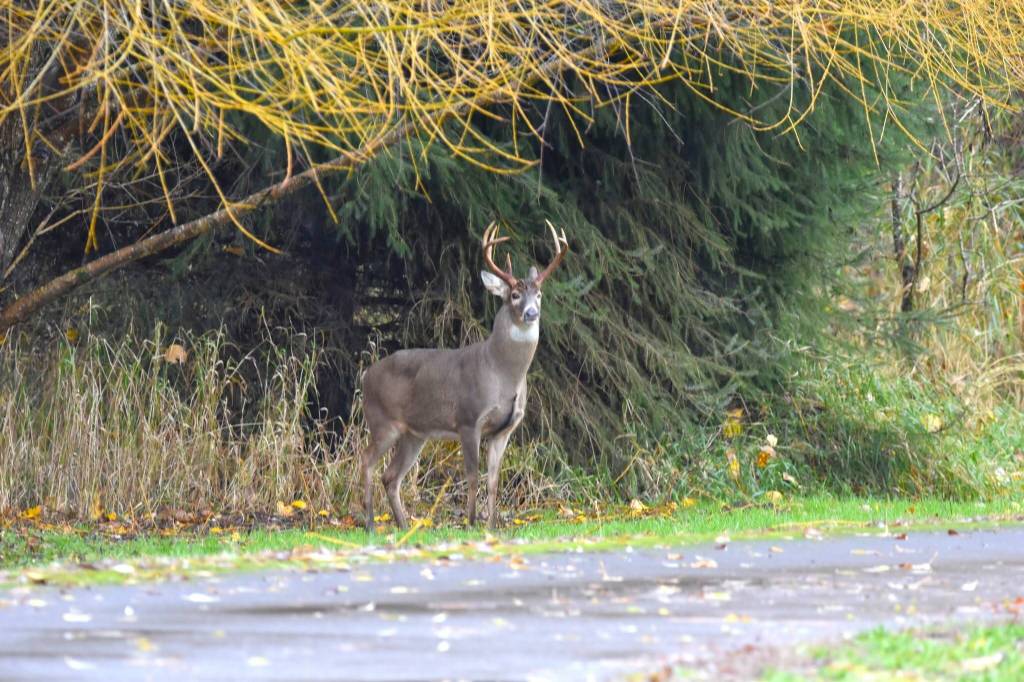
Highways close to Willapa Bay are among the highest in Western Washington for wildlife/vehicle collision rates, according to the Washington State Department of Transportation.
High numbers of wildlife/vehicle collisions frequently occur in areas where large numbers of deer and elk are present directly adjacent to high-traffic-volume highway segments, which are found throughout Grays Harbor and Pacific counties.
Areas with some of the state’s highest wildlife/vehicle collision rates are:
Western Washington
Widely distributed throughout state with high rates on Whidbey Island, along state Route 20 and state Route 525.
High numbers where highways intersect the Cascade Mountains such as the Packwood-Randle vicinity, east of Sedro Woolley and on Interstate 90 near North Bend.
Highways close to Willapa Bay – high localized rates involving elk.
Eastern Washington
State highways in the Spokane area, particularly north of Spokane, where the highways intersect with white-tailed deer wintering grounds.
Southeastern Washington, where state Route 124 and U.S. 12 follow the Touchet River Valley, an area with an abundance of white-tailed deer.
State highways in the Methow and Okanogan River Valleys – host one of the state’s most prolific mule deer herds, consistently have high numbers of animals killed in collisions each year.
Wenatchee vicinity – abundant mule deer population results in high deer collision rates on the busy highways both north and west of the city.
U.S. 97 – there are high deer/vehicle collision areas just north of Goldendale.
I-90 Easton/Cle Elum vicinity & Ryegrass vicinity west of Vantage – highest number of elk/vehicle collisions on the east side.
Animals most often involved in vehicle collisions
Because of property damage and human injury, most reported wildlife/vehicle collisions are with deer and elk. Each year there are a few collisions with other large mammals such as moose, bighorn sheep, cougar and black bear.
The more commonly killed smaller species are raccoons, coyotes, squirrels, rabbits, opossums, frogs, salamanders and snakes.
WSDOT has evaluated a number of different technologies for reducing road kill. These included deer reflectors, a laser detection system and signs. Signs are the most commonly used tool to warn motorists of the possibility of wildlife on the highway. WSDOT installs signs in areas with documented high numbers of deer or elk/vehicle collisions.
Flashing signs, or signs with regularly updated messages, are more likely to be noticed and they tend to reduce deer or elk/vehicle collisions more effectively than regular signs. Unfortunately, most of these have not proven to be effective. The only method still in use is the animal activated warning signs used to notify motorists when the elk are near U.S. 101 in Sequim.
In place since 2000, this system relies on radio telemetry collars placed on elk to trigger a flashing elk crossing sign. While the system has reduced the number of elk/vehicle collisions, it has several drawbacks including the need to place radio collars on the elk, and false warnings triggered when the elk are near the receiver, but not necessarily crossing the road.
While lowered speed limits may help reduce the number of wildlife/vehicle collisions, it is difficult to get drivers to comply with the lowered limits. If drivers feel that the lowered speed limit is unreasonable, then they are likely to engage in passing, tailgating and speeding, which can increase the severity and frequency of collisions.
WSDOT maintenance crews remove animal carcasses that are a potential hazard or distraction from state highways. In many areas, this work occurs exclusively on weekdays. To report dead animals on a state highway, contact the local Washington State Patrol district office or local law enforcement. They will contact the appropriate WSDOT facility.
In most areas, WSDOT buries carcasses at designated disposal sites, often borrow pits. Citizens may salvage freshly killed animals.
How can I avoid hitting deer on the road?
Driving defensively is the best way to avoid wildlife on the roadway, experts said.
“Motorists can help avoid a collision by slowing down and staying extra alert,” especially in the spring and fall, said Jennifer Sepulveda, communications manager for the Washington Department of Fish and Wildlife.
According to the Washington State Department of Transportation, tips for driving in deer country include:
Be especially watchful during dawn and dusk, when deer are most active.
Be cautious while passing other vehicles.
Take note of deer-crossing signs and drive accordingly.
Drive more slowly at night, giving yourself time to see a deer with your headlights.
Be especially watchful when traveling near steep roadside banks.
“If a collision with a deer seems imminent, take your foot off the accelerator and brake lightly,” the Washington Department of Fish and Wildlife said, keeping “a firm hold on the steering wheel while keeping the vehicle straight.”
Do not swerve in an attempt to miss the deer, as this could result in more damage to your car and yourself.