Learning about the lower Satsop River ecosystem
Published 1:30 am Wednesday, June 10, 2026


Throughout the school year, 5th graders at Elma Elementary have been learning about the salmon life cycle and the riverine ecosystem in the classroom.
In February, Kathy Jacobs, the outreach and education coordinator with the Chehalis Basin Collaborative for Salmon Habitat, spent two days teaching about the geomorphic processes that shape rivers through the use of stream table, which uses flowing water and plasticized sand to model its real-world counterpart, and students built houses and placed log jams to see how the landscape responds. For their lesson plans, Kelsey Hunter and Breana Downs, the education and outreach program manager and education and outreach coordinator, respectively, with the Grays Harbor Conservation District, highlighted the importance of macroinvertebrates and the salmon life cycle.
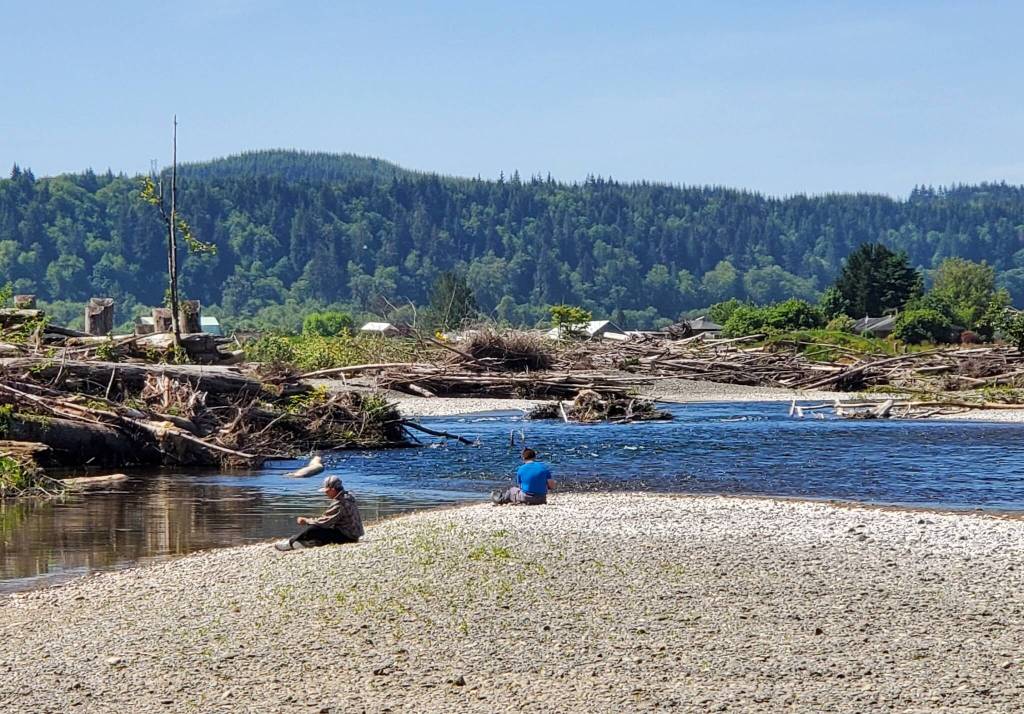
Recently, the students had the opportunity to visit a site along the lower Satsop River to see real-life examples.
Organizers of the field trip were Hunter, Downs and Jacobs, along with Anthony Waldrop, the watershed restoration program manager with the Grays Harbor Conservation District.
Last year, Jacobs, Downs and Waldrop did a similar field trip for another elementary school that went very well so for this year, the group decided to bring the Elma students to a site within the Washington Department of Fish and Wildlife Satsop Wildlife Area Unit on the Satsop River that’s a bit downstream from Double Bridges.
“This is their river, essentially,” Hunter said. “Being able to bring them down here and take everything that they’ve done in the classroom, from learning about native plants and salmon and river ecology, and then getting to be engaged with it in person and see it in the field.”
The Daily World had the opportunity to tag along with Megan Hinderlie’s and Melinda Tuttle’s classrooms.
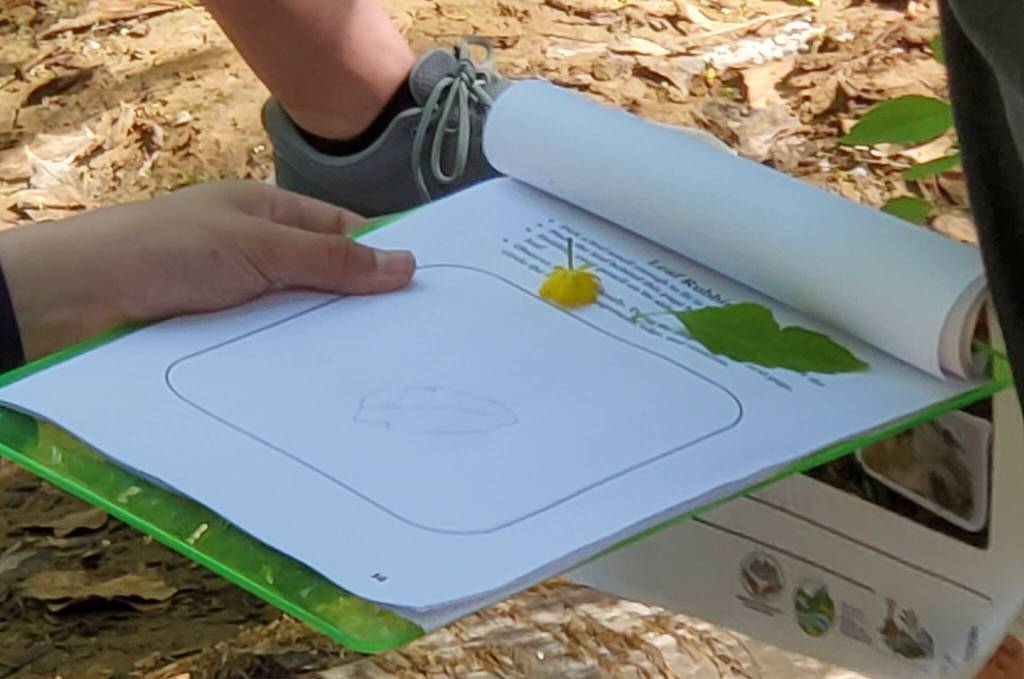
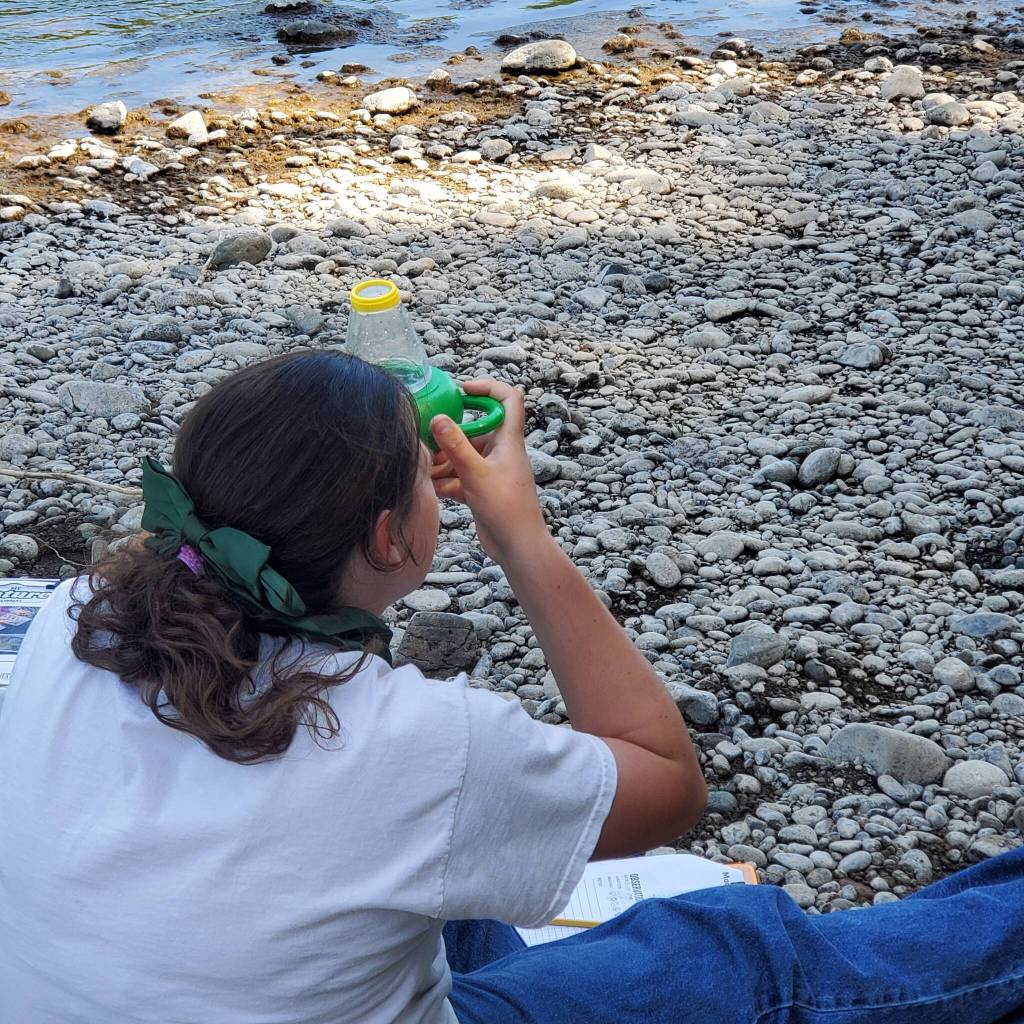
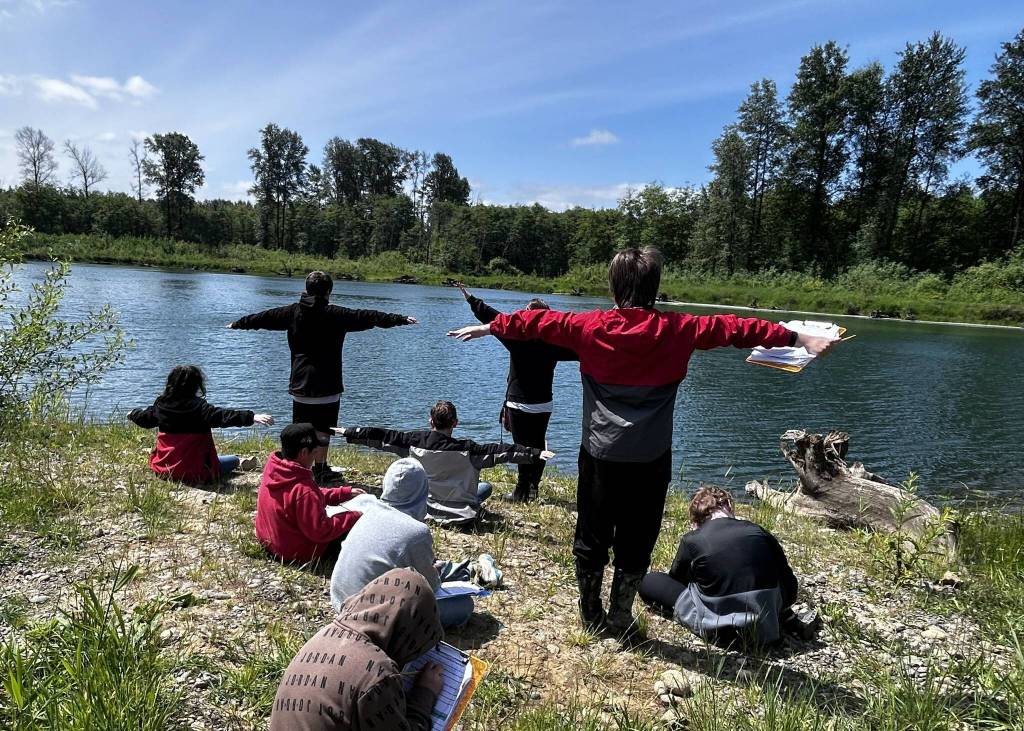
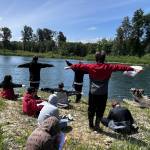
Over the course of the morning, with clipboards and a nature journal packet, the students rotated through four stations. Jacobs led a stream walk survey where students recorded observations about the river. Downs had the students search for macroinvertebrates in water samples, and Waldrop led a plant identification lesson. Hunter’s activity was a sit spot, which had the students sitting individually and reflecting upon where they were.
“They’ve gotten a lot of classroom time with us, so it’s cool to be able to finally like take them out on a field trip and get them outside,” Hunter said.
To the question of what’s the benefit for these types of field trips, Meghan Porter, one of the field trip chaperones shared that, “It’s good for them to learn about their surroundings and lots of kids, I think, don’t get out and learn about what’s around them.”