Fish passage work means short-term closures for SR 109
Published 1:30 am Monday, May 25, 2026
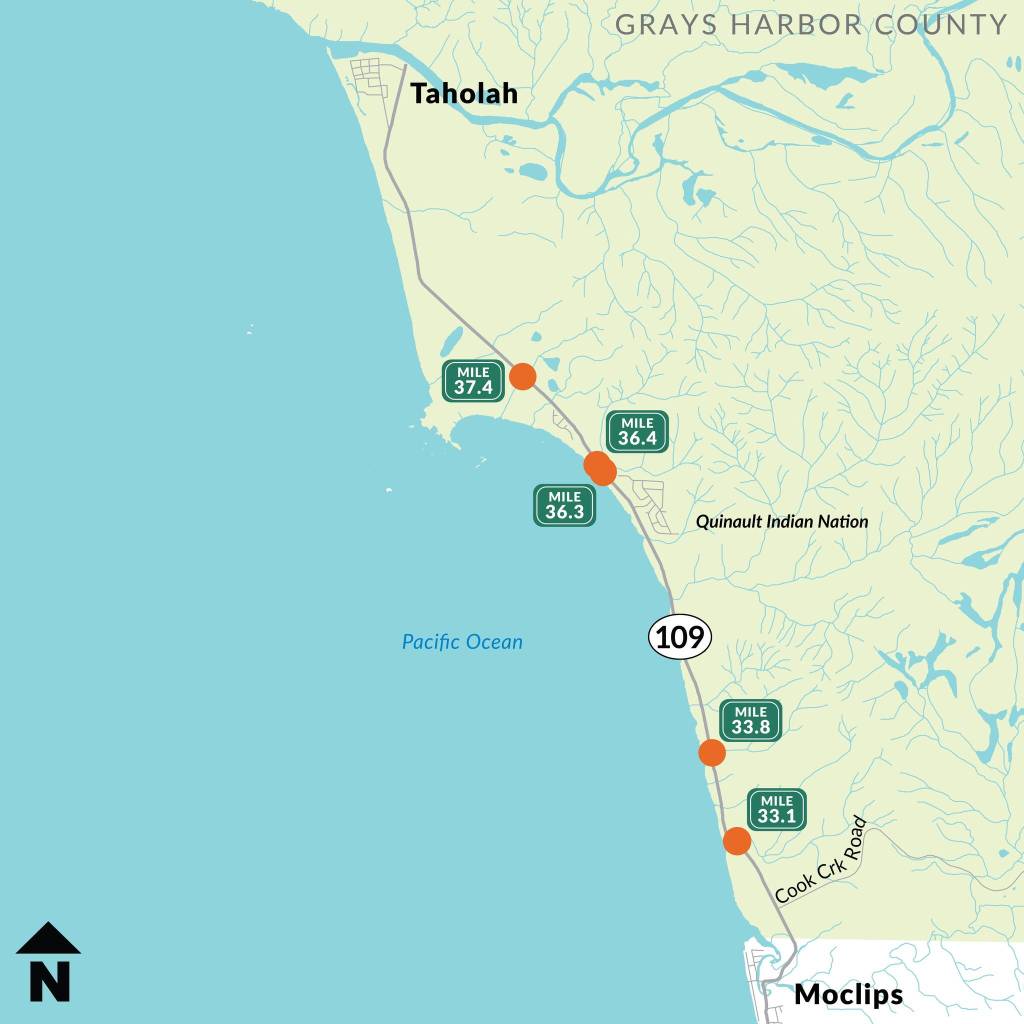
Travelers on state Route 109 near Canyon Way south of Taholah should plan for weekday closures the first two weeks of June from 8 a.m. to 4 p.m. Monday, June 1 through Friday, June 5 and Monday, June 8 through Friday, June 12.
SR 109 will close up to two times each day near milepost 36 north of Canyon Way
• Travelers can expect closures to last 45 minutes at unscheduled times
• Temporary traffic lights will remain red during the closures
The closures allow contractor crews working for the Washington State Department of Transportation to deliver and install bridge materials at two construction sites between mileposts 36.1 and 36.7.
Before and after the closures, travelers will continue to see one-way alternating traffic through the work zone.
Two more fish passage work zones
Travelers will also see temporary traffic lights with one-way alternating traffic around the clock at the last two work zones for the project.
Beginning Monday, June 1, the speed limit on SR 109 will be temporarily reduced from 50 mph to 25 mph at the following locations:
• Milepost 33.62 to milepost 34.12
• Milepost 37.18 to milepost 37.68
The temporary changes will remain in place through fall. People will see a total of four fish passage work zones on this section of highway between Moclips and Taholah.
This project will replace a total of five outdated culverts under the highway. The work is part of a larger effort to remove barriers to fish under SR 109.
The work is an important part of the state’s efforts to protect and restore fish runs. WSDOT is under a 2013 federal court injunction. WSDOT is required to significantly increase efforts to remove barriers to fish. The work will increase the likelihood of fish migration. The improvements also help simulate a natural creek environment.
Crews can only work in the water during a limited time. Construction must occur inside a “fish window.” This is when working in the water will be the least disruptive to aquatic life. The fish window is usually in summer. Other work can occur when crews do not work in the water.
A fish passage barrier is anything that hinders fish from moving upstream or downstream. Culverts, large pipes under roadways, allow water to flow but may not allow fish to swim through. Culverts may block fish migration because the water flow is too swift, too shallow, or has a waterfall into or out of the culvert.
WSDOT corrects fish barriers on state highways to help salmon recovery and comply with state laws. Since they created a dedicated fish passage program in 1991, they have corrected hundreds of barriers that have restored access to over 1,000 miles of fish habitat.
Opening habitat allows more salmon and steelhead at all life stages (including juveniles who aren’t yet strong swimmers like adults) to access important spawning and rearing habitat, including areas that have been inaccessible for years. Installing structures like bridges and culverts that allow for natural stream processes help protect and restore salmon runs, ultimately benefiting both the Pacific Northwest landscape and economy.