Velella an attractive, odiferous nuisance, washes up on coastal beaches
Published 1:30 am Tuesday, March 10, 2026
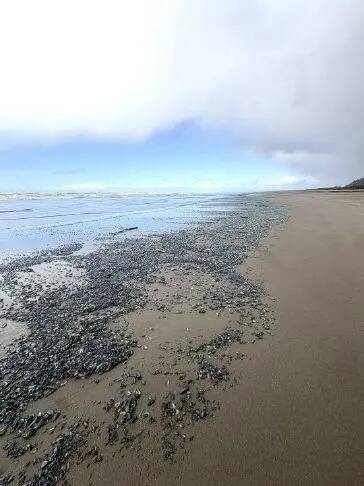
Springtime visitors to the beach may be mystified by the appearance (and odor) of long bluish rows of jellyfish-like creatures that are covering miles of the Washington coast shoreline.
These are actually masses of thousands of mobile hydroids that normally travel at the surface of the Pacific with the aid of buoyant float tissue. Propelled by winds that act on a somewhat rigid triangular sail held above the float, Velella velella (their scientific name) normally inhabit open ocean waters.
Spring wind patterns and unusually warm seawater may be responsible for casting millions of these long-distance wayfarers onto beaches this March.
The sail is made of a chitinous material and has a distinctive cellophane-like texture. The float and surrounding tissues are colored with an attractive deep blue pigment. The float contains a series of sealed air chambers that provide buoyancy. Total width of the floating polyp is usually less than two inches with a length less than three inches. Dangling beneath the rim of the float are hollow tentacles that ensnare fish and invertebrate eggs, copepods and appendicularians.
Velella are also known as by-the-wind sailors since they go wherever winds and currents take them. Velella are found in warm and temperate seas throughout the world.
Although not particularly dangerous to people, it is best not to handle them or touch your face or eyes if you’ve been touching beached individuals since some irritation may result. The squishy deceased creatures stick to shoes and vehicle tires.
Although they come ashore most years, some years see many more than others. Memorably, in 1989 masses of Velella left a band covering nearly an entire beach in Pacific County up to 50 yards wide and five inches thick.