Gas prices in the Grays Harbor region have jumped nearly a dollar
Published 1:30 am Friday, March 6, 2026
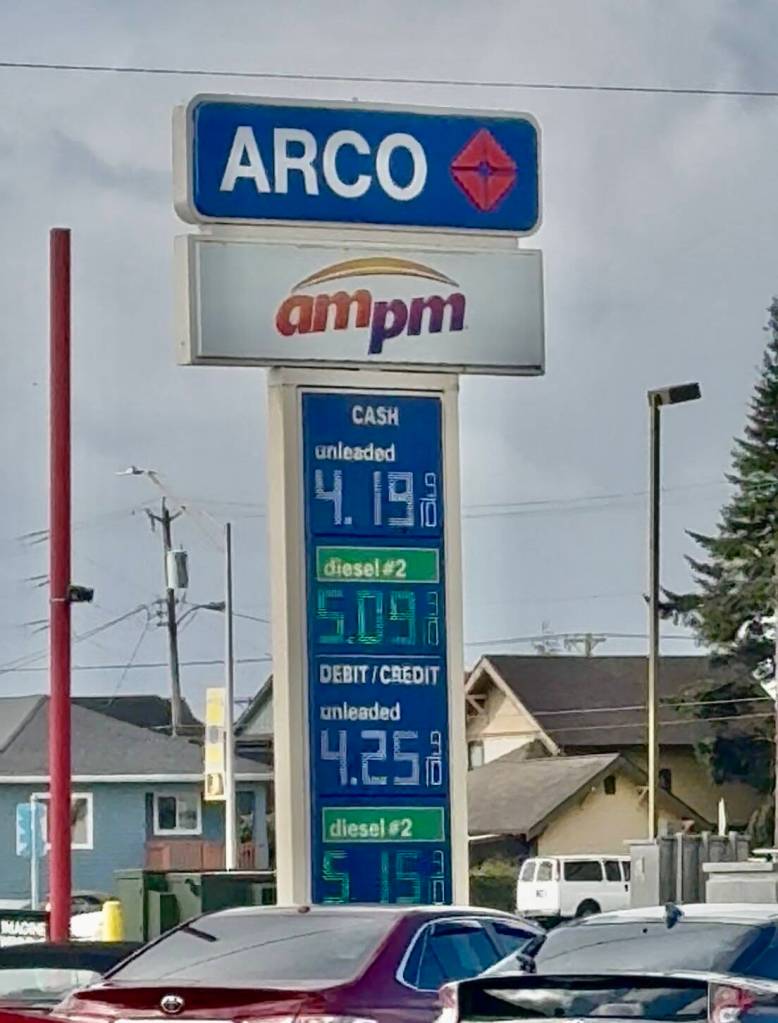
Since the first week of January, gas prices in the Grays Harbor region have jumped nearly a dollar per gallon.
Safeway was at $3.15 on Jan. 6 and is currently priced at $4.09 per gallon according to GasBuddy. Q-Mart II boasts the cheapest gas in Aberdeen at $3.79 per gallon. The average price per gallon in Washington state is $4.44 per gallon, and $4.34 in Grays Harbor County as of 11 a.m. Thursday.
According to a AAA press release issued on Thursday, March 5, the national average for a gallon of regular gasoline jumped nearly 27 cents since last week to $3.25. The conflict in the Middle East has sent crude oil prices higher to the mid $70/barrel range. The recent increase puts the national average at the same price as it was in early April of 2025. Springtime typically sees higher gas prices as gasoline demand rises and summer-blend gasoline production begins. The last time the national average made a similar weekly jump was back in March of 2022 during the start of the Russia/Ukraine conflict.
The national average per kilowatt hour of electricity at a public EV charging station stayed the same at 39 cents.
Two days before the United States and Israel launched a major joint military operation against Iran, AAA reported that the rise in gas prices coincided with the pending arrival of spring and gas prices in Grays Harbor did see a similar spike this time last year.
Spring weather may be weeks away in much of the country, but the seasonal rise in gas prices is underway, AAA said in a Feb. 26 press release. The national average for a gallon of regular gasoline went up by more than five cents this past week to $2.98. Refineries are beginning the process of producing summer-blend gasoline which contains pricier additives to help reduce evaporation during warmer months. Gas demand is also expected to increase next month as spring break season kicks off and more drivers take road trips.
According to GasBuddy, oil markets are reacting to heightened geopolitical tension, rising insurance costs, and leadership uncertainty in Iran. But at this point the Strait of Hormuz remains open, oil continues to flow and OPEC+ has signaled additional supply. Unless there is sustained physical disruption to oil infrastructure or shipping lanes, GasBuddy believes price increases are expected to remain incremental rather than explosive.