State’s most lucrative fishery starts with high hopes after delay
Published 1:30 am Monday, December 29, 2025
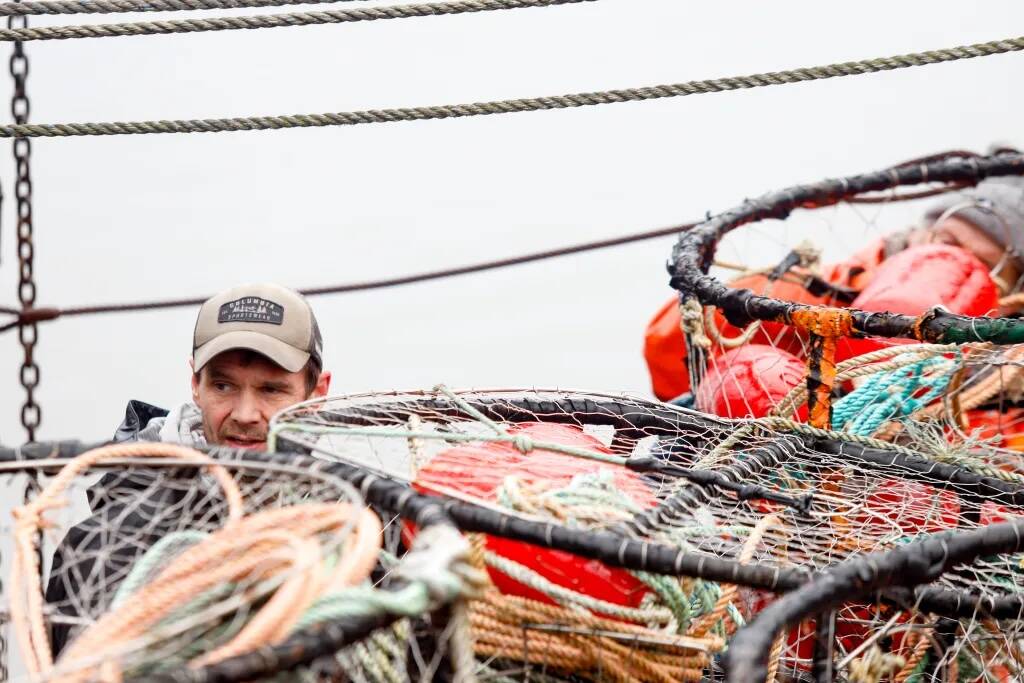
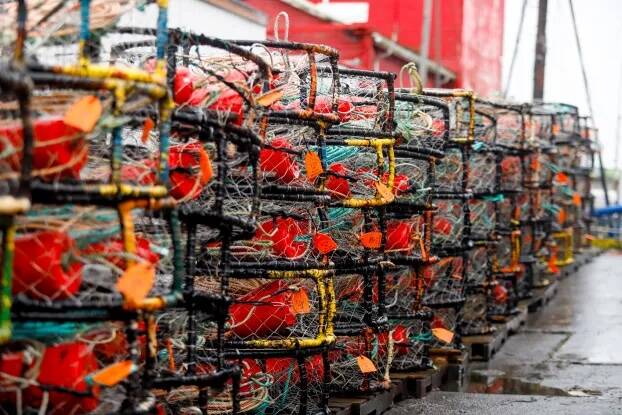
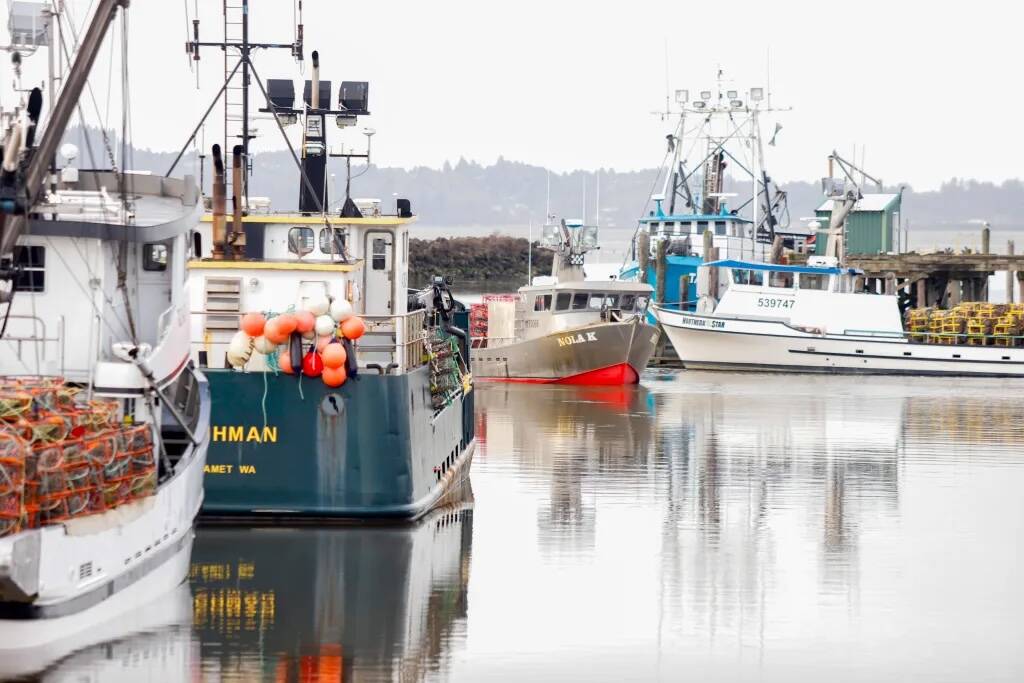


The pots are loaded and hopes are high.
After a month-long delay, the 2025-2026 Washington commercial Dungeness crab season is underway — much to the relief of local fishermen — kicking off the most lucrative fishery in the Pacific Northwest.
Fast and furious start
Each year, the vast majority of Dungeness is landed in the first two months, turning the first few weeks of the season into a marathon for fishermen and local processors.
By noon Saturday, Dec. 27, at the Port of Chinook, South Bend Products deck boss Herman Sevilla had helped load more than half a dozen boats with thousands of pots, a typical pace for the start of the commercial crab season.
Later in the day, fishing crews were going to begin loading crab bait — a frozen mix of rockfish, tuna, herring — which is then placed in plastic or metal bait jars before going into the crab pot.
“They’re going to start dumping pots at 8 a.m. tomorrow [Sunday, Dec. 28],” Sevilla said. (With calm seas, clear skies and little wind, Sunday morning’s weather was chilly — in the 30s — but outstanding for the last week of the year.) “Most will get bait today or tonight, others might come at 3:00 in the morning. For the first week, it’s work, work and work. We don’t go home, we eat and sleep here.”
Sevilla anticipates the first offloads could arrive as soon as early evening on Dec. 31, “if everything goes well.” “And then it’s going to be all night and all morning,” he said.
As in the past, the vast majority of crab came from the fishing-rich waters just west of Long Beach, designated as Catch Area 60A-2, extending approximately from the Columbia River north to Westport. This area accounted for more than 6.5 million pounds, roughly 54% of total statewide landings in 2025.
‘Excited and nervous’
After the delay — including watching their counterparts in Oregon begin their season — local fishermen are eager to get crabbing, but the dangers that come with fishing for Dungeness in the North Pacific in December are never far from mind.
“We’re excited and nervous,” said Brian Kamp, 36, of Nemah, owner and captain of the F/V Willie K, who will fish this season with crew Shon McEneny, 25, of Chinook, and Harley Lopez, 27, of Raymond.
On the day after Christmas, Kamp and crew were finishing final preparations for the upcoming season. McEneny carefully examined the seals of wheelhouse windows as Lopez helped clear and prepare the deck, soon to be saddled with thousands of pounds of crab pots.
“Just making sure everything is sealed up, tidy and ready to go,” Kamp said, adding that he will fish 500 pots in Washington this season, his second as a crabber.
“Last year went pretty well, it was a learning curve, but that’s fishing. Every year is different and every year you gotta learn new tricks.”
One thing Kamp intends to do differently this year is his initial pot placement.
“I’m trying to fan out the few that I start with a little more, cover more areas and break them up into smaller chunks,” Kamp said.
Meanwhile, in Chinook, commercial fisherman Blaine David, 47, was making final preparations on some crab pots stacked alongside the port, a final task before being ocean bound in less than 24 hours.
“We always get the preseason jitters,” said David, who will help fish 550 pots aboard the F/V Sadie K this season, his 15th crabbing. “But it needs to hurry up and start.”
‘One of the most dangerous jobs’
Local ears will be peeled for the worrisome sound of Coast Guard rescue helicopters flying out to sea, as accidents aren’t uncommon during crabbing.
Commercial fishing is one the most dangerous occupations in the U.S., characterized by hazardous working conditions, strenuous labor and harsh weather, with work-related fatalities 40 times higher than the average worker, according to the National Institute for Occupational Safety and Health (NIOSH).
During the 20-year period 2000–2019, 141 deaths due to traumatic injury occurred in West Coast fisheries, according to the NIOSH. While year-to-year fluctuations occurred, the annual number of fatalities has generally declined over these two decades, from an annual average of 9 to 6.
While the Alaskan King crab commercial fishing industry has the reputation as one of the most dangerous jobs in the world, statistics published by the Center for Disease Control (CDC) show that the commercial West Coast Dungeness crab fishery has more than twice as many fatalities.
There were 25 deaths in the West Coast Dungeness fishery from 2000 to 2009, as compared with 12 in the Bering Sea and Aleutian Island crab fishery.
The rate of deaths in the West Coast Dungeness crab fishery is 310 deaths per 100,000 full-time employees, according to the CDC. In its analysis, the CDC concluded that the data illustrated that occupational risk factors varied by region and fishery, demonstrating that the West Coast Dungeness Crab Fishery is one of the most dangerous jobs in the world.
Meat yield delayed start date
The traditional Dec. 1 season start was delayed because of low meat yield in Long Beach Peninsula waters, but with Dungeness crab meat testing at 28.1% off the Long Beach Peninsula in Dec. 13 sampling — well above the required 23% — the commercial season was approved to begin.
This past season, commercial Dungeness crabbers in Washington caught about 12.1 million pounds of crab (16 million including the 4.1 million pounds landed by tribal fisheries), generating an ex-vessel value of $83.1 million — the second highest total on record, only trailing $88 million generated during the 2022 season. The 2025 season officially opened on Jan. 15, following weeks of delays due to low meat yield. The first landings of the season earned a record opening price of $5.75 per pound, which helped buoy a relatively low catch volume.
Southwest Washington’s commercial fishing industry, based primarily in Westport, Ilwaco and Chinook, includes over 200 vessels and nearly 1,300 fishermen, with annual landings exceeding 21 million pounds of fish and shellfish with an ex-vessel value of nearly $15 million, according to the Washington State University Pacific County Extension Office. Dungeness crab, Pacific pink shrimp, albacore tuna, and bottomfish production are the major components of the commercial fishery, generating over $25 million in personal income.
Fish and seafood was the third biggest export for Washington state, generating more than $940 million in the most recent data, with Canada, China and Hong Kong being the primary markets, according to the U.S. Census Bureau.