Rep. Randall visits with Quinault Tribal Council in Taholah
Published 1:30 am Monday, February 2, 2026

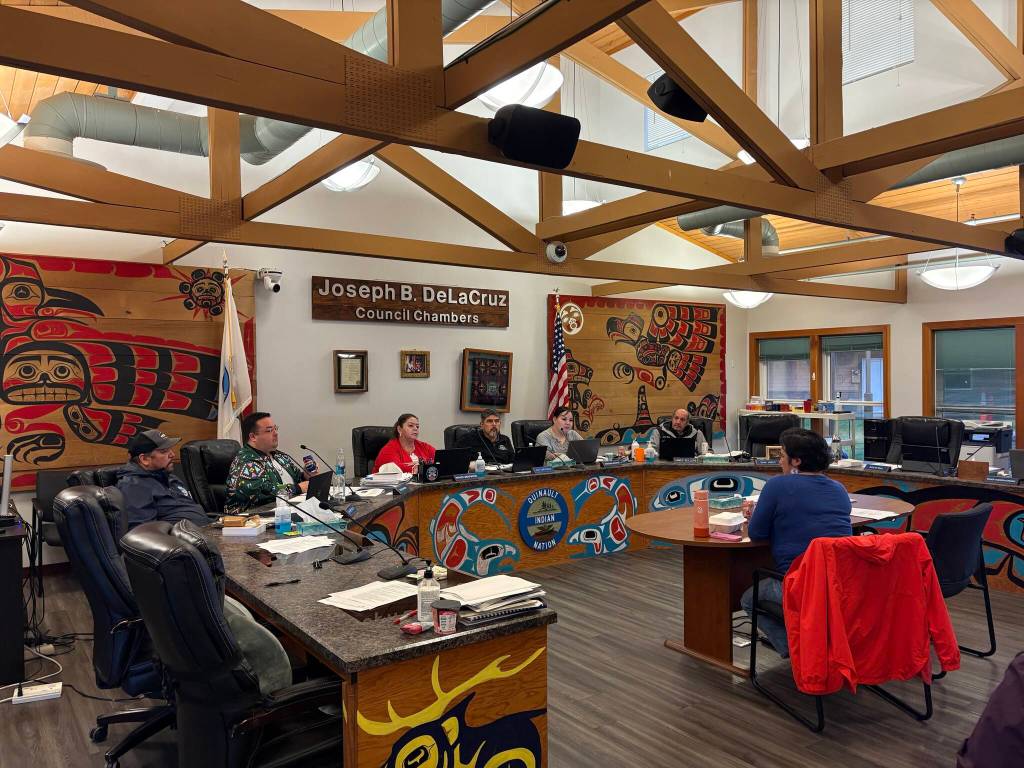
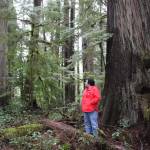


United States Rep. Emily Randall (D-6th District) returned to Grays Harbor County last week and met with the Quinault Indian Nation’s tribal council for roughly 90 minutes. The council, led by Quinault Indian Nation President Guy Capoeman, presented several legislative issues that are top of mind for the tribe.
The first order of business was a thank you to Rep. Randall for facilitating $1 million for three new Quinault fire stations — Queets, Taholah and Qui-Nai-Elt Village as part of the Community Project Funding program.
According to a press release issued by Rep. Randall’s office, “the Quinault Indian Nation in Taholah will receive $1 million to construct a fire station in Grays Harbor County. The Tribe does not currently have any dedicated firefighting facilities to house their fire engine and tender, resulting in longer response times for tribal members in more remote and rural areas.”
The funding will pay for geotechnical, engineering and design, and clearing and grading for all three fire hall locations.
The presentation then shifted to the Quinault Indian Nation Land Transfer Act, the TERRA (Tribal Emergency Response Resources) Act, amendments and reforms to ITARA (Indian Trust Asset Reform Act) legislation, concerns over H.R. 1, otherwise known as the “Big Beautiful Bill” and its potential cuts to Medicaid and impact to the Quinault Wellness Center, fish populations and pinniped predation, treaty rights, timber harvest bottlenecks, potential re-alignment of a stretch of state Route 109 due to landslides and erosion, and opposition to the proposed Chehalis flow-through dam project.
“We’ve given you quite a list,” Capoeman said.
When asked about her concerns and top of mind issues in Washington, D.C., Rep. Randall said, “We’re trying to stem the tide of a fascist government takeover. We’re trying to keep people alive in the streets,” which led to a conversation about concerns regarding U.S. Customs and Immigration Enforcement (ICE) and its tactics with relation to Native Americans and tribal IDs. The possibility of replicating a new law recently enacted in Arizona was also discussed. According to the Arizona Department of Transportation, enrolled members of federally recognized tribal nations in Arizona can now receive driver licenses, instruction permits and ID cards bearing a Native American designation.
According to Capoeman, Rep. Randall’s in-person visit was important to the tribal council and to the nearly 5,000-strong of the Quinault Indian Nation.
“I think it’s one of those key relationships between tribes and the federal government, through our representatives, where we were able to meet with them, tell them what our concerns are, what’s pressing with the tribes, so that, you know, we can get some subtraction on some of these issues. If we didn’t have these types of meetings, it would be really hard for us to do that,” Capoeman said. “It’s so important to look somebody in the eye in your homeland, and tell them, and show them what the concerns are and how we could work together to remedy those things. It’s a part of the job, right? It’s a part of her role as our Congresswoman, and we believed in her from the get go. She’s always been a champion for tribes, and for our fight, and for our issues.”
Rep. Randall says she makes it a point to visit the people she represents as often as possible and views her role as an advocate for Native American tribes as critical to her mission in Congress.
“It’s absolutely important to be in community, to meet with people face to face, but also to break bread, to share a meal, to build a real relationship. It’s especially important to me when I think about our government to government treaty responsibilities to have these face-to-face meetings with tribal leaders,” Rep. Randall said. “That’s why I spend every week when I’m home, one day in every county, so that I can be out talking to neighbors in Ocean Shores, here at Taholah. We make the rounds around the peninsula because meeting people where they are, seeing the problems that they’re facing, connecting in person makes me better at this job. One of the bright spots for me in this Congress has been the support for sovereignty and tribal governments has been pretty strong in the natural resources committee. We have good bipartisan support for some of the policies that I’ve been working on so closely. It’s our duty to make sure we are righting some of these historic wrongs.”
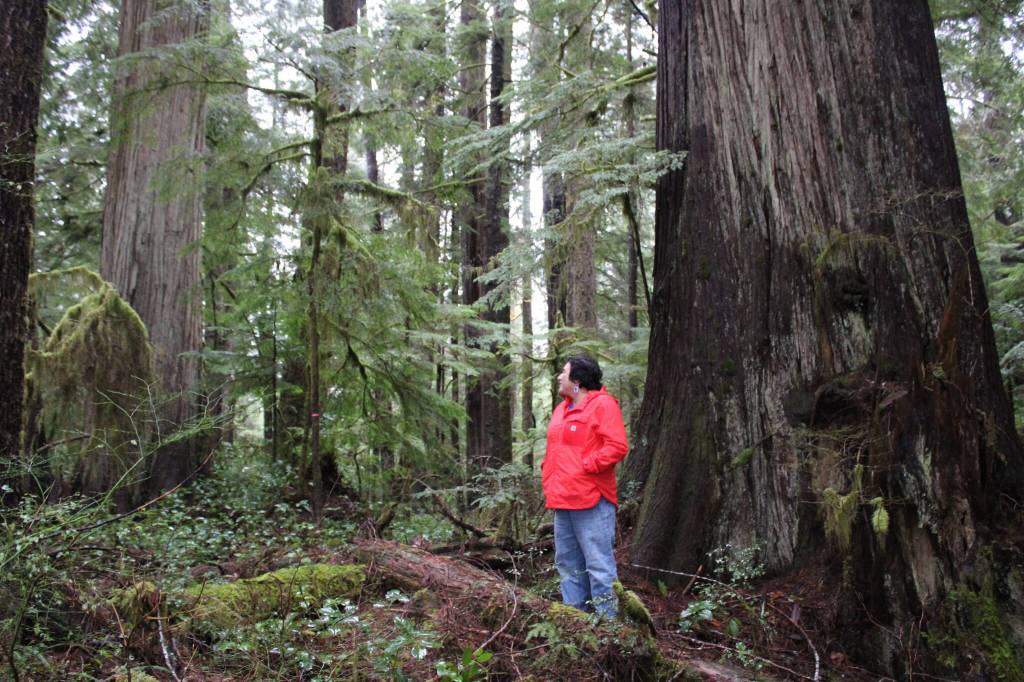
Rep. Randall concluded her visit with a tour of areas of the Quinault Indian Nation’s forestland involved in the Land Transfer Act which was passed by the U.S. House of Representatives back in December. The bill would transfer 72 acres from the Forest Service to the Bureau of Indian Affairs to be held in trust for the Quinault Indian Nation. The 72 acres, known as Allotment 1157, was originally part of the Quinault reservation that was established by the Treaty of Olympia of 1856.
The Allotment was eventually sold to a timber company and was purchased by the U.S. Forest Service in 1996 for conservation. Allotment 1157 is one of the last remnants of old growth forest, particularly old growth cedar, that were a significant part of the Quinault’s reservation.
With the passage of the Dawes Act in 1867, the Quinault Reservation was broken up into 80-acre allotments, with many given to individual tribal members. As private interests quickly moved in to buy up the allotments, including allotment 1157, the Quinault Nation lost multiple pieces of its Reservation.
After her visit to the Quinault Indian Reservation, Rep. Randall headed to Elma to attend a candlelight prayer vigil for Minnesota organized and hosted by the Elma Methodist Church.