Life Flight Network complements local on-the-ground partners
Published 1:30 am Wednesday, October 8, 2025

Editor’s note: In the First Responders special section article published on Tuesday, the hangar celebration was the focus. This article expands upon how Life Flight Network works with local first responders.
The tones going off audibly over the conversations in the hanger alerted Life Flight Network staff that a patient was enroute, with a probable rendezvous at the hangar.
When the Hoquiam ambulance pulled up behind the hangar, Life Flight Network crew members joined the Hoquiam crew inside. The helicopter took off without the patient, to the confusion of those watching, and it was later explained they had to burn fuel first.
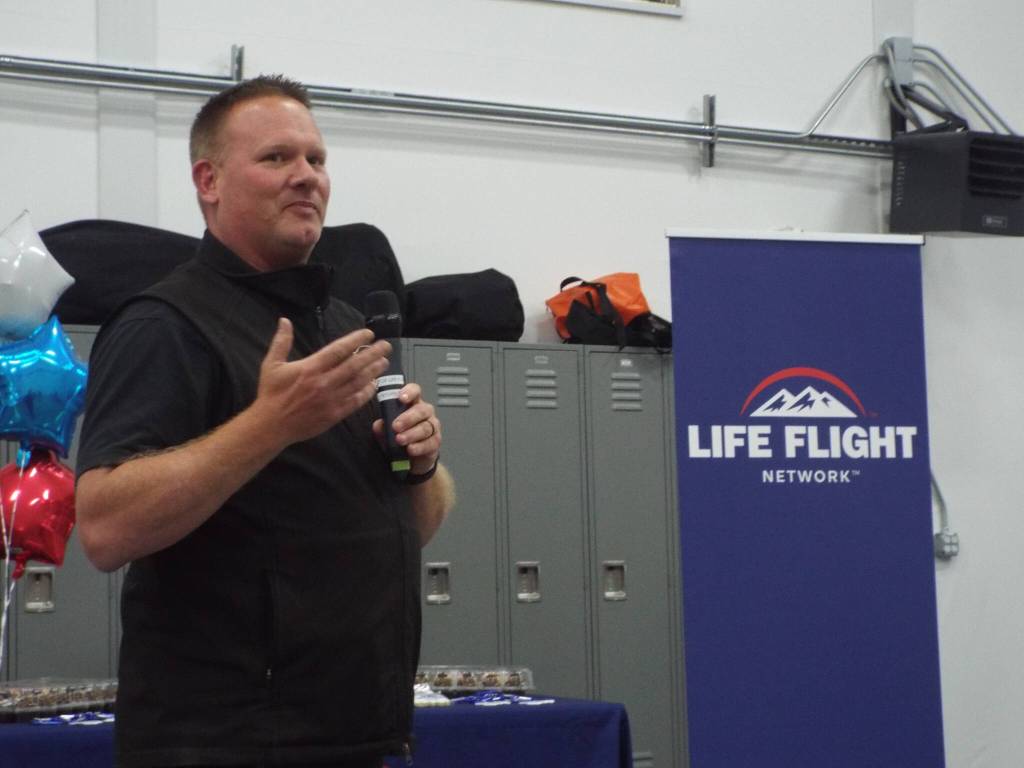
To what the attendees witnessed, “that’s a prime example of the importance of having Life Flight here and the patient care that goes into that,” said Hoquiam Fire Chief Matt Miller in his impromptu remarks. “For example, on this call, our crews were on scene for less than 10 minutes … and in less than another 10 minutes, they were here. … The patient’s going to get loaded up and will be sent to a higher level of care much quicker than if they went to the local hospital, had to wait for a transfer, and be transferred out. So this is just a prime example of the patient care that is happening with the local EMS and fire service and Life Flight.”
When the helicopter returned, the scene played out as Miller described. The two crews, the Life Flight crew distinguishable from the distance because of their helmets and flight suits, transferred the patient to the helicopter. And in what seemed like less than a minute, the helicopter took off and headed east.
This cooperation showcases the behind-the-scenes training that Life Flight Network and local first responders have done to make it appear seamless.
“We do a lot of training with [local hospitals and EMS agencies] to make sure that, like you saw here, we loaded the patient while the aircraft was spinning. That takes training for the fire department so they know how to do it,” said Ben Clayton, CEO of Life Flight Network.
Even before Life Flight Network established a base at Bowerman Airport in June 2023, they were already providing airlift services for years.
Natalie Hannah, the public relations manager for Life Flight Network, said that at a request from the community, Life Flight Network assessed the market and saw a need for their services because of the incidents that could happen on the water or in the nearby recreational areas.
Life Flight Network established a base at Bowerman Airport in June 2023, originally leasing hangar space before constructing their own hangar this year.
“Everyone was so welcoming when we set up shop here and has made our transition into this area really, really smooth,” Hannah said.
Life Flight Network becomes involved in the emergency response when a physician or local first responder makes the call that a patient needs to be transported by air.
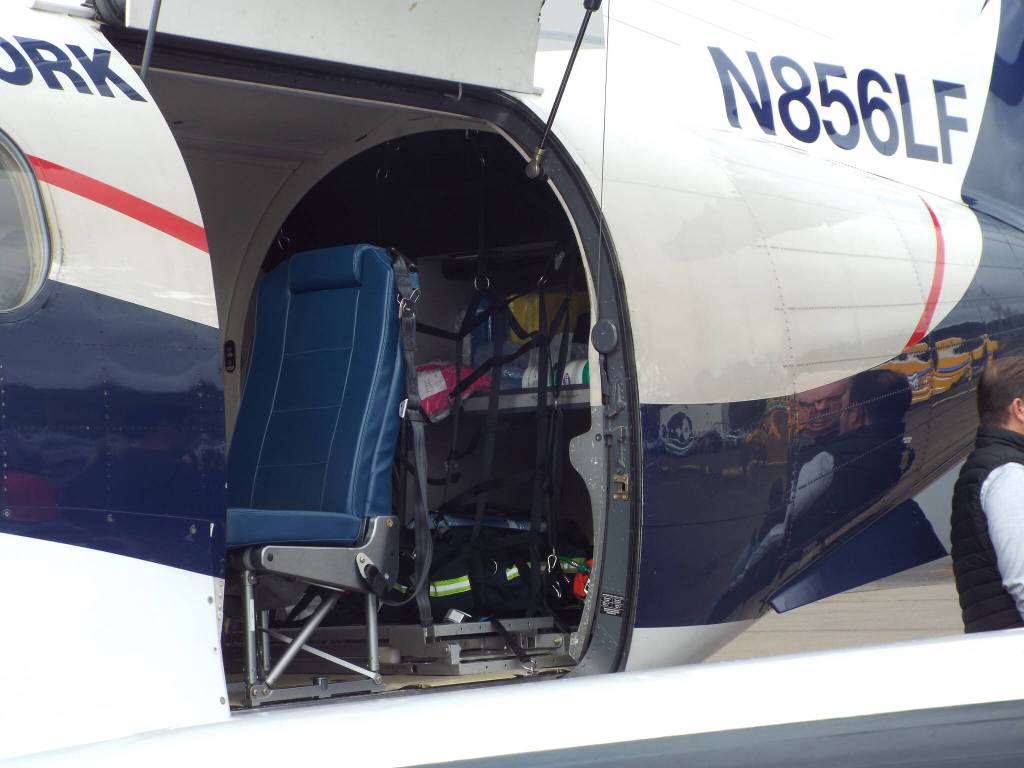
Transportation options, whether a helicopter, fixed-wing airplane, or ambulance, are intensive care units, and “our crews are doing really highly complex procedures in the air while we’re transporting,” Clayton said.
Patients may be transported to Seattle, Tacoma, Boise, Salt Lake, Tri-Cities, or Portland — “wherever they need to go for the care that they require,” said Hannah.
Given the reluctance of insurance companies to approve claims, there is the inevitable and indelicate question of what patients may be billed if they require Life Flight Network’s services.
“It really depends on a couple of things,” said Hannah. “One, we have the No Surprises Act in place now, so that really helps to eliminate the patient being involved in any back and forth between the provider and the insurer.”
Life Flight Network also offers an annual membership for $85, which provides benefits such as no out-of-pocket expenses, air transport throughout its network of five states (Oregon, Washington, Montana, Idaho and Hawai’i), and unlimited transports. And they also offer a financial assistance program.
“We have a lot of resources in place to ensure that our patients are taken care of all the way to the end,” Hannah said. “It is never our goal to save someone’s life and then leave them incredibly stressed out.”
Hannah added that “patients receive a bill because it comes from us, but the amount that’s getting billed to them is what the insurance didn’t cover, their co-insurance or their deductible or their co-pay. It causes some confusion in that aspect and then also they may see what the total of charges billed is to their insurance and go, ‘Oh, my God,’ and think they have to cover that in some way. So we always just tell people, ‘It’s really, really important that if you have any questions, concerns, fears, whatever it is, just call our billing department because we will work with you.’”