Keep an eye out for migrating gray whales on the coast
Published 1:30 am Tuesday, December 30, 2025
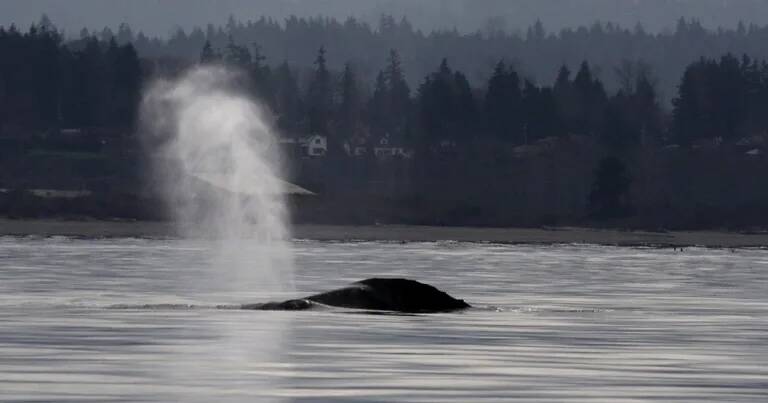
If you want to see a whale — from a distance — now is a good time to do it. Gray whales are migrating south from summer feeding grounds off the coast of Alaska down to the lagoons of Mexico, to give birth.
As they swim past Oregon and Washington, it’s possible to see their breathing spouts and even some acrobatic feeding behaviors, such as headstands, upside-down swimming, and bubble blasts. Binoculars are advised.
Whale watchers will also be able to see other coastal animals, like birds and sea lions. Visitors are encouraged to dress for the winter weather, bring binoculars, and follow beach safety guidelines such as keeping an eye on the surf.
The gray whale population has declined to its lowest level since the 1970s. NOAA now estimates there are about 13,000 of them along the West Coast.
Whale watching in Washington is some of the best in the world, offering the opportunity to spot various species like humpbacks, orcas, minke whales, and gray whales. You’ll never forget the first time you spot a fin, hear a whale spout water vapor 12 feet into the air, or see one breaching before it crashes back into
Seabrook and Westport
The charming community of Seabrook rests atop rugged bluffs overlooking the Pacific, making it a fantastic location for gray whale watching in Washington from spring through fall, with a peak in May. The Northwest Glen neighborhood perches over the Northwest Glen Conservation Area, offering a solid vantage point. North of town, Pacific Beach State Park is a great option during spring, when whales feed on the smelt and anchovies that spawn near land, giving visitors the chance to see whales up close. A Discover Pass is required when visiting.
A little over an hour drive south is Westport, which sits on a finger of land jutting into Grays Harbor where it opens to the Pacific Ocean. On the west side of town, Westport Light State Park is part of the Whale Trail where you can best glimpse gray whales from March through May. A Discover Pass is required within the park. In the Westport Marina, find a viewing tower with multiple platforms and telescopes perfect for scanning the sea. Top off a visit by stopping by Westport Maritime Museum, which showcases a full whale skeleton.
La Push
During April and May, migrating gray whales pass through La Push, feasting on the cornucopia from the estuary of the Quillayute River and the bay’s nutrient-rich sediments around First Beach. At the northern end of First Beach, there’s a popular Whale Trail site where gray whales and orcas frequent, especially in April and May. And visitors might have the pleasure of seeing the Quileute Tribal School’s public Welcoming the Whales Ceremony on First Beach in spring. A few miles offshore, the continental shelf drops steeply, creating an upwelling that attracts whales. Humpback, fin, and blue whales are increasingly sighted.
Just north of the river mouth from La Push is Rialto Beach, a gray whale-watching hotspot within Olympic National Park. As a bonus, the beach’s rugged beauty isn’t hard on the eyes: huge sea-tumbled logs, sea stacks dotting the horizon, and rocky beaches. Due to popularity, aim to visit during the week. The Olympic National Park entrance pass is required.
Gray whales
In the winter, gray whales, which can grow between 43-46 feet long, breed and birth in Baja California before migrating 14,000 miles back to Alaska in spring – the longest migration of any animal. March through May is the best time to see them; they tend to be closer to land and slower when traveling with new calves. A group of about 300 resident gray whales summer in the Northwest instead of returning to the Bering Sea. Keep an eye out for their distinctive heart-shaped tails.
— stateofwatourism.com and the Chinook Observer contributed to this report.