GGHI presents ‘State of Grays Harbor’
Published 1:30 am Wednesday, June 24, 2026
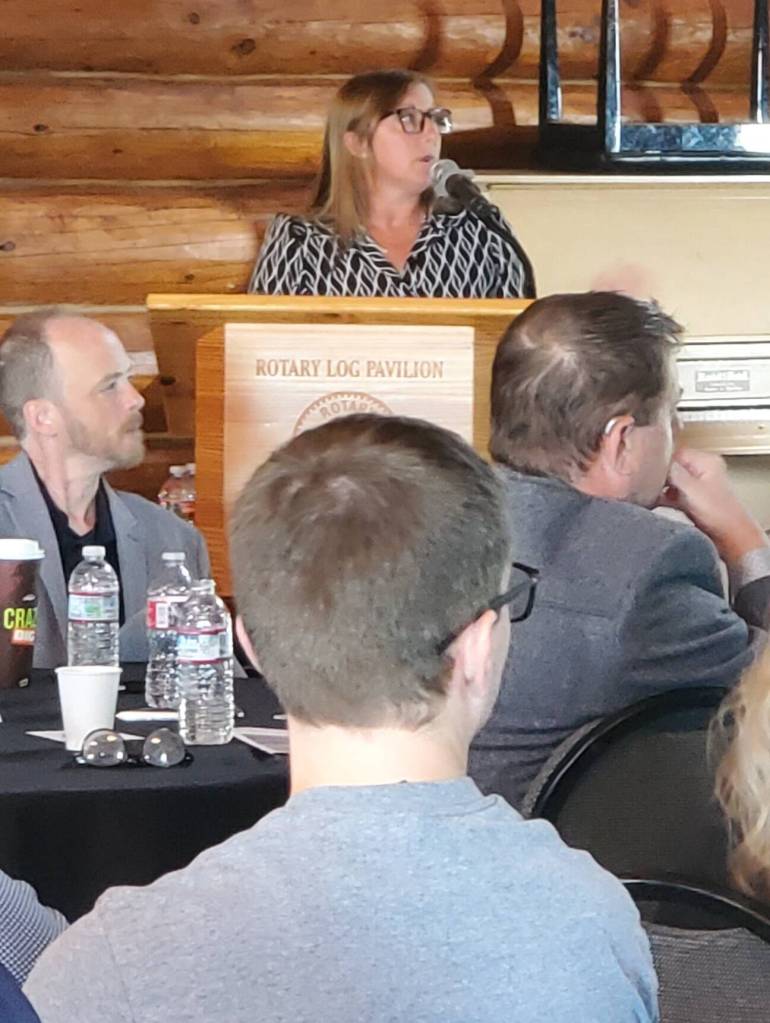
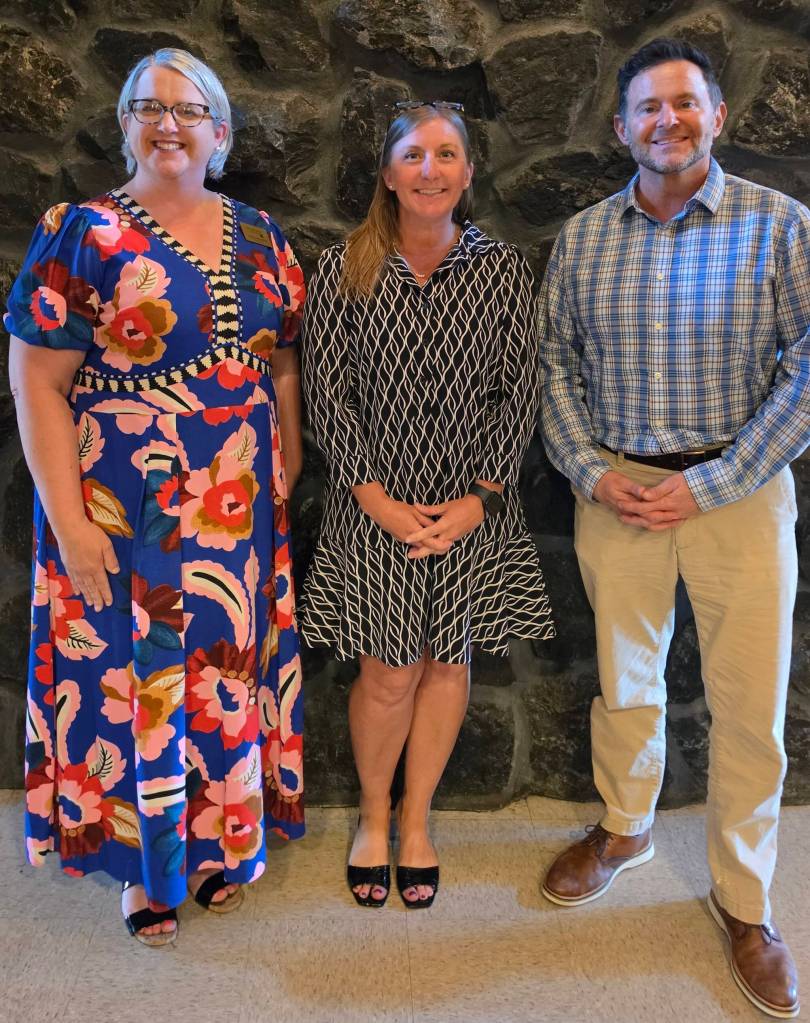
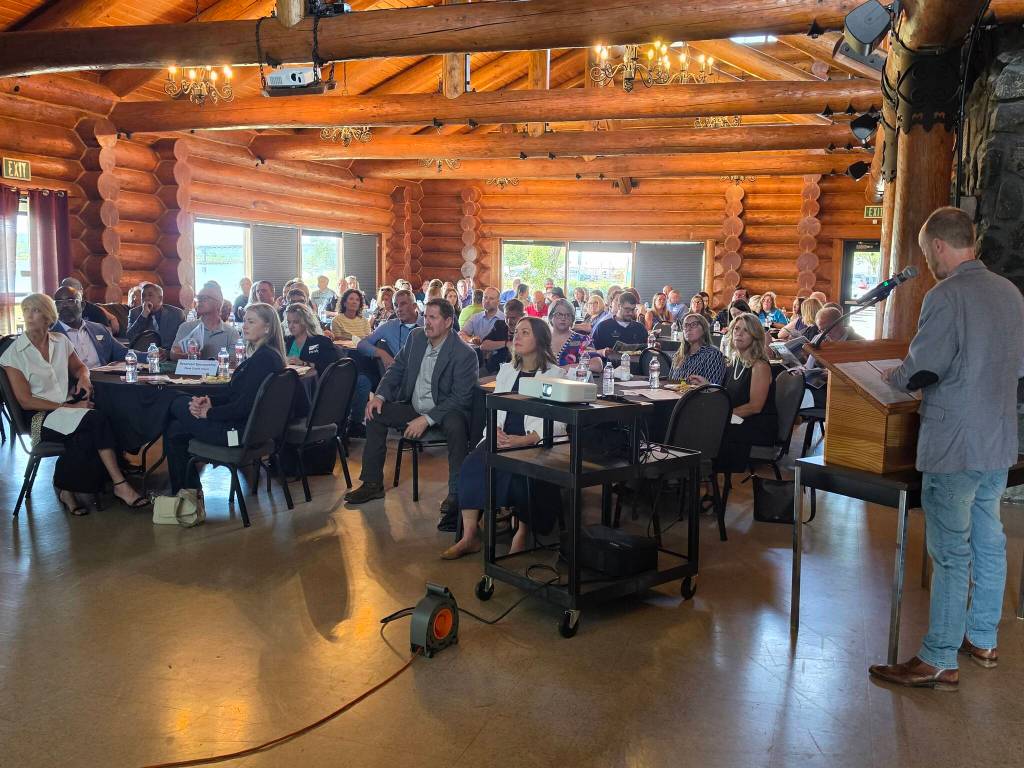
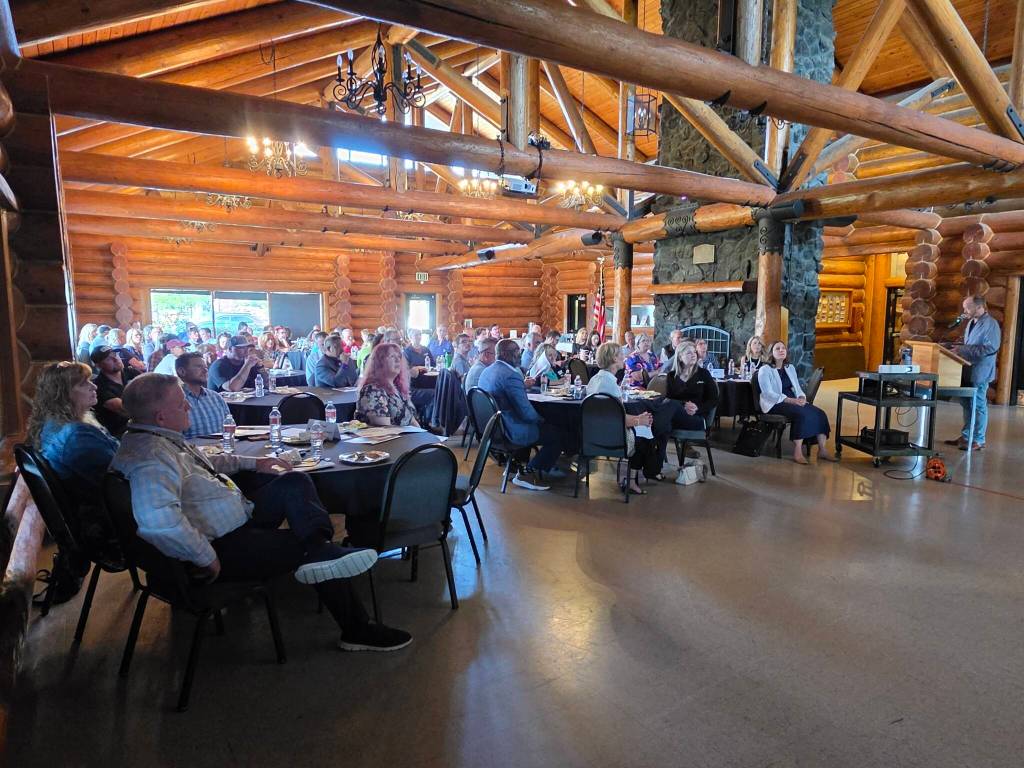



Greater Grays Harbor, Inc. [GGHI] delivered its annual “State of Grays Harbor” report on Tuesday at the Rotary Log Pavilion in Aberdeen during GGHI’s June Business Forum Lunch.
The good news? Unemployment in Grays Harbor County is down, wages are up, and retail spending is healthy. The bad news? Home prices and sales are down.
Peak Credit Union sponsored the “Economic Vitality Index,” which stated that average annual wages increased to $57,392 in 2025, average unemployment decreased from 6.5% to 5.9%, home prices decreased 7.7% from $358,100 to $330,370, and retail sales totaled $1.48 billion through Q1-Q3 2025 [Q4 data was not available]. According to the report, the Grays Harbor Gross Regional Product increased by 4.7% from 2023 to 2024, rising from $3.7 billion to $3.8 billion. The news that Grays Harbor County is no longer in the top five in unemployment in Washington garnered applause from the attendees.
The report stated, “Wage growth continued in several sectors, particularly in Utilities, Transportation and Warehousing, Public Administration, and Construction.”
The sold-out luncheon featured several guest speakers, including Kayla Dunlap from the Port of Grays Harbor, Dr. Carli Schiffner from Grays Harbor College, Annette Roth from the Evergreen Coast Economic Development District, LaMarco Mitchell with Peak Credit Union, and Joe Vansyckle with the Washington State Employment Security Department. Kyle Pauley, GGHI’s board chair, led the discussion.
In his remarks, Mitchell emphasized Peak Credit Union’s community connections and relationships with the people of the region.
“Grays Harbor County has always been a place defined by resilience. This community understands hard work. It understands adaptation, and it understands the importance of investing in the future while honoring its heritage. The same spirit that built the timber industry, the maritime economy, and generations of local businesses continue to drive innovation, and opportunities to this day,” Mitchell said. “As a credit union with roots in both education and the timber communities, we feel a special connection to Grays Harbor. We recognize the opportunities ahead from workforce development and housing to entrepreneurship and business expansion. And we are committed to being a part of those conversations and solutions. Our educational roots remain central to who we are.”
Pauley pointed out an interesting statistic when it comes to the number of jobs in the area and wages. Although average unemployment decreased, the number of jobs decreased as well.
“One figure that stands out is total employment declined by 328 jobs despite the wage growth. … So, the question isn’t always whether the jobs exist. Many employers will tell you that they have openings, but the challenge is always finding that they have qualified workers to fulfill them as well,” Pauley said. “While the employment dipped slightly overall, the wage increased across many sectors, and that is a good sign for the economy that it’s adjusting and competing for talent rather than one that’s just contracting and diminishing.”
Annette Roth, the executive director of the Evergreen Coast Regional Partnership, was up next.
“We are the federally designated economic development district for Mason, Grays Harbor, and Thurston counties. We work with all of our economic development partners across the region to bring investment and support the development and growth of our economy,” Roth said. “We have some really good news for those of you who have known the work that we’ve been doing. We have been working to get our federal designation for our economic development district for quite some time. We actually got notice less than two weeks ago that we got our federal designation, which is a really, really big deal.”
Roth said that sustained economic success will take planning and coordination.
“There’s a lot of progress that’s happening in the economy here in Grays Harbor, but it’s uneven. We saw that wages in Grays Harbor have increased in several sectors, and the unemployment rate was better year over year, which is fantastic. We also saw that real employment numbers overall declined, and we have seen some interesting challenges in our housing activity over the past year,” Roth said. “My takeaway is that we have some opportunity gaps. The wages still aren’t where we want them to be. That’s a pretty significant difference between Grays Harbor median wages and average U.S. wages. Our workforce is undergoing some demographic shifts. … We do have some really, really good momentum building and I want you all to be proud of the fact that we do. But it’s not going to just carry us forward on our own. So, if we want to be able to turn these opportunities into tomorrow’s economy, it’s going to require us all to do some intentional coordination in the planning. The regions in the United States that are winning right now have one thing in common, and that is alignment.”
Southwest coastal regional director with the Washington State Employment Security Department, Joe Vansyckle, was the next to present. He reiterated the optimism suggested by much of the economic data and discussed what his organization is doing to help the workforce.
“One of the barriers we had was that we weren’t necessarily offering services where people needed them. We had one 8,000-square-foot facility in downtown Aberdeen. That was a significant cost to us. And we only had six staff in there because people were not showing up for workforce services at the time. We decided we needed to have a different footprint. So we are now in five libraries in Pacific and Grays Harbor counties. We’re in Elma. We’re in Hoquiam. We are in Ocean Park and Ilwaco libraries. And we have a beautiful new facility that we’re housed in with Grays Harbor College,” Vansyckle said. “We served about 1,600 job seekers in our offices in Grays Harbor and the libraries this last year. We provided almost 3,000 services to those folks. Services like job search support, career guidance, training and education programs. We have workshops on writing resumes, how to have interview techniques, doing mock interviews with folks who need that kind of help. We make sure that they’re connected with employers. And we have a number of specialized programs we also offer, as well as support services for those who are eligible. We might be able to give them gas cards, give them clothes for work, work boots, etc. So when they’re qualified, we have programs we can tap into help people get to and prepared for employment.”
The next presenter, Kayla Dunlap, director of government and public affairs for the Port of Grays Harbor, presented an overview of the Port’s seven lines of business and an update on current Port projects and employment, most notably with the Terminal 4 expansion project, which is nearing completion.
“One of the things we’re most proud of, and when we talk about infrastructure projects and the investment, all parts of this project, AGP’s $175 million and the Port’s … $60 million, they went to three local contractors. That’s a really big deal. So Rognlin’s, Quigg, and Brumfield,” Dunlap said. “So when we talk about money staying local, I’m going to guess about 95 percent of those workers on site every day live in Grays Harbor. So they’re spending their checks here in Grays Harbor, and that flows throughout our county. That’s exactly what these projects do. … They’re going to pay over $60 million in wages over the life of this project. Eighty long-term jobs will be created [once it’s finished]. Most of those are longshore jobs. There’ll be some [other] jobs as well.”
President of Grays Harbor College, Dr. Carli Schiffner, talked about the state of the college, enrollment and student demographics, and how Grays Harbor College fits into the community.
“First, the report notes that the community is trending with a slightly higher average age. This trend is in our student demographics and reflects the students we are serving. It also is a signal to us to start working very much with great intention of serving our adult learners in our communities,” Schiffner said. “Second, the need for health care and related services is well noted in the report. Grays Harbor College, through its work with a recompete grant, has launched a plan to expand health care programming for the next two years.
“This includes increasing opportunities for students to get into health care pathways, which could be medical assisting, nursing, behavioral health, and paramedics/EMT pathways. And third, noting that the educational attainment levels remained low in our community, we are rethinking our outreach strategies and plans. And we’re working on making a seamless experience for all people to have an easy time for enrollment into our services or our programs. Through our community and continuing (education) department, GHC is working to build opportunities for adults who maybe are a little nervous to come back and give them a space where it is a low-risk environment to try something on a pathway toward a degree or certificate. So this past year, we have seen modest growth in our enrollment. We have seen more growth in adult basic education and Running Start.”
Schiffner expressed concerns with funding as the federal government has cut numerous programs, and the state faces a budget crisis.
“We’re very concerned about our federal funding, and we’re very concerned about our ongoing state funding. In regards to the state funding, as you know, the economic forecast and the messaging from the Office of Financial Management has been pretty dismal. And so we’re bracing and being really conservative with how we’re approaching our spending and what we’re committing to for next year. … You might have seen in the news that several colleges are doing layoffs and doing reductions in force and so forth. Near a third of the 34 community technical colleges have experienced either a financial emergency declaration or a general reduction in force. We have not,” Schiffner said. “That is because of the community support we have. We’ve shown up in different ways with our foundation. We’ve also been really, you know, we have great leadership in our trustees. We have great leadership with our executive team. … I’m very nervous that when we get into this next legislative session, we’re going to be faced with maybe similar challenges that our colleges have had this year. So what are we going to do about that? GHC will continue to focus its efforts on enrollment and retention, specifically, as I mentioned earlier, our adult populations and re-engagement there. We’ll focus on those adults who have some credits earned, but not a credential. We’ll start working through outreach for those individuals. We’ll continue to bring about academic programming that reflects the needs of our community.”
Pauley said that GGHI will post the Economic Vitality Index to its website in the coming days. https://graysharbor.org/