Where to dispose of your noxious weeds for free
Published 1:30 am Wednesday, May 20, 2026
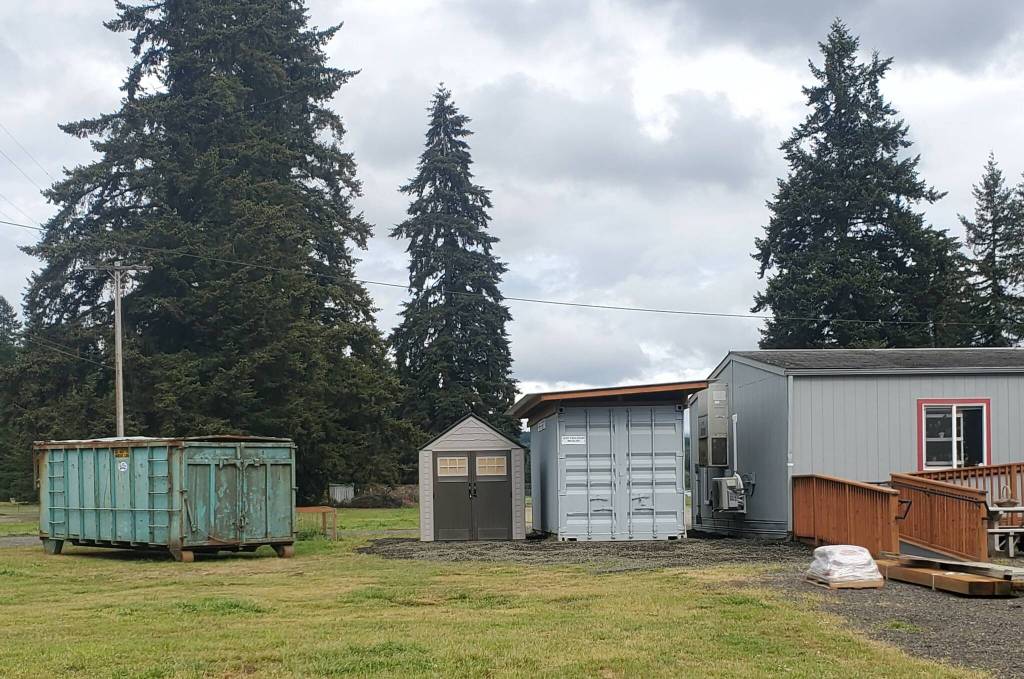
To assist landowners in their disposing of noxious weeds, the Grays Harbor County Noxious Weed Control Board is providing a free disposal solution. A dumpster is now located at their office, and residents can drop off their bagged weeds through September.
The dumpster idea was suggested by Roger Hamshar, the District 1 representative on the board, a couple years ago.
“Tansy was the primary motivator for getting this thing started,” said Danika Davis, the Grays Harbor noxious weed coordinator. “One of the things about tansy is people who live within city limits can’t burn it or they don’t want to because it does have potential of releasing toxins if you get exposed to too much smoke when you burn the tansy. So people who have [a large] amount of it are filling their weekly trash bin, which fills up pretty quickly because tansy can get pretty big. This was our solution to alleviate that, allowing them to bring it to us and then we’ll cover the [cost of the ] dumpster.”
This year, in response to requests by the community to accept other species than just tansy, the list now includes thistles, herb Robert and jewelweed.
“We’ll pretty much accept anything that is on the noxious weed list that is smaller than tansy,” Davis said.
A reason for not accepting Scotch broom, English ivy, or the non-native Himalayan and evergreen blackberries, which are also on the noxious weed list, is the dumpster would quickly fill up given the volume of these plants. And as for why knotweed isn’t accepted, Davis doesn’t want to encourage residents to remove knotweed by cutting it. There are resources available for treating knotweed through the Grays Harbor County Noxious Weed Control Board and the Grays Harbor Conservation District.
To prepare the noxious weeds for disposal, it’s recommended to bag them and tie up the bag, especially if the plants are flowering or are seeding. No appointment is needed to stop by and drop off the bags, but if you need assistance, it’s advised to call and schedule a drop-off time. If Davis or her staff are around, they can help open the dumpster and help unload the bags. There is easy access if a hauling a trailer, and there is no limit on how many pounds of noxious weeds can be disposed of.
“If you got it and it’s the right species, I’ll take it, especially tansy,” Davis said. “I’d love to fill the dumpster three times in this season.”
The disposal cost is grant funded. During summer of 2025, residents disposed of 9,080 pounds of noxious weeds.
“Last year we we kicked it out of the park. We emptied that dumpster mid-season,” Davis said. “It was such a big difference from the year before. Kylie, after speaking with her, said she never had to empty it mid-season.” [Kylie Smith was the previous noxious weed coordinator and now works for the Quinault Indian Nation.]
This year, Davis wants to break that record. To encourage residents to bring weeds, county residents can enter a raffle to win a prize of two-hour noxious weed removal work in spring 2027. And if the record is broken, three randomly selected residents who dropped of noxious weeds will be selected.
The Grays Harbor County Noxious Weed Control is located at 32 Elma McCleary Road, Elma.