Ocean Shores residents debate livestock ownership
Published 1:30 am Thursday, September 4, 2025
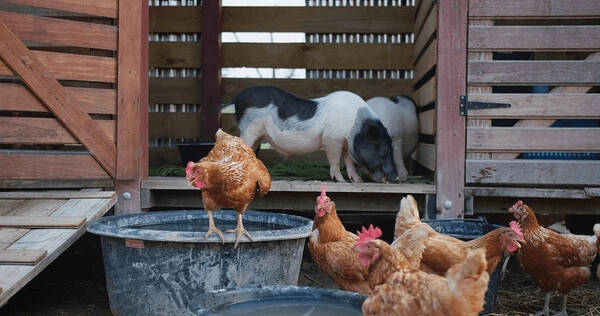
Within the 9.3 square miles of Ocean Shores you’ll find all manner of flora and fauna including several species of predators such as eagles, owls, coyotes, bears, raccoons and the occasional mountain lion.
The many deer that roam the medians and shoulders are part of the charm of living in the seaside city of roughly 8,000 permanent residents. Tuesday evening, many of those residents attended a 35-minute town hall at the Ocean Shores Convention Center to discuss the merits and demerits of allowing the denizens of the city to own livestock.
City Councilor Lisa Scott led the conversation and addressed the genesis of this particular town hall in her opening remarks.
“This came up at council a few meetings ago and we had a discussion on it. After that meeting I know the mayor (Frank Elduen) was approached as well as myself from different residents about the possibility, or having a more in-depth conversation with the general public regarding livestock,” Scott said. “We are aware that there’s covenants to the city of Ocean Shores, and what that would take to potentially change that. (We) just want to get the feedback from the public tonight whether or not this is something council should look at to have on the ballot.”
The first commenter to take the microphone discussed the layers of bureaucracy and regulation that would have to be put in place to police ownership of livestock, and the potential unwanted noise certain types of animals make.
“If the powers pass it, even though I don’t think it’s a good idea, there would need to be very specific, detailed instructions and also penalties if they’re not followed, because, again, I think there’s a whole Pandora’s box that could be opened,” she said. “First of all, no roosters. Yours truly is not an a.m. person, and I do not want a five o’clock rooster. Also, there would need to be a regulation about numbers that would definitely need to be considered. A lot of people who raise chickens like free range chickens, I don’t want my neighbor’s chickens visiting my house. I don’t want a business next door, meaning they’re selling eggs and selling this and that. Are we going to allow the chickens to be slaughtered?”
She went on to bring up food-borne illnesses and tracking inventory and the sources of the animals and their products.
The next commenter discussed the vermin that might be attracted to a population of chickens and the inherent risks associated with extermination.
“I grew up on a farm, the first thing you’re going to get with chickens is the explosion in rats and mice. Then you’ve got to poison those,” he said. “You’d think with pest control at the main gate here that we would know better than to put farm animals on small pieces of property. I’ve had bears break in the chicken coop for the rotten eggs, and coyotes break in to get the chickens.”
The third commenter talked about the smells associated with livestock.
“Pigs and chickens stink. I’m from the Midwest and I used to spend time on my family’s farms and I’m telling you right now, pigs and chickens stink,” she said. “I don’t care how far away from you they are, unless they’re in a grocery store and they’re wrapped in foil or something they smell. Do you want that next door to you?”
The fourth commenter was the first in favor of chickens in Ocean Shores.
“I think we can be environmentally responsible for our chickens. I think we can be environmentally responsible for the opportunity to take care of them. We already have coyotes, we already have bears,” she said. “Shall we get rid of our garbage? Because that’s what happens when the bear comes into my neighborhood. I find that we can’t have chickens, we can permit the chicken coops, and permit the area in which they can be in. We have code enforcement already and I guess we could ask them to enforce the chicken coops.”
The fifth commenter, Pam Moser, presented the most comprehensive argument against livestock in Ocean Shores, including the negative effects on the well-being of the community and stress that would be placed on city infrastructure.
“I would argue that adding chickens and pigs does not enhance the quality of life for all citizens, nor does it add to the attractiveness of the community. In fact, I’d be willing to bet that the quality of life for some members of the community would be diminished because of poor animal husbandry by some, and the smell, sounds and visual unattractiveness that goes with that,” Moser said. “Adding backyard chickens would do the opposite of providing for efficient municipal services. … City staff would now have the added responsibility of being sure that animal enclosures are up to standard … because of the high amount of nitrogen, phosphorus, and potassium in chicken and pig poop, as well as salmonella and other bacteria, and our shallow water table the city would have to check that animal waste is handled in a timely and safe manner for the environment.”
She went on to describe the prohibitions against agriculture and forestry outlined in the Shoreline Master Plan and the changes that would need to be made to allow livestock to be kept in the area covered by that plan.
Ocean Shores City Council candidate Curt Dooley explained the properties in the city are too small to accommodate the keeping of livestock.
The following commenter quoted a chicken owner who had nothing good to say about the birds and reiterated the potential environmental impact and predation.
The next commenter discussed other cities in Washington that allow chickens and wondered aloud about collecting data during a trial period to study the issue, while the next bemoaned the possible detrimental effects to property values.
The next discussed the changes to the city’s covenants that would have to be made to allow the ownership of livestock. The next three spoke out against the ownership of livestock citing code enforcement and environmental impact.
A typed comment in the online chat suggested strict permitting could be used to regulate livestock. The next in-person commenter talked about the uniqueness of Ocean Shores and the potential impact to the fresh waterways in the area, with the next two also expressing a “hard no.”
At the end of the town hall Scott thanked everyone for attending, and said, “We really do appreciate the feedback. No matter what it is, it’s always nice to hear and hopefully we can put this one to bed.”
This is not the first time this topic has been brought to bear in Ocean Shores, and if history is any indication, it won’t be the last.