Group addressing the housing shortage in Grays Harbor County
Published 1:30 am Tuesday, June 9, 2026
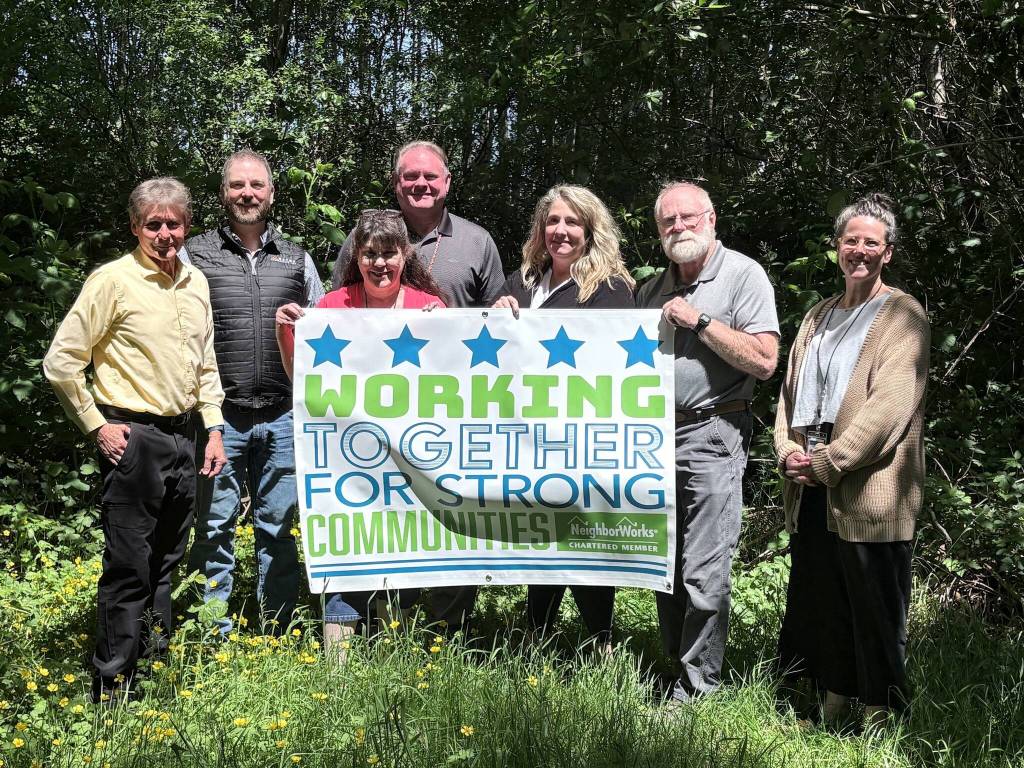
Ask 10 agencies about the nationwide housing crisis and you’ll get 10 different answers regarding statistics and characterization. There’s a shortage of housing, a shortage of affordable housing, a shortage of rental housing, home prices are too high, and rent has skyrocketed …
Meanwhile, in Grays Harbor County, the Board of County Commissioners [BOCC], through its year-long strategic planning process, identified housing as one of the seven pillars of the county’s Vision Statement.
In August of 2025, the county held its inaugural housing summit, with 60 elected officials, community leaders, builders, real estate professionals, and city, county, and state staff participating in panel discussions on topics including affordable housing challenges, the permitting process and workforce housing. Housing was a topic of discussion at the Greater Grays Harbor, Inc.’s [GGHI] September 2025 Business Forum Lunch. In April of last year, Gray Acres LLC was honored for its success in apartment renovations in downtown Aberdeen.
In September of last year, GOBankingRates named Aberdeen No. 5 on its list of America’s 30 Best Hidden Gem Housing Markets of 2025. These markets “offer significantly lower home prices than their state averages, manageable mortgage costs and solid median incomes — along with strong livability ratings,” according to GOBankingRates.
In October, Charlee Paull [US Bank], Eric Bjella [NeighborWorks of Grays Harbor], Larry Burgher [Empire Home Loans Inc.], Jill Warne [CENTURY 21 Real Estate Center], and David Quigg [Quigg & Co Real Estate] took part in a panel discussion on the state of the real estate market at a GGHI business forum lunch.
According to a handout provided at that event, the median home sales price in Grays Harbor County had dipped from $380,000 to $341,900, and as of 2023, roughly 73% of housing units were owner-occupied. There are approximately 55,400 homeowners with an average of $55,900 in home equity in Grays Harbor.
While real estate professionals say there is plenty of unsold inventory [Zillow shows 681 houses for sale, including manufactured homes, in Grays Harbor County], Zillow lists only 152 rentals available. Prices for homes for sale, including micro condos, range from $6,500 to $9.9 million. Rent ranges from $800 to $4,500 per month. However, the numbers indicate that most people who do not currently own their own home cannot afford to buy.
When it comes to building new, there are numerous options including single family tract housing subdivisions, townhouses, condominiums, egg carton apartment housing projects you see in larger cities, tiny houses, modular apartment, et al. Each type of development comes with its own unique challenges, and in some cases stigma or negative connotations. While Seabrook, Ocean Shores proper and Oyhut Bay Seaside Resort continue to develop along the coast, the question remains — where and what to build in the rest of the county.
Housing needs and feasibility assessments
Recently, Grays Harbor County awarded two contracts to start answering some of these questions — one for a housing needs assessment for housing at all levels in Grays Harbor County, and one for a feasibility analysis for a specific property on the south side of Aberdeen.
ECOnorthwest will develop a “fully vetted Housing Needs Assessment with actionable recommendations for policy changes, building incentives, partnerships and funding to create more housing at all levels in Grays Harbor County” by the end of the year at a cost of $48,575.
According to Grays Harbor County Public Health Director Mike McNickle, the housing needs assessment was born directly out of the housing summit held last year.
“After that housing summit, everyone said we need a housing assessment, because there were lots of numbers being thrown around about how many houses we need. Commissioner [Georgia] Miller and I had a discussion and we decided we really need to have a third party come in and tell us what the numbers are, by city, by location,” McNickle said. “We’re still kind of shooting in the dark about what kind of housing we’re talking about.”
Part of the current housing landscape is understanding what types of housing already exist in Grays Harbor County before trying to figure out what to build and where.
“The idea is to get a baseline, so we find out what we have and from there we build on from the demographics and economics that we can predict to the best of our ability to determine what and where we can do something,” McNickle said. “We want to make sure it’s not just the county but the cities, because there’s an opportunity for infill. There are lots available and that’s what the next part is, the feasibility study. We wanted to demonstrate that private-public partnerships could work.”
NeighborWorks of Grays Harbor County will “conduct a feasibility analysis, site assessment, and engineering study to determine whether the proposed property has the necessary infrastructure and capacity to support the installation of up to 16 modular affordable housing units,” also by the end of 2025, at a cost of $62,400.
Eric Bjella, executive director of NeighborWorks of Grays Harbor, said work has begun with Vector Engineering and that he hopes to have the feasibility study complete by September. A kickoff meeting was held on May 14 and a tour of the property was conducted on June 1.
“We attended the housing summit and saw that we needed a needs assessment and pretty much everyone in the room agreed that they’d like to see that done,” Bjella said. “Mike McNickle called and said we’re going to put out an RFP [request for proposal] for a feasibility study for those who might have property and could possibly develop it for affordable, low-income housing. NeighborWorks owns some property in south Aberdeen near [Grays Harbor] College, a total of 16 lots. … We put together our package with the help of Vector Engineering out of Olympia. … the units that Mike McNickle talked about we would need to put manufactured homes or units on that property.”
Creating neighborhoods
Bjella added that using manufactured structures helps keep construction and development costs down and the idea behind this project would be to create a neighborhood.
“We do want it to be a neighborhood and have a neighborhood feel, and not be on top of one another, not so dense that people feel like they’re crowded into an area, that’s not the intent at all. It is meant to be a part of the community, and a community within itself,” Bjella said. “Once the feasibility study comes back, the cost, the design, the partnerships that would be involved in this … we’re looking at who would use these units. Would they all be sold? Not necessarily. They may be used under NeighborWorks as rental units, and we might rent them out to another organization like CCAP [Coastal Community Action Program] and CCAP would rent the units from us and use them to put their folks in and they would be the property manager and lease the buildings from us. We might, I’d like to see this, partner with the college to make several of the units student housing.”
Bjella said the proposed development would tie in to existing Aberdeen city infrastructure and would be easily accessible to public transportation and other amenities and could include a park or other types of green spaces to foster the neighborhood feel. He reiterated that placing 12-16 modular homes at this site is preferable to building a vertical apartment building.
“Apartment buildings are higher density and come with their own set of issues — one issue is to manage, another thing would be the zoning that’s there already. We would want to go along with the zoning the site already has and not look for variances to put up multi-unit buildings,” Bjella said. “Maximization is not always to the betterment of the community. My personal experience with high density building … packing people together creates friction, it creates other issues and it separates a group of people from the neighborhood who live in single family homes. Our point is not to stigmatize this area and make it part of the rest of the community so the people who live there felt no different than anyone else on the block.”
Bjella did not rule out using prefabrication modular apartment units as part of this possible development project. He also said that the feasibility assessment could lead to a development that serves as proof of concept for other areas in the region.
“Maybe when the feasibility study comes around it may say, yeah, you could do more with this land, and it still will have the feel of that space and community and we’re looking for all ideas on that,” Bjella said. “It could be a model for other areas that don’t have a lot of land to spread out on and make it as efficient as possible. Maybe going up is a possibility and as long as you don’t lose that community feeling and don’t have the separation feeling that some of these high-rise or multi-family units project.”
McNickle added, “We have no idea if the land is even right for it. That’s what the feasibility study is for. It’s going to tell us what we can do, what are the permit restrictions, what are the site conditions, what are we up against. We had a conversation with the Department of Commerce, which is really exciting and they were like, ‘yes, we want to help you.’ Back to the housing needs assessment, Commerce is really supportive of that because that’s how we get into getting more money. They always wanted us to do one and we never did.”
As Grays Harbor County has adopted a more holistic approach to the well-being of its residents, many stakeholders have come to the conclusion that housing is a key component.
“Housing is not in Public Health’s wheelhouse, but it is such a need, and it is one of the social determinants of health. We need to fill that niche,” McNickle said. “This is my foray into seeing if we can get some things done.”