Grays Harbor College students perform Our Place for spring drama
Published 1:30 am Tuesday, June 2, 2026
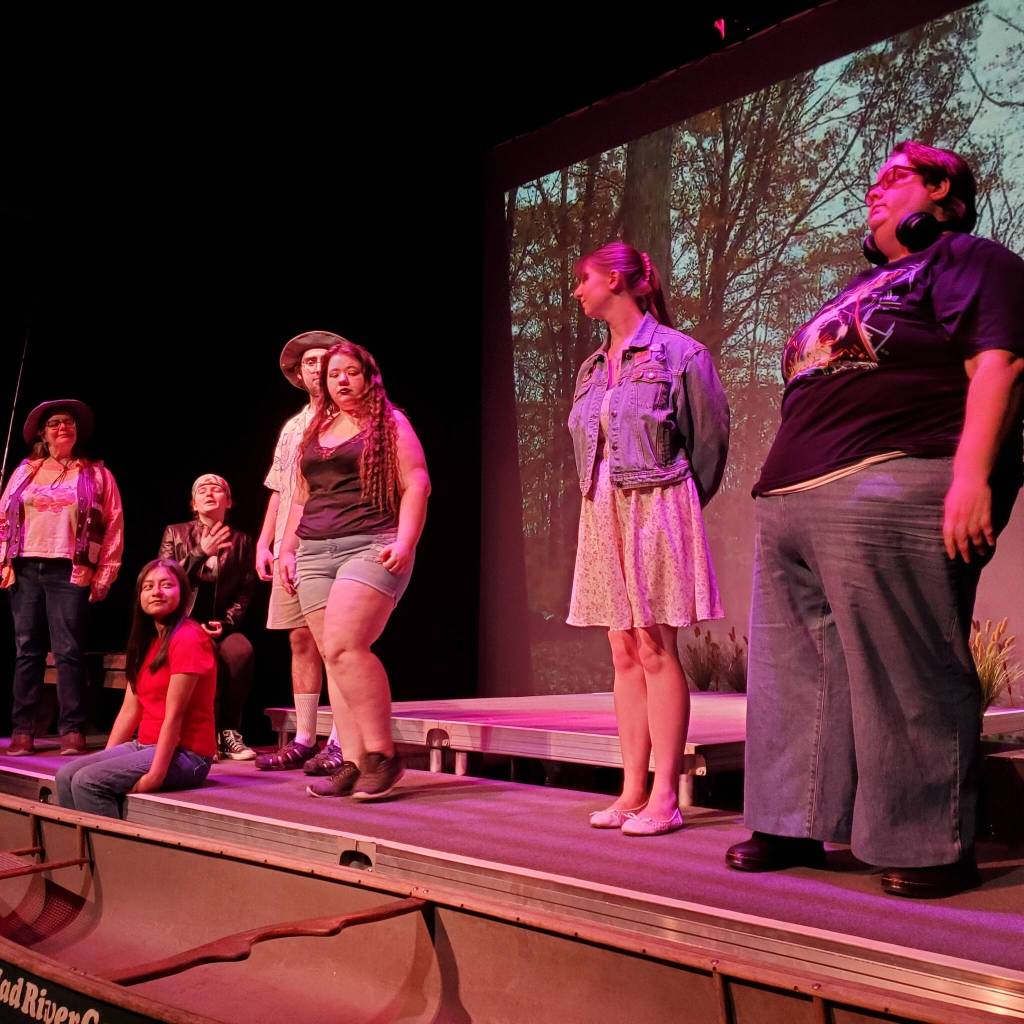
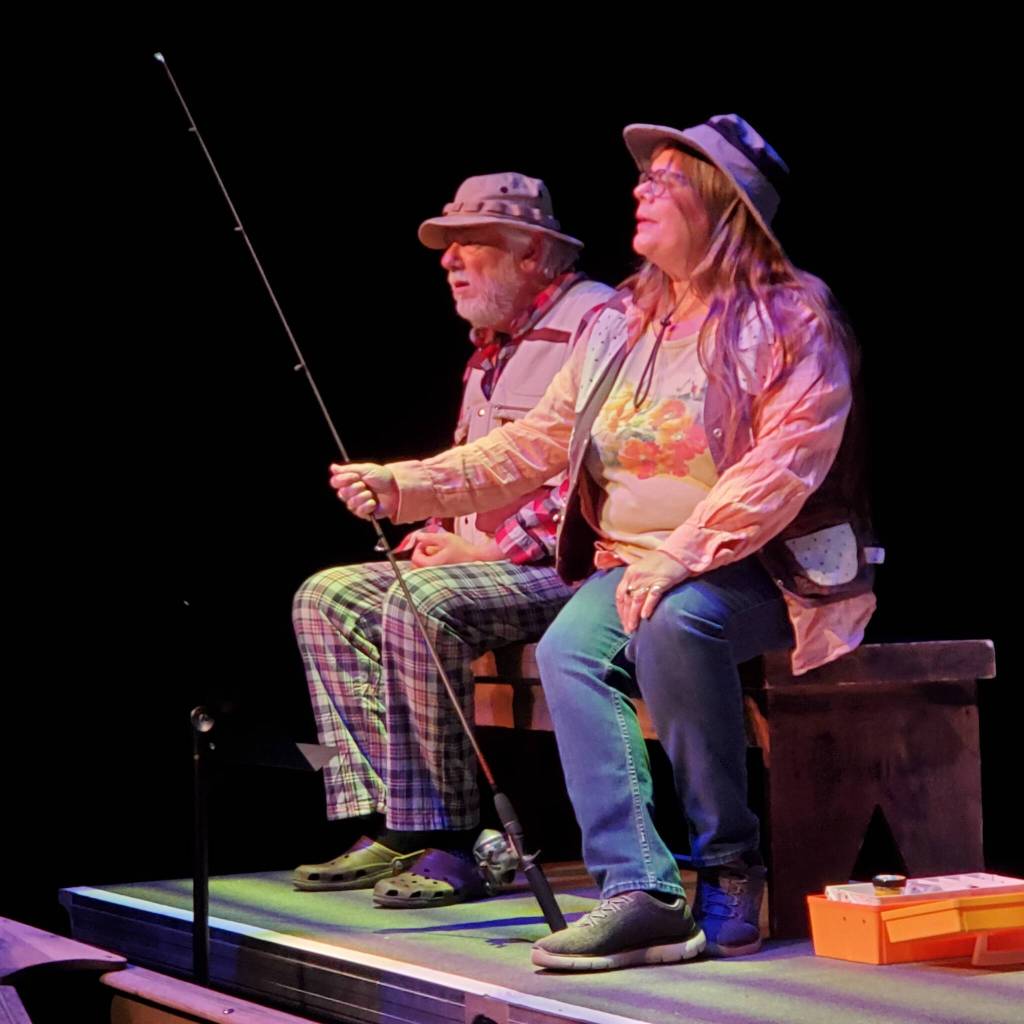
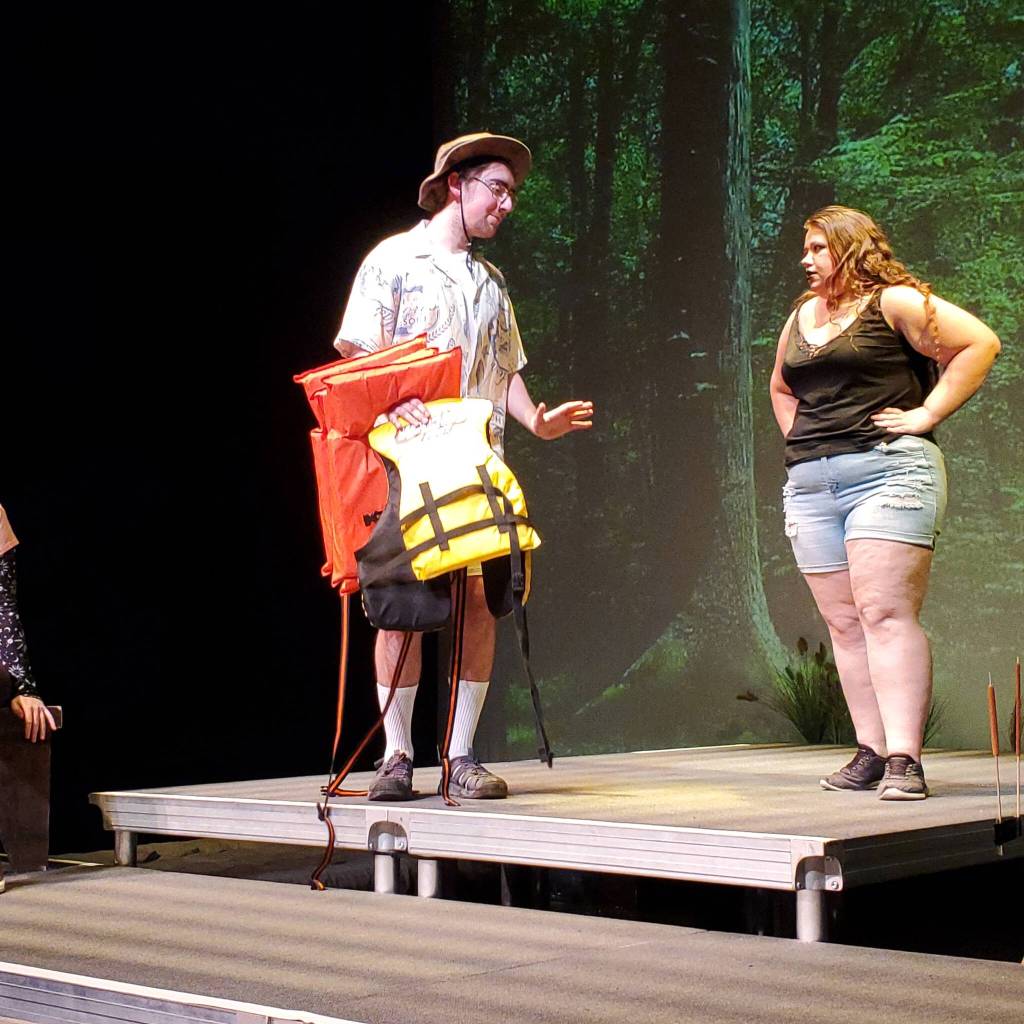
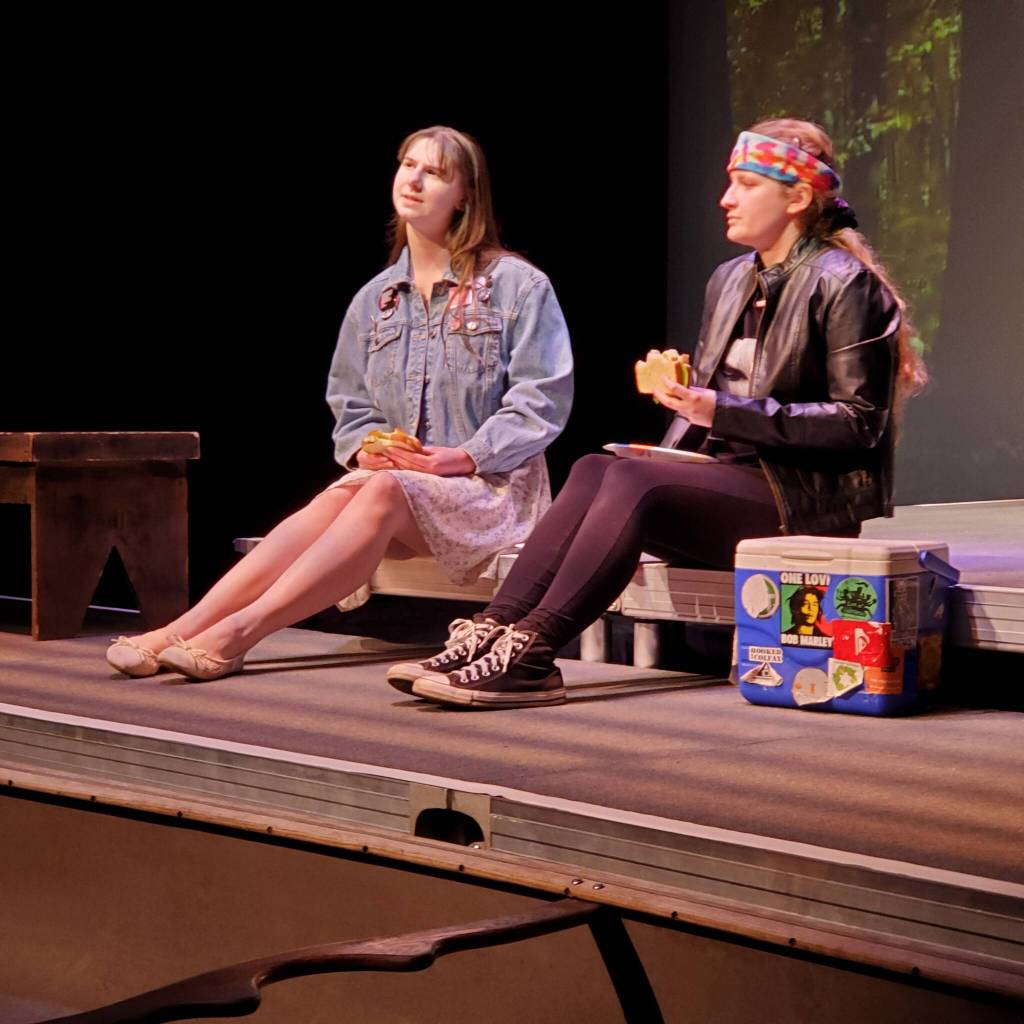


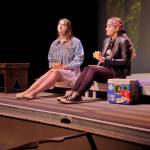
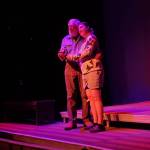
On Saturday, Grays Harbor College students taking the Introduction to Acting class this spring quarter performed a sold-out, single showing of Our Place written by Terry Gabbard.
The playbill described the play as heart-wrenching and heart-warming, which it was. Set on a lakeside dock, the five scenes depict snapshots of life’s moments that are trivial — when the rest of the family doesn’t share the dad’s enthusiasm of canoeing — or signal a significant change is coming — when a girlfriend realizes that what she wants in life is not shared by her boyfriend. The “Flick of the Wrist” and “Stay With You” scenes were especially poignant with the characters mourning the loss of their father and younger sister.
This is the eighth spring drama production that Dr. Andrew Gaines has directed since joining Grays Harbor College. Performing alongside the students was guest actor Mario Winkelman, who played the judge in Hello, Dolly! The backstage crew of Technical Director Art Oestreich, Naomi Watkins, as assistant director and stage manager, with Dani Fleury, as production assistant, and Kirin Cassady, the production and sound board operator, ensured the lights and sound paired with actors. (Fluery was Miss Scarlet in this year’s Hoquiam Drama Club’s Clue.)
Before and after the play, The Daily World had a chance to chat with members of the cast and production team to learn more about what it took to stage Our Place.
What follows is our conversations edited for length and clarity.
The Daily World: Dr. Gaines, why did you select Our Place for this year’s spring drama?
AG: I was researching different plays that would accommodate nine to 10 actors since that’s how many students were enrolled in the course, and this play popped up in two different forums. There was a free PDF of the first couple pages, and I liked this style of writing, so I ordered a copy of the play, and it blew me away. This is the kind of play where I read it and it was hitting me emotionally.
It’s both heartwarming and heart-wrenching — it surprises you and all in 45 minutes too. It’s funny, it’s dramatic, and the writing suits the college students.
When selecting this play, the length was important to me, because the goal was to help the actors memorize their lines.
Previous productions have been staged readings, which takes away the pressure of having to memorize anything and which can be a lovely way to present material. But once an actor memorizes their lines, it opens up worlds of possibilities in how the actors interact with each other.
TDW: Mario, why did Andrew reach out to ask you to perform in this play?
Mario Winkleman: They needed an old guy. [Mario’s character was Johnathan, a character with dementia.] I’ve been stereotyped in a number of plays since Andrew began to be the director here. For Oklahoma, he called me because he needed a nasty old man.
Since then, I’ve really learned to appreciate Andrew. His education has really helped because he is Dr. Andrew Gaines and his doctorate really is apparent in his education and experience. The way that he deals with people, helping them to feel comfortable and to allow them to develop their characters, has drawn me to him. Because of that, I’m more willing to participate than I would otherwise have been.
TDW: What was it like working with students who are learning to become actors?
MW: When we do these community theaters production, and I’ve been doing these for many, many, many years with Brad Duffy as well, you get to learn the local talent and you’re excited to see them — you watch them build the characters. It’s stunning, the amount of talent that is here. And then with these new students, you watch them carefully and slowly build up their characters, and you see there is an extreme amount of potential here. It’s delightful to see.
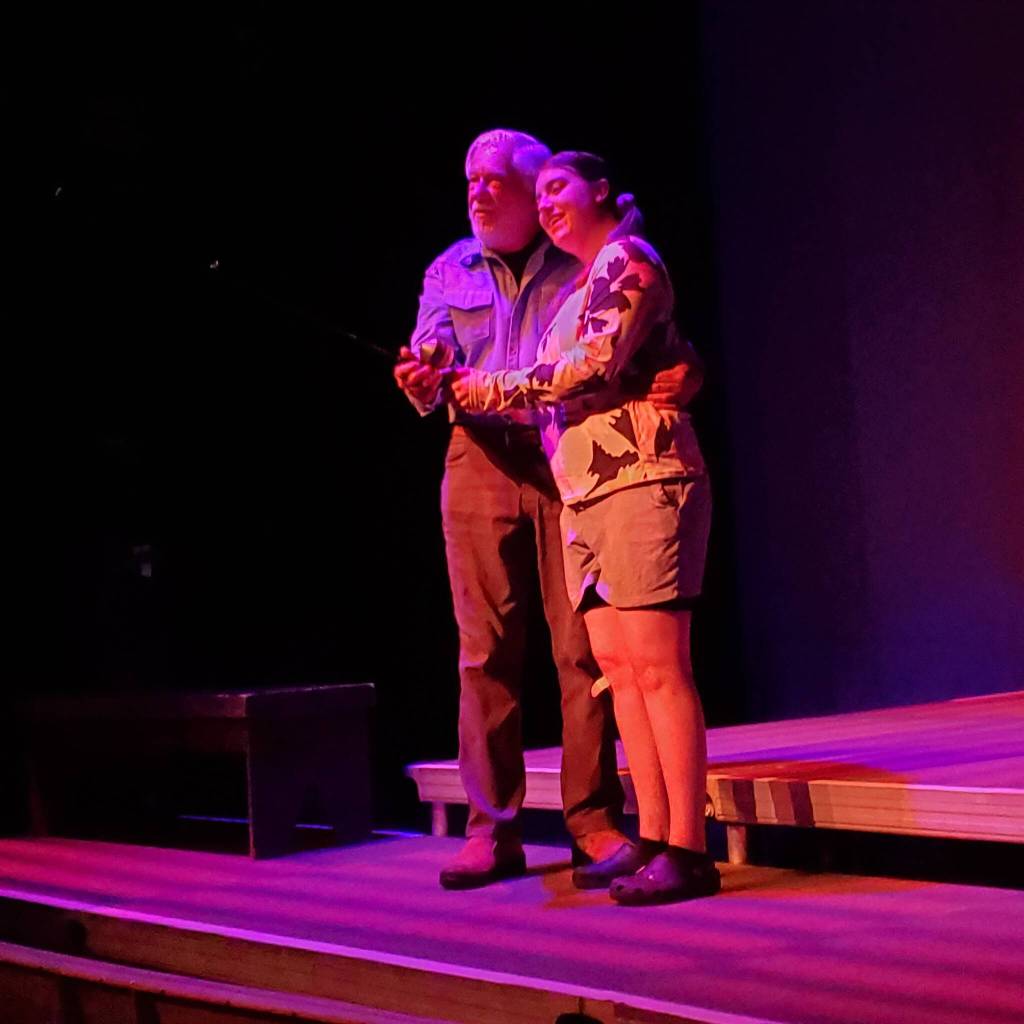
TDW: The “Flick of the Wrist” scene you have with Corrine Towner [where the daughter takes her father to the dock to remind him of times they fished together], did those characters resonate with you both, in terms of knowing someone with dementia?
MW: There’s a lot of emotions that come up when you deal with somebody like this, and there’s other situations and conditions because when you get into your 70s, you have a lot of experience with those who no longer hear. That is a part of life.
TDW: Did you have to participate in rehearsals?
MW: I went to a number of rehearsals because we have our blocking where we need to be, but I did not have to remember any lines; I just had to look old. But I did have to strain to think and remember and the enlightenment and the joy when I remembered something that I was involved in and the turmoil I was feeling so I tried to project that.
TDW: It was really interesting how the use of lighting and music indicated that you, as Johnathan, were reliving a moment in the past.
MW: When his daughter says that the nurse told her that he’s walking the halls at night looking to pick up his daughter from preschool, that’s a trigger for him. That was maybe one of the best times of his life.
The director coached us through this scene by saying, ‘He has the urgency to find his keys because he must go pick her up, and the sound of the children’s voices is just a supreme delight for him.’ And then when he looks over and doesn’t see his little girl, almost not recognizing his daughter because she’s not the little girl and he’s so sad. That’s where she says, ‘Don’t give me that look,’ because she’s seen it before.
TDW: Were those stage directions in the play or did Andrew add them?
MW: When you get the script, you make an agreement to follow the script so there are some parameters to work around. But the lighting designs and the background and the sound effects, that largely was Andrew on this one.
And I think he drew in the class during the process because their class is Intro to Acting and it includes everything — to working with the sound and the lighting. They’re very lucky because Andrew is a full spectrum of talent, and he is so giving when it comes to helping the students to learn that. Even their experience on stage is only a small part of what they learn.
We’re very lucky on the Harbor to have him, so now when he may call me for something, I’ll say yes. In theater you get introduced to so many people and you learn them and your hearts meld. Because in the end, you’re not taking your money, you’re not taking your cars, you’re not taking your truck, you’re taking nothing with you. What’s really valuable in the whole course of life? It’s the relationships that you build with people.
TDW: And I would say you’re also being vulnerable as well because you are going to screw up, make mistakes, and you have to know that it’s okay.
MW: Yes, and sometimes your character is vulnerable. And to make that real, the rest of the people just soak right into you, and it becomes a reflection of life — for that I appreciate it.
And although I think my time is valuable, much more so than money nowadays, I like to think that my time is well spent being involved with the theater.
TDW: Paige, is this your first time acting?
Paige Brueher [Sidney, the six-year-old sister of Stanley]: Acting in general, yeah. I’ve done mostly musicals, I was in Hello, Dolly! and I’ve also done Driftwood, so it was really different to do something serious.
TDW: How was that transition from ensemble to playing a main character?
PB: It was different because I was playing a different age, a six-year-old, and I’ve never really portrayed that age before, so age-wise, it was different for me. The dialogue too, because I don’t talk like that in real life so it was a very different aspect too.
TDW: What from the class resonated with you that you expect to take forward?
PB: I learned to not be myself but be the character, the mannerisms and the voice.
TDW: Were there other lessons from the class that will inform other parts of your life?
PB: To keep practicing and just enjoy every aspect of it.
TDW: Naomi, what prompted you to be the assistant director and stage manager for Our Place?
Naomi Watkins: I was actually in Hello, Dolly! this last winter and I’m currently in the process of learning to direct and that has been my goal since about 2019. During Hello, Dolly!, Andrew and I were talking backstage and I told him of these plans and he said, ‘Hey, I’m going to need someone for [this show]. Would you be interested?’ I was like, ‘Yes, I’ll be there.’
What started as just stage managing became assistant directing and also lightboard operating; it ended up being a lot more than I was expecting it to be but ended up working out.
TDW: How does behind-the-scenes work resonate with you in a way that being on stage doesn’t?
NW: It gives me the opportunity to expand in ways that I didn’t know was possible. Where in acting, that’s one side of the arts, but the backstage is a very different side of the arts. It’s very technical.
When I was younger I thought the crew didn’t do a lot — Oh boy, they do! — so it started off wanting to know what they were doing. I would sit in on auditions, whether it was mine or just watching, and I would put together what I would do for the cast list, and it would always be almost identical to the cast list that went out.
TDW: Had you done 7th Street Kids then?
NW: Yes. I have been doing theater out here since 2015. And that’s what was so great about getting pulled into this show too, a lot of these people have done a few shows or who have never done anything. I get to assist and give them notes that’ll help them further along and hopefully they continue because they’re really talented. For a bunch of people who I’ve never seen do theater before, they were phenomenal.
TDW: As assistant director, what did you learn on this production?
NW: I’ve helped out with basic lighting at the Driftwood before, but I have never hung or helped set the lights. Here, I was helping hang the lights, plugging them in and then queuing them up to the light board. I had to learn the process of recording all the cues and adjusting the lights. Even on the black stage, if the lights are slightly too bright, they will bounce off onto the projection. You have to account for that in the angles and how bright it is to make sure it’s not affecting the image you see.
TDW: When The Daily World chatted with Mario, I commented about capturing the older gentleman’s dementia through the combination of lights and music. Was that challenging to pull off?
NW: The biggest challenge was finding the right audio, which Andrew found, but he had asked me what colors to put in that scene. When I think of memories, I always think of very warm colors, warm yellows and oranges.
I specialize in working with dementia residents through my caregiving jobs, and where they have those moments, they just always light up and it’s a warm feeling so that’s why I thought warm lighting, orange lights would be the right move.
There was a lot of pressure when he asked what color would you put here because that is a direction that we are choosing. It sounds simple, but it does not feel simple.
TDW: Any last thoughts?
NW: I just thought this crew did great; I’m really proud of them. The first week I came in, most of them were struggling to say their lines because there was someone new in the room and so watching them perform today was really great.
Audition Calls
Gruesome Playground Injuries – Stage West Community Theatre
Some stories demand the right pair of actors — and this one is worth finding them. Stage West is holding an additional audition session for this gripping two‑person play by Rajiv Joseph.
Over three decades, Kayleen and Doug collide in hospital rooms, schoolyards, and emotional crossroads, revealing a connection stitched together by pain, humor, and heart.
Auditions are on Saturday, June 20 at 11 a.m. Ocean Shores Lions Club 832 Ocean Shores Blvd., NW.
There is one female role and one male role:Kayleen — must be able to portray ages 8–38
Doug — must be able to portray ages 8–38
Actors will be provided sides for a cold‑read audition.
It is recommended that all auditioning read the full script beforehand. You may request a copy from the director, Arlene Nissen, at anissen17@gmail.com.
Midsummer Night’s Dream
Auditions are on Thursday, July 16 from 6 to 9 p.m. and Saturday, July 18 from 1 to 4 p.m. at United Christian Church 300 West 1st St., Aberdeen.
The performance will be held during the Renaissance Faire on Sept. 11-13.
The roles to file are 2 teenage/college age males, 2 teenage/college age females, 9 people of any age (1 female and 1 male at least), 2 males and 1 female over 30.
For questions, email kdemasters@yahoo.com.